The Dohyō-iri, the iconic ring-entering ceremony performed before every major sumo match, is far more than sports pageantry. Its roots reach into the ancient layers of Shinto, where purity, ritual order, and the presence of kami guided both daily life and sacred performance. Sumo itself began as a religious rite, not a competitive sport. Early chronicles such as the Kojiki and Nihon Shoki describe wrestling as a form of offering, an embodied prayer demonstrating strength before the gods. Over centuries, this spiritual foundation shaped the dohyo (wrestling ring) into a consecrated space and preserved the ring-entering ceremony as a living tradition of Shinto practice.
Though the ceremony evolved within the structured world of professional sumo, its heart remains the same. Every gesture echoes ancient shrine customs: purification with salt, rhythmic clapping to summon kami, and ritual stomping to dispel malevolent forces. At its highest level, the yokozuna’s own dohyo-iri stands as a direct continuation of Japan’s oldest religious gestures.
Description of the Ritual
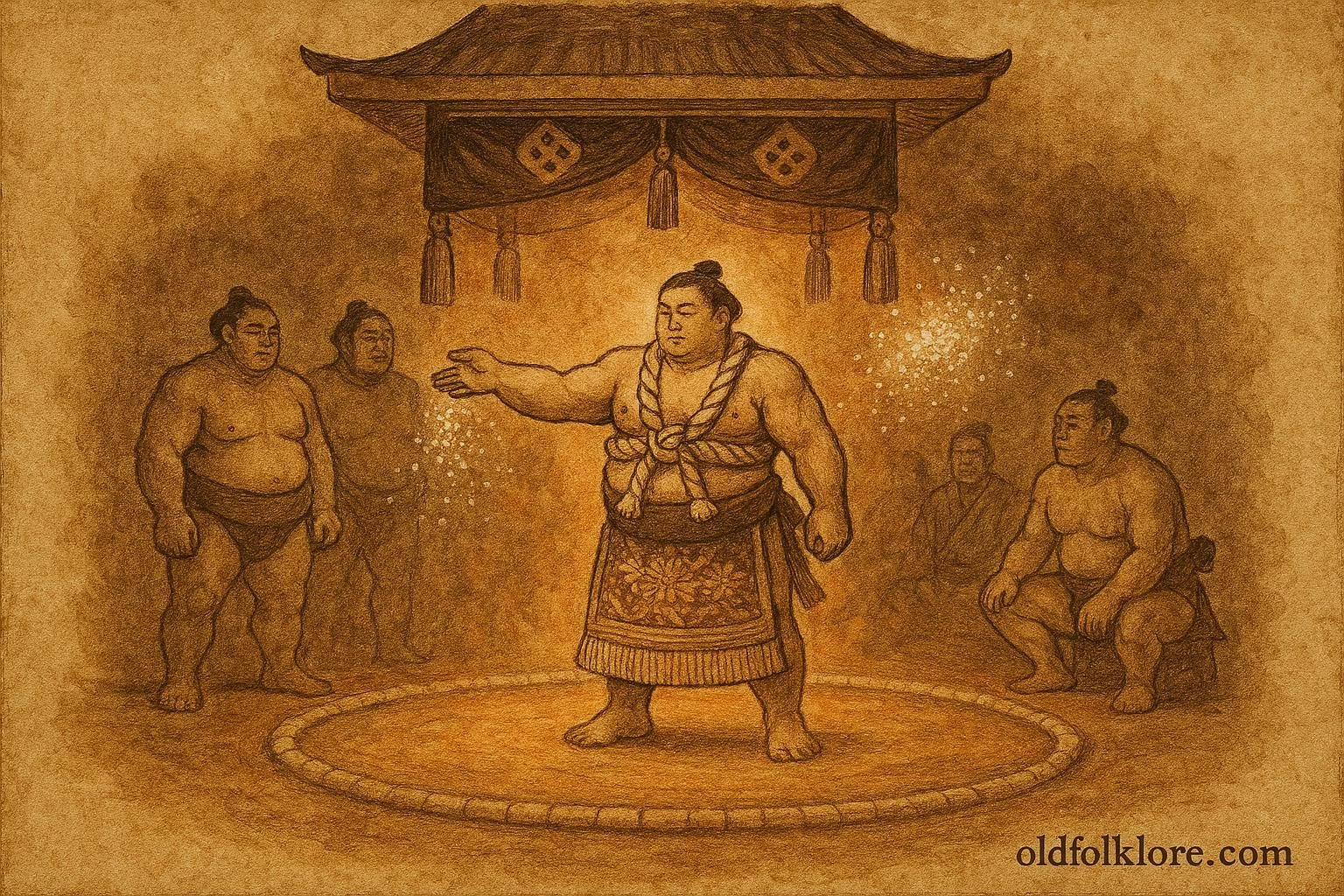
Before a tournament session begins, spectators fall silent as sumo wrestlers, massive, disciplined, and spiritually prepared, enter the arena. They step onto the elevated clay ring, which has already been ritually purified and adorned with a canopy styled after a Shinto shrine roof. This marks the dohyo as a sacred microcosm where human effort and divine observation meet.
The ceremony varies by rank. For most wrestlers, the sequence is simple but meaningful:
-
They ascend the ring respectfully.
-
They face the crowd and clap, a gesture tied to shrine worship.
-
They perform shiko, the powerful leg-lifting then foot-stomping motion that symbolically crushes impurity.
-
They throw salt, purifying the ground and themselves.
Yet the yokozuna’s dohyo-iri, the highest and most prestigious version—is an extraordinary sight. Wearing a massive sacred rope (tsuna) reminiscent of those hung at Shinto shrines, the yokozuna steps forward slowly, each movement deliberate. Flanked by attendants, he performs a stylized sequence of gestures. Arms extend outward in an open invitation to the kami, feet slide into position, and a powerful stomp grounds his presence. Finally, he spreads his arms in a gesture of spiritual openness, declaring purity, power, and readiness.
Though the entire display lasts only minutes, it communicates centuries of meaning. The yokozuna is not merely an athlete; he becomes a ritual officiant embodying strength that is both physical and sacred.
Mythic Connection and Cultural Significance
Shinto myth tells us that sacred spaces must be purified before contact with divine forces. In many ways, the dohyo is a temporary shrine where wrestlers engage in symbolic combat before the watching kami. The salt thrown into the ring recalls purification rites at shrines. The clapping mirrors the kashiwade, used to call deities’ attention. The stomping, perhaps the most dramatic motion, echoes the ancient belief that forceful earth-shaking movements could frighten away lurking evil.
Furthermore, the yokozuna’s ceremonial rope draws directly from shrine iconography. The rope marks him as a figure of spiritual weight, someone ritually clean enough to perform before the gods. His presence inside the dohyo is not just athletic superiority; it signifies moral stability, self-discipline, and ritual purity.
Sumo’s mythic narratives also trace back to stories such as the match between the gods Takemikazuchi and Takeminakata, whose wrestling determined control over the land of Japan. Thus, the dohyo becomes the stage on which primeval myth is reenacted through disciplined bodies and sacred gestures.
Even today, the ceremony reflects Japan’s enduring relationship with Shinto. Modern fans may admire the spectacle or athleticism, but beneath the surface is a dialogue with ancient cosmology. The dohyo-iri keeps alive the belief that purity precedes action, that sacred presence can be invited through ritual, and that strength, when aligned with discipline, is a spiritual virtue.
Author’s Note
This article highlights the Dohyō-iri as both a cultural treasure and a living religious practice. Though it appears simple to the untrained eye, each gesture preserves Japan’s ancient understanding of purity, divine presence, and ritual discipline. Today’s wrestlers stand inside the same sacred lineage that once connected performers, priests, and the kami themselves. The ceremony endures because it speaks to something timeless, the union of body, spirit, and tradition.
Knowledge Check
1. What is the dohyo treated as during sumo ceremonies?
A sacred Shinto space where kami are believed to be present.
2. Why is salt thrown into the ring?
It is a purification act reflecting Shinto cleansing rituals.
3. What does the yokozuna’s rope symbolize?
The rope marks spiritual authority and echoes sacred ropes at Shinto shrines.
4. Which Shinto myth connects to sumo’s origins?
The wrestling match between the gods Takemikazuchi and Takeminakata.
5. What is the meaning of the shiko stomp?
It symbolically drives away impurity and evil influences.
6. How does the dohyo-iri reflect Shinto tradition?
Through purification rites, shrine gestures, and ritual movements honoring divine presence.