
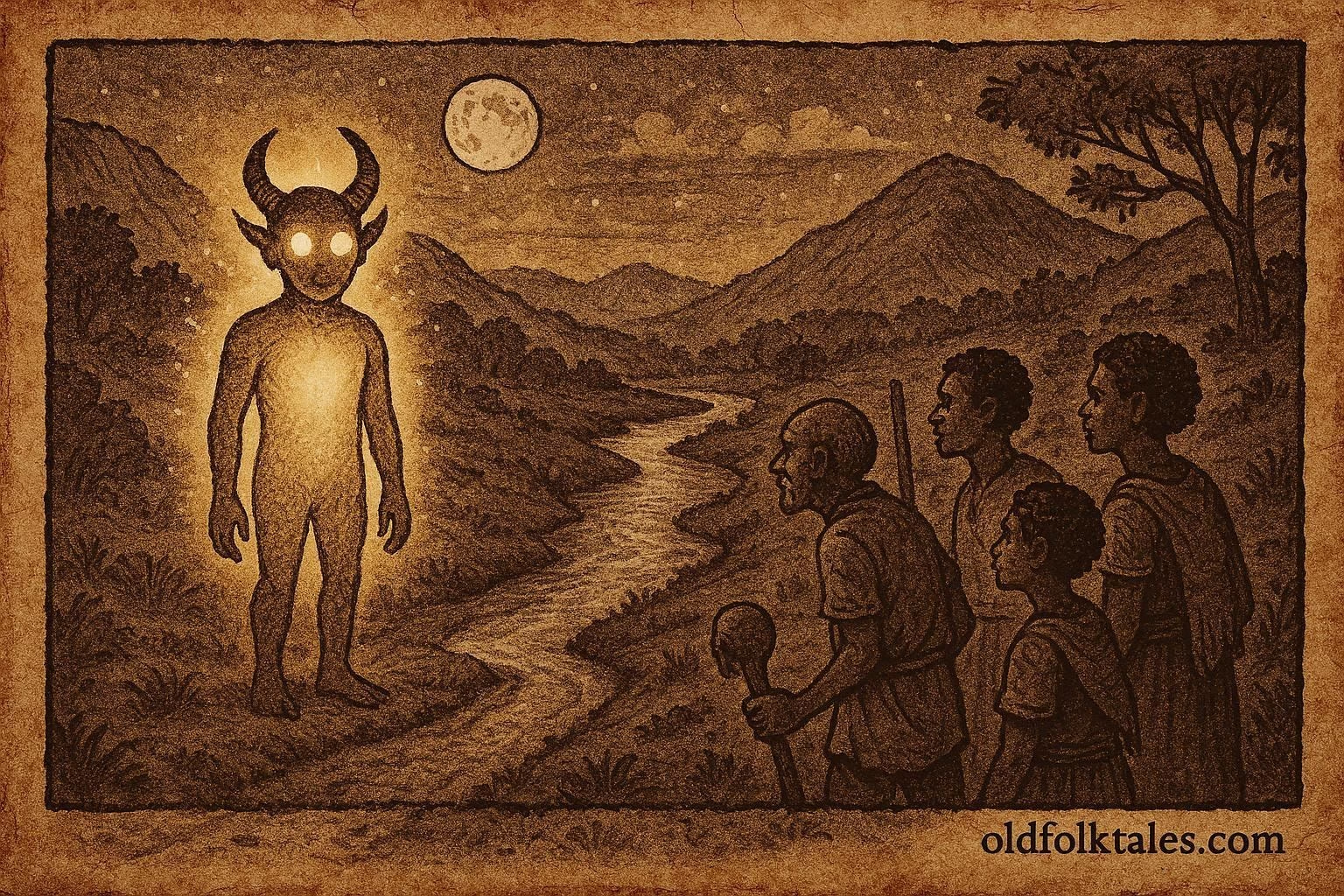
In the cool nights of the Goroka Valley, where the mist drifted slowly from ridge to ridge and the moon cast long pale shadows across the grasslands, people spoke in quiet tones about the Night Masalai. The elders said it was a spirit of the land, ancient and ever watchful. It walked only after sunset, slipping silently between gardens and riverbanks, carrying warnings for those willing to listen. The Masalai did not speak with a human voice. Instead, it sent signs through dreams, through sudden wind, through the cry of birds at unusual hours, or through the rustling of leaves without any breeze.
For generations the people respected these signs. When the Masalai warned of sickness, families stayed together and shared herbs that strengthened the body. When it warned of danger on the paths, the hunters waited until the spirit’s signal changed. The valley thrived because the people understood that harmony with the unseen kept the visible world safe.
But as time passed, the younger generation began to doubt. They grew impatient with old rules and questioned why a spirit’s warning should hold more weight than their own judgment. They respected the Masalai in name, but they no longer listened deeply.
One evening a farmer named Kanim returned home from his garden just as the sun set. His daughter, Sana, greeted him at the doorway with a troubled expression. She said she had heard tapping noises outside her window the previous night. Three taps at regular intervals. She felt certain it was the Masalai giving a sign.
Follow the paths of legendary warriors, kings, and demigods who defined ancient honor
Kanim frowned but said nothing. He had once been attentive to such things, but the demands of work and the changing ways of the valley had dulled his instincts. He assured Sana that it was probably just a branch falling or the movement of a night bird. Sana did not argue, yet she felt unsettled.
That night the tapping returned, stronger and clearer. Sana woke and felt a presence outside the house. She peered through the woven cracks in the wall. In the moonlight she saw a shadow standing beneath the yam vines. It had the outline of a person but shimmered slightly, as if made of mist. The shadow slowly raised an arm and pointed toward the river path. Sana gasped and stepped back. When she looked again the figure was gone.
At sunrise she told the family what she had seen. Kanim hesitated, torn between caution and disbelief. Some relatives urged him to take the warning seriously. Others insisted that spirits had no place in modern life and that the valley should rely on its own strength. The debate grew heated, but in the end most chose to dismiss the warning.
Later that morning several youths prepared to travel along the river path. Their baskets were already full of trade goods and they were eager to reach the next village before the afternoon rains. Sana begged them to wait. She reminded them of the Masalai’s warning. They laughed gently and said the river path had always been safe.
As the sun climbed the sky the travelers set off. Meanwhile Kanim worked in his garden, trying to push away the unease that clouded his thoughts. When midday came a sudden silence fell over the valley. The birds stopped calling. Even the usual rustling of grass in the highlands wind vanished. People paused in their work and looked toward the river.
A deep rumble arose. It grew louder and louder until the ground trembled. A surge of water burst through the trees and tore across the riverbank. A landslide had crashed into the river upstream, releasing a powerful wave of debris. The valley shook with the roar of churning stones and rushing water.
Shouts and cries filled the air. Men and women rushed to the river’s edge but could not cross. The path had been swallowed by mud and uprooted trees. The travelers had not returned. The shock of the disaster spread through the valley like a cold wind.
At dusk the Masalai returned.
Its presence drifted through the dark fields. Some saw a silhouette near the broken path. Others heard its voice in the wind crossing the ridgeline. This time the spirit did not warn. It mourned. The people felt the weight of its grief settle over their homes. They understood then that they had ignored not a superstition but a guardian whose purpose was to protect.
That night the families gathered in the largest house of the village. The elders spoke with great seriousness. They recalled how their ancestors had once relied on the Masalai’s signs and how peace had prevailed when people listened with humility. The disaster had not been a punishment but a consequence of forgetting the bond between land, spirit, and community.
Sana stood quietly beside her father. Kanim felt a heavy sorrow. He held her hand and whispered that he would never again doubt the spirit that watched over the valley. The elders decided to hold a ceremony the next evening to honor the Masalai. They prepared food, lit torches, and sang the old songs that called to the unseen guardians of the land.
When the night ceremony began, the air grew calm. A soft light moved between the trees and hovered just beyond the circle of torches. The Masalai had come. It watched as the people offered their voices, their gratitude, and their renewed promise to listen. The spirit did not speak, but its presence felt warm and steady. When it faded into the darkness the valley felt lighter, as if balance had gently returned.
From that day forward the people of the Goroka Valley listened once more to the Night Masalai. And the valley remained safe, not because danger never came, but because the people remembered that they walked alongside a guardian who warned them with patience and care.
Explore the shadows of world mythology, where demons test the soul and spirits watch over mankind
Author’s Note
Masalai spirits in Papua New Guinea are often understood as guardians of land and community. They protect families but also enforce moral and social harmony. Much like the story above, documented accounts show that danger arises not from the Masalai itself but from people ignoring its signs.
Knowledge Check
-
Why did the people originally respect the Night Masalai?
They believed it protected the valley by giving warnings through signs and dreams. -
What signs did Sana experience before the disaster?
She heard tapping at night and saw a shadow figure pointing toward the river path. -
Why did the youths ignore the warning?
They believed the Masalai was an outdated superstition and trusted the river path’s history of safety. -
What caused the disaster in the valley?
A landslide upstream created a destructive surge of water that flooded the river path. -
How did the villagers respond after realizing they had ignored the Masalai’s warning?
They held a ceremony, renewed their respect for the spirit, and restored the old practices of listening. -
What lesson does the story teach about heeding spiritual warnings?
Ignoring signs can lead to avoidable danger, while humility and communal unity bring protection.
Source
Adapted from research on Masalai spirit belief systems described in Melanesian Journal of Theology Vol. 29 No. 2 published in 2013.
Cultural Origin: Eastern Highlands, Goroka Valley, Papua New Guinea, Melanesia






