
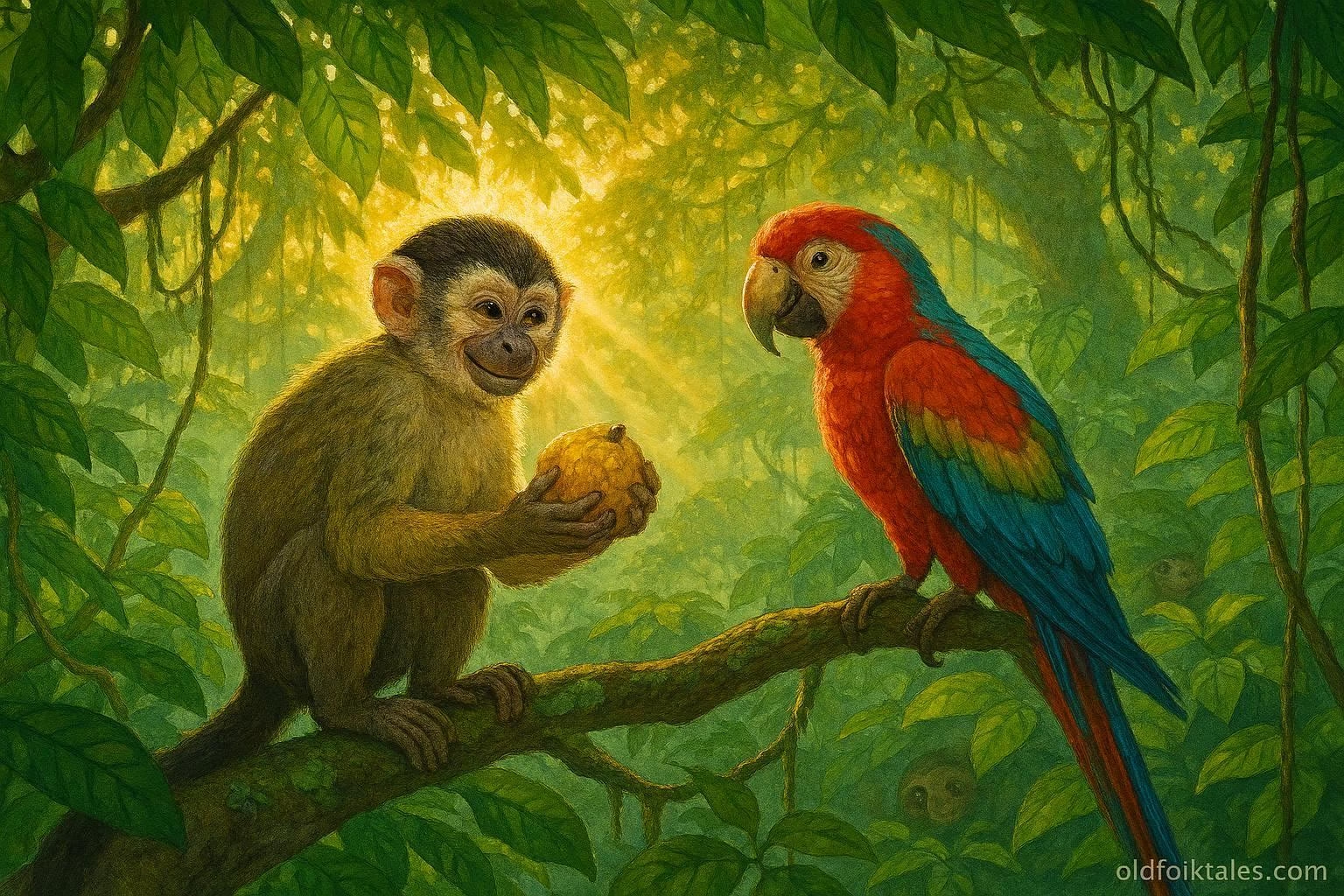
In Amazonian indigenous culture, animals are not just creatures of the forest, they are teachers, mirrors, and guides for human behavior. Among them, the monkey and the parrot hold a special place. The monkey embodies wit, resourcefulness, and playful intelligence, while the parrot represents observation, foresight, and the power of communication. Through fables, oral traditions, and proverbs, these creatures illustrate human traits, teaching lessons about cleverness, social interactions, and ethical conduct.
Proverbs featuring the monkey and parrot often highlight the subtle art of navigating complex social and natural environments. The jungle is a classroom: understanding the rhythms of life, observing the behaviors of others, and knowing when to act are all essential for survival. Wisdom, in this context, is both practical and strategic, it involves using intellect, empathy, and awareness to respond to challenges wisely.
The sayings compiled here capture the richness of Amazonian storytelling. They emphasize that cleverness and insight are not simply tricks, but tools for ethical behavior, foresight, and successful interaction with both people and the environment. Each proverb provides guidance on navigating life’s complexities with intelligence, humor, and moral awareness.
100 Proverbs on Wit, Cleverness, and Social Insight
1. “The monkey who climbs slowly avoids the hunter.”
Patience and caution prevent danger.
2. “The parrot repeats only what it understands.”
Wisdom comes from comprehension, not mimicry.
3. “Even the cleverest monkey learns from the parrot’s watchful eye.”
Observation teaches insight.
4. “A monkey’s prank teaches more than a stern word.”
Playfulness can reveal important lessons.
5. “The parrot listens before it speaks.”
Foresight enhances communication.
6. “He who laughs first may fall last.”
Cleverness requires timing.
7. “The monkey’s tail shows the way to hidden fruit.”
Resourcefulness uncovers opportunity.
8. “Even a quiet parrot can alert the forest.”
Small acts of awareness have impact.
9. “The monkey learns by trying, the parrot by observing.”
Different approaches to intelligence are equally valid.
10. “Wisdom travels faster than wings.”
Insight spreads quickly when shared.
11. “The parrot warns before the snake strikes.”
Foresight prevents harm.
12. “A monkey’s curiosity teaches the jungle’s secrets.”
Exploration uncovers hidden truths.
13. “Even a clever parrot cannot mimic honesty.”
Ethics cannot be faked.
14. “The monkey jumps where others hesitate.”
Courage and cleverness often go hand in hand.
15. “A parrot’s echo can remind the wise of danger.”
Reflection on repeated signals informs decisions.
16. “The monkey steals fruit, but the parrot steals attention.”
Different types of cunning achieve different goals.
17. “Even the smallest parrot may have the loudest warning.”
Size does not determine influence.
18. “The monkey’s laughter hides lessons.”
Humor can teach deeper truths.
19. “The parrot flies to observe before it chooses a tree.”
Assessment before action ensures success.
20. “Cleverness without thought is a monkey without a tail.”
Intelligence requires guidance.
21. “The parrot repeats, but the monkey understands.”
True understanding surpasses rote behavior.
22. “A monkey’s path twists, but it reaches the river.”
Adaptability leads to success.
23. “Even the forest respects a cautious parrot.”
Careful actions earn respect.
24. “The monkey that shares fruit gains friends.”
Generosity strengthens relationships.
25. “A parrot’s words can change the wind’s direction.”
Influence grows through communication.
26. “The clever monkey counts the branches before it leaps.”
Planning prevents mistakes.
27. “Even a colorful parrot keeps secrets of the canopy.”
Appearances can hide wisdom.
28. “The monkey sees the hidden path others miss.”
Observation uncovers opportunity.
29. “A parrot learns the forest’s gossip and survives.”
Awareness of surroundings ensures safety.
30. “The monkey tests the fruit before it bites.”
Caution prevents harm.
31. “Even the loudest monkey cannot hide a timid heart.”
Bravado cannot replace true courage.
32. “The parrot repeats lessons, not mistakes.”
Focus on learning, not failure.
33. “A monkey’s mischief teaches humility.”
Errors provide valuable insight.
34. “The parrot’s watchful eye avoids hidden traps.”
Observation mitigates risk.
35. “Cleverness without morality is a monkey in a snare.”
Ethics guide intelligence.
36. “The monkey imitates, the parrot reflects.”
Action informed by thought is superior to blind mimicry.
37. “Even the parrot admires a brave monkey.”
Courage is universally respected.
38. “The monkey who hoards fruit forgets the forest.”
Selfishness limits perspective.
39. “The parrot repeats truth; the monkey discovers it.”
Learning combines observation and experience.
40. “Cleverness without listening is foolishness.”
Intelligence requires attentiveness.
41. “The monkey’s jump teaches the tree to bend.”
Actions can influence others subtly.
42. “Even a parrot’s mimicry carries wisdom if watched carefully.”
Observation turns imitation into insight.
43. “The monkey counts before it steals.”
Planning prevents errors.
44. “A parrot that repeats evil learns nothing.”
Repeating harm perpetuates folly.
45. “The monkey who laughs last laughs best.”
Patience enhances success.
46. “Even a quiet parrot sees what a monkey misses.”
Different perspectives complement each other.
47. “The monkey tests the river with one paw.”
Careful experimentation prevents mistakes.
48. “A parrot’s colors warn the wise of danger.”
Signals provide guidance if interpreted.
49. “Cleverness without empathy is a forest without shade.”
Intelligence must be tempered by compassion.
50. “The monkey learns from every fall.”
Experience is the teacher of wisdom.
51. “Even the parrot must obey the wind.”
External forces limit freedom; adapt wisely.
52. “The monkey shares the best fruit with the clever parrot.”
Collaboration amplifies success.
53. “A parrot’s chatter reveals hidden truths.”
Communication exposes reality.
54. “The monkey observes before it imitates.”
Reflection improves understanding.
55. “Even the boldest monkey benefits from the parrot’s warning.”
Heed advice, even when confident.
56. “The parrot learns to speak without disturbing the forest.”
Wisdom balances expression and discretion.
57. “The monkey counts the leaves before it leaps.”
Attention to detail ensures safety.
58. “Even a small parrot can change the monkey’s plan.”
Influence comes in many forms.
59. “Cleverness hides in plain sight like a monkey in the trees.”
Subtlety is powerful.
60. “The parrot flies high but returns to the same tree.”
Perspective and roots coexist.
61. “The monkey that shares fruit wins trust.”
Generosity strengthens bonds.
62. “Even the parrot admires careful planning.”
Foresight earns respect.
63. “A monkey without a path gets lost in the jungle.”
Strategy is essential.
64. “The parrot listens to the wind before flying.”
Patience guides action.
65. “Cleverness is knowing when to speak.”
Timing enhances effectiveness.
66. “The monkey counts the branches to avoid mistakes.”
Preparation prevents failure.
67. “Even the loudest parrot is ignored if it lacks truth.”
Substance outweighs noise.
68. “The monkey’s mischief teaches others caution.”
Observation of mistakes is instructive.
69. “A parrot’s wisdom grows with age.”
Experience deepens understanding.
70. “Even the monkey respects the parrot’s advice.”
Humility enhances learning.
71. “Cleverness without patience is a broken branch.”
Rushing destroys potential.
72. “The parrot notices the ripest fruit first.”
Observation identifies opportunity.
73. “The monkey sees the hidden paths under the canopy.”
Intelligence uncovers unseen options.
74. “Even a timid parrot warns the cautious.”
Small insights can be life-saving.
75. “The monkey who jumps too quickly trips.”
Impatience leads to failure.
76. “A parrot’s echo reminds the forest of past mistakes.”
Memory preserves learning.
77. “Even a clever monkey must eat to survive.”
Practicality tempers ambition.
78. “The parrot learns from the monkey’s errors.”
Observation converts mistakes into lessons.
79. “A monkey without a tail loses balance; a parrot without listening loses wisdom.”
Tools and attention support success.
80. “Cleverness shines brightest when guided by ethics.”
Intelligence must align with morality.
81. “Even the smallest monkey can trick the largest predator.”
Size does not determine influence.
82. “A parrot’s words echo longer than its wings fly.”
Wisdom communicated endures.
83. “The monkey hides its fruit, the parrot hides its plan.”
Discretion is part of strategy.
84. “Even the boldest parrot respects the jungle’s rules.”
Rules govern action, regardless of skill.
85. “Cleverness without kindness is empty.”
Ethics temper intelligence.
86. “The monkey’s leap reveals hidden branches.”
Action uncovers opportunity.
87. “Even the parrot’s silence teaches.”
Quiet observation instructs deeply.
88. “The monkey who waits wins the ripest fruit.”
Patience yields reward.
89. “A parrot sees the storm before the rain falls.”
Foresight prevents harm.
90. “Even the forest respects cleverness tempered by virtue.”
Ethical intelligence earns respect.
91. “The monkey’s laughter teaches resilience.”
Joy strengthens survival.
92. “The parrot repeats truth, not lies.”
Discernment preserves wisdom.
93. “Even clever monkeys obey the forest’s law.”
Rules cannot be ignored.
94. “The parrot’s words can calm the monkey’s fear.”
Communication aids cooperation.
95. “A monkey’s mischief may hide a lesson.”
Errors teach subtly.
96. “Even the quietest parrot can stop a fight.”
Observation and diplomacy prevent conflict.
97. “The cleverest monkey observes the simplest detail.”
Attention to small facts informs strategy.
98. “The parrot knows more than it speaks.”
Wisdom is often hidden.
99. “Even a playful monkey shows courage in need.”
Fun does not preclude responsibility.
100. “Wit guided by virtue outlives strength and speed.”
Ethical intelligence endures beyond raw ability.
Author’s Note
These Amazonian proverbs illustrate that intelligence and social insight are not measured solely by speed or strength but by observation, foresight, and ethical discernment. The monkey and parrot guide us to approach life with wit tempered by morality, courage balanced by patience, and cleverness informed by reflection. The forest teaches through every leap, flight, and song: a reminder that true wisdom arises from both action and mindful awareness.
Knowledge Check
- What traits does the monkey symbolize?
Resourcefulness, cleverness, playfulness, and adaptability. - What traits does the parrot symbolize?
Observation, foresight, communication, and discernment. - Why is ethical guidance emphasized alongside cleverness?
Because intelligence without morality can lead to harm or failure. - How do monkey and parrot proverbs complement each other?
They show that action and observation together create effective wisdom. - What role does patience play in these proverbs?
Patience ensures opportunities are fully realized and mistakes avoided. - What overarching lesson emerges from all 100 proverbs?
True social and practical wisdom combines wit, foresight, observation, and ethical conduct.






