The Festa dei Ceri, or “Corsa dei Ceri,” is a centuries-old festival held annually in Gubbio, a medieval town in Italy’s Umbria region. Its origins are documented as early as 1160, though many scholars suggest that the festival overlays older spring or propitiatory rites dating to pre-Roman Umbrian traditions.
Dedicated to St. Ubaldo Baldassini, Gubbio’s patron saint, the festival merges religious devotion, civic identity, and communal celebration. Over the centuries, it has become emblematic of the town itself, demonstrating the fusion of faith, local legend, and pre-Christian seasonal ritual. Its endurance through centuries highlights the capacity of ritual to anchor communal memory and identity, blending divine reverence with the physicality of public performance.
Description of the Festival
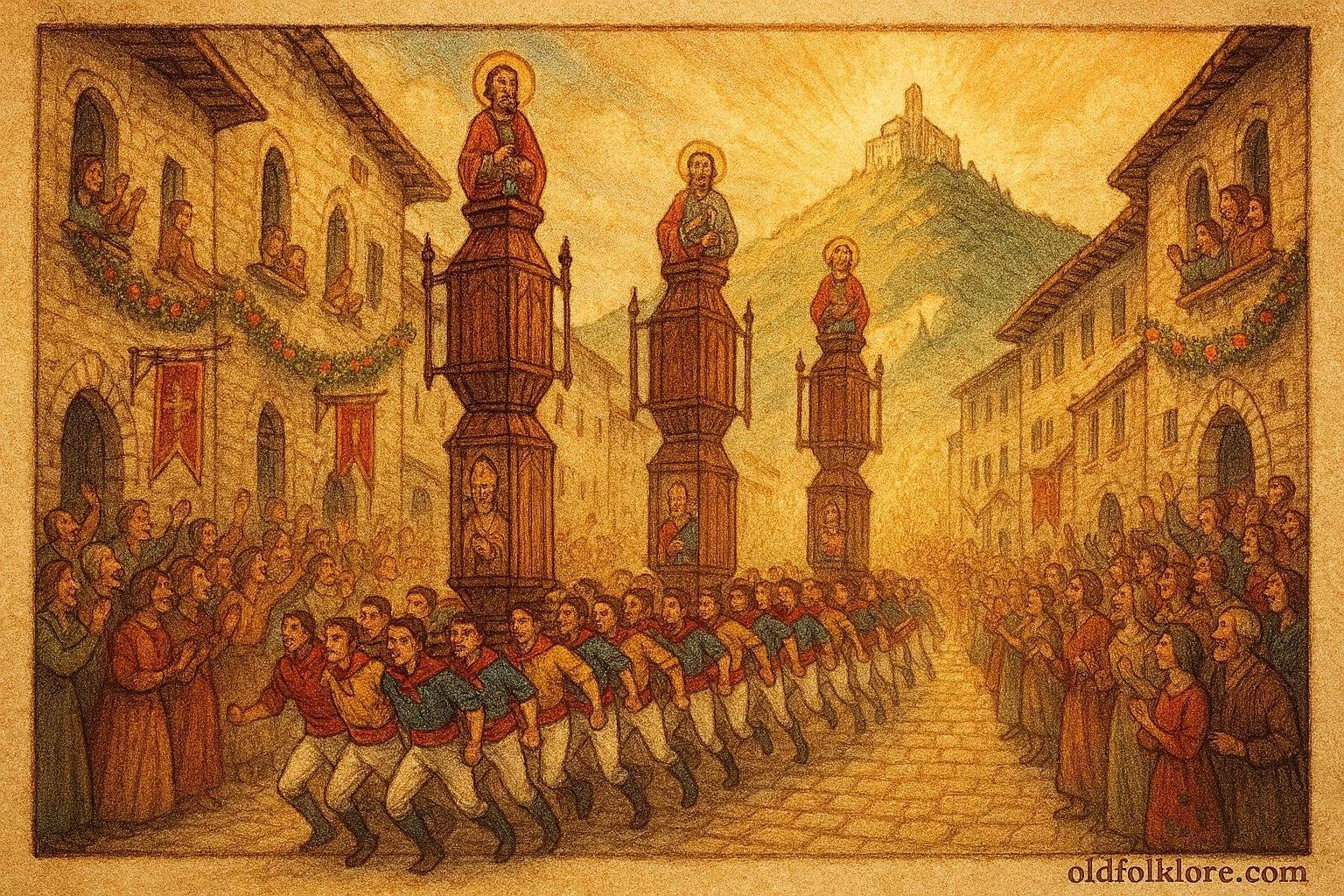
Festa dei Ceri takes place every 15 May, during a single, climactic event: the “Corsa dei Ceri,” or Candle Race. Teams of ceraioli, typically representing Gubbio’s three main districts, carry enormous wooden ceri, towering candle-shaped structures topped with statues of saints, through the town streets and up the steep incline of Mount Ingino, culminating at St. Ubaldo’s basilica.
Each ceri weighs several hundred kilograms, requiring coordinated teamwork, physical strength, and precise timing. The race is intensely competitive yet rooted in collective devotion: participants consider the act a form of honoring the saint, while spectators line the streets, cheering and participating in the festival atmosphere. Local music, traditional garb, and ceremonial rituals enrich the spectacle, creating an event that is both devotional and deeply civic.
The festival also includes ritual preparation, from cleaning and decorating the ceri to ceremonial prayers, blessing of the participants, and communal gatherings. These preparatory acts reinforce the intertwining of sacred observance with civic pride. The Gubbio celebration is unique in Italy for its combination of religious symbolism, physical exertion, and deep local attachment.
Mythic Connection and Symbolism
While St. Ubaldo anchors the festival in Christian devotion, the Festa dei Ceri retains echoes of older symbolic frameworks. The act of carrying heavy ceremonial objects in a communal procession is reminiscent of pre-Christian propitiatory practices, often associated with fertility, protection, and seasonal renewal. Some scholars trace elements of the festival to Umbrian spring rites, in which townspeople would engage in physical acts or processions to honor deities and ensure communal prosperity.
The three ceri represent the town’s main districts, symbolizing civic unity and cooperation. Each is topped by a saint effigy, blending sacred veneration with civic identity. The uphill procession mirrors a metaphorical ascent, a symbolic journey connecting the earthly community with divine protection.
In broader ritual terms, the festival enacts a physical offering: the effort and risk involved in transporting massive ceri reflect devotion, perseverance, and collective investment in the sacred. Through these acts, townspeople externalize faith and embody their relationship with St. Ubaldo, ensuring the saint’s protection over their community, livelihoods, and local identity.
Author’s Note
Festa dei Ceri exemplifies the fusion of religious devotion, civic identity, and pre-Christian symbolic frameworks. By blending physical exertion, communal participation, and ceremonial reverence, the festival demonstrates how rituals can anchor communities in both historical memory and shared spiritual values. Beyond a spectacle, it functions as a living link between generations, connecting medieval devotion to contemporary expressions of local pride and cultural continuity. The ascent of the ceri to Mount Ingino encapsulates the human desire to honor the divine through effort, unity, and celebration.
Knowledge Check
1. Who is the patron saint honored in Festa dei Ceri?
St. Ubaldo Baldassini, the patron saint of Gubbio.
2. When is the Corsa dei Ceri held each year?
Every 15 May.
3. What are “ceri” in the context of this festival?
Large wooden candle-shaped structures topped with statues of saints, carried by teams during the race.
4. How does the festival reflect pre-Christian traditions?
Through communal processions, physical exertion, and symbolic offerings reminiscent of Umbrian spring rites for fertility and protection.
5. How do the ceri represent civic identity?
Each ceri corresponds to one of Gubbio’s three districts, symbolizing unity, teamwork, and local pride.
6. What is the symbolic significance of carrying ceri uphill?
The ascent represents devotion, spiritual offering, and the community’s connection to divine protection.