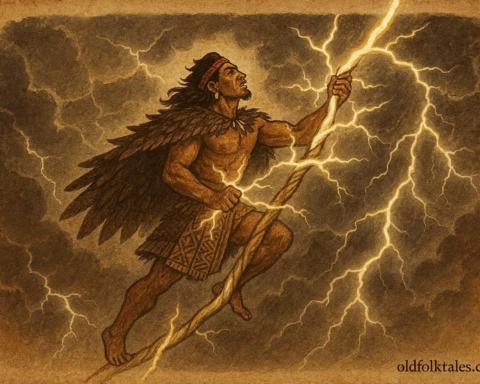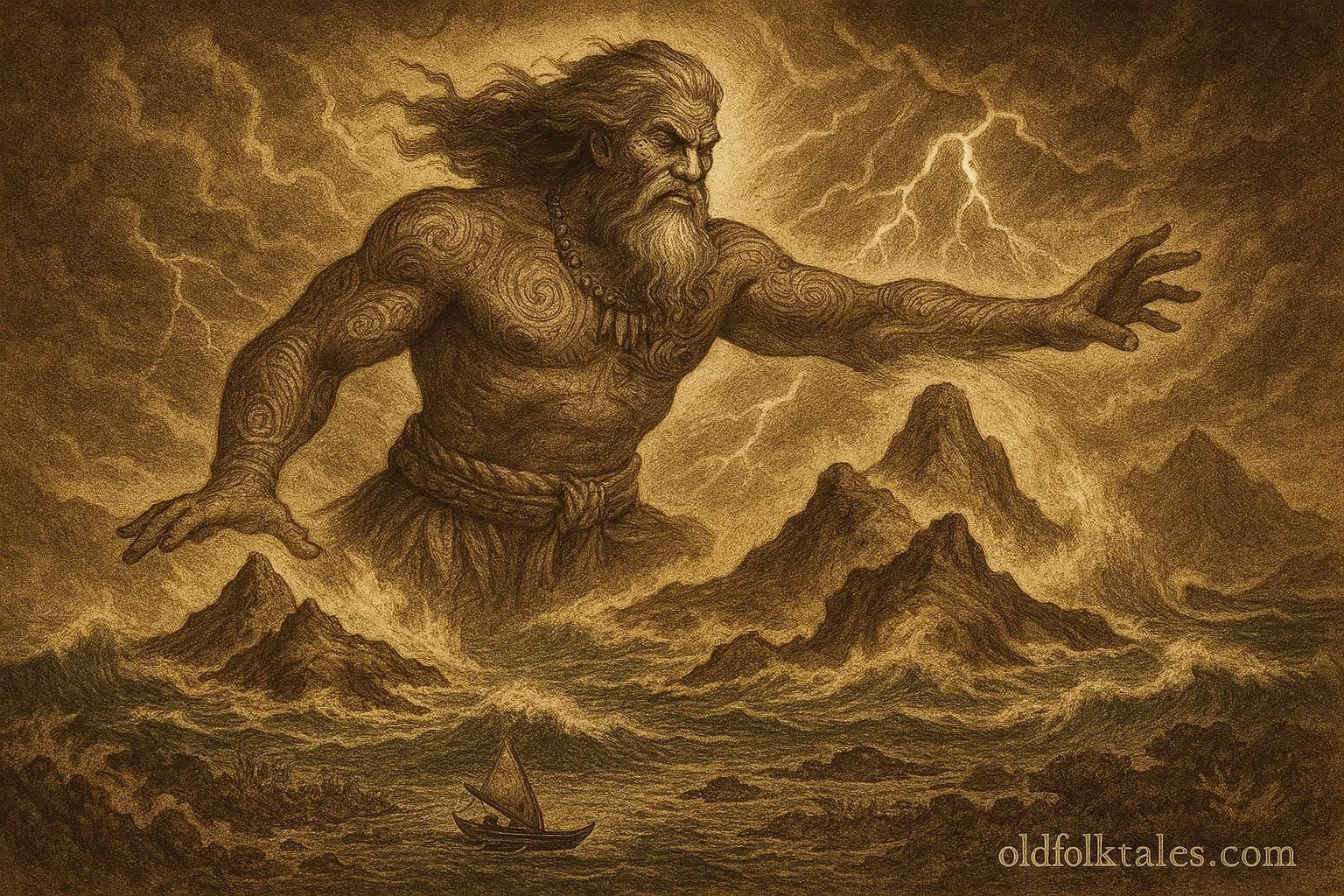
In the time before time, when the waters of the great deep stretched unbroken and the sky was yet a thin veil above, there was no land upon which humankind might tread. Only the endless sway of chaos, the thrashing currents, and the deep rumblings of the abyss filled the world. From this boundless turmoil arose Tangaroa-Tikitiki, the son of light and the ocean, whose very breath stirred the waves into life. Born with the strength of the tides and the vision of the heavens, he carried in his hands the promise of order, the gift of land, and the art of sustenance.
Tangaroa-Tikitiki gazed upon the waters and felt a stirring deep within his chest. “The earth must rise,” he declared, his voice rolling like thunder across the expanse. From his hair fell shimmering strands that became the first coral reefs; from his footprints, islands emerged, small at first, then growing with the pulse of creation. Yet the chaos of the waters would not relent. Whirlpools, leviathans of night, and storms of fire and water rose to challenge him, testing the limits of his divine strength and cunning.
To confront this primordial tumult, Tangaroa-Tikitiki called upon the sacred winds and the currents of the deep. With a mighty gesture, he split the seas, separating calm from tempest, guiding the waves into channels where they nourished the earth rather than swallowing it. The islands formed under his care, their peaks rising like the crowns of kings, their valleys fertile and deep. Each new land bore the mark of his thought: trees for shade, rivers for drinking, rocks for shelter, and lagoons teeming with fish.
Yet the hero faced a moral struggle as great as the physical challenge. He knew that the humans he would one day bring to these islands must live by the gifts of the sea, but they were fickle and prone to greed. The bounty of the ocean, if taken without respect, could vanish. Tangaroa-Tikitiki pondered the balance of giving and the discipline of the creatures of the deep. He crafted the first fishing tools: the hook, carved from bone, strong and curved; the net, woven from the fibers of the sea plants; and the canoe, light and steady upon the waters. “Let this be your pact,” he spoke into the wind, “to take only what you need, and the sea shall never fail you.”
In his solitude among the forming islands, Tangaroa-Tikitiki encountered the most profound trial: the primordial shadow of chaos itself, a swirling mass that sought to reclaim all that had been shaped. Its tendrils reached for the islands, eroding cliffs and drowning valleys. With courage drawn from the depths of his own being, Tangaroa-Tikitiki battled the shadow. He summoned whirlpools and redirected them, used the rising tides as shields, and with a final stroke of his spear, he bound the chaos beneath the waters, leaving the surface serene. In that act, he did not destroy the chaos entirely, for it is a part of the world, but he constrained it, giving it form and rhythm, so life could flourish between its bounds.
Having secured the land and sea, Tangaroa-Tikitiki turned his gaze to humanity. He molded the first people from clay and the driftwood of the ocean. He whispered to them the knowledge of the tides, the secrets of the fish, and the language of the waves. He taught them to read the stars and to honor the balance of life. And as he departed into the unseen depths, the islands he had shaped stood firm, the seas teeming with fish, and the humans with tools and wisdom enough to thrive. His mark remained on every shore, every reef, every current, a testament to the hero who bridged the divine and mortal worlds, who wrestled chaos into harmony, and who gave humans the knowledge to live with the sea rather than be devoured by it.
The people would call upon his name in song and prayer, invoking Tangaroa-Tikitiki whenever a storm threatened, a net failed, or a voyage began. His legacy was not merely in the islands themselves, but in the covenant between humankind and the sea, a moral order enshrined in both deed and respect.
Author’s Note
Tangaroa-Tikitiki stands as a symbol of creation’s complexity and the moral responsibilities of power. He embodies the heroic struggle against chaos, the divine art of shaping life, and the wisdom to impart necessary knowledge to humanity. Through his deeds, the myths of Māori and Tahitian peoples convey a deep understanding of balance between the natural world and human action, emphasizing stewardship and respect for the life-giving forces around us.
Knowledge Check
-
What primordial condition existed before Tangaroa-Tikitiki formed the islands?
-
How did Tangaroa-Tikitiki create the first landforms?
-
What tools did he give humans to interact responsibly with the ocean?
-
What moral challenge did Tangaroa-Tikitiki face regarding humans and the sea?
-
How did Tangaroa-Tikitiki confront the primordial chaos?
-
What is the symbolic significance of Tangaroa-Tikitiki’s legacy for humans and nature?
Cultural Origin: Māori & Tahitian cosmologies
Source: Beckwith, Martha (1940). Hawaiian Mythology.