Hula Kahiko represents one of the oldest and most sacred cultural expressions of the Hawaiian archipelago. Rooted in pre-contact Hawaiian society, this ritual form of hula predates European influence and was traditionally performed in temples (heiau) and ceremonial grounds. The dances were inseparable from Hawaiian spirituality, serving as a living link to gods, ancestors, and natural forces, and codifying cultural knowledge into embodied performance.
Central to Hula Kahiko is its mythological foundation. The practice honors deities such as Laka, the goddess of hula and creativity, and Pele, the volcano goddess, who embody the islands’ spiritual and natural energies. According to legend, Laka taught humans the sacred movements and chants, ensuring that ancestral wisdom, cosmology, and genealogy were preserved through ritualized storytelling in dance.
Description of the Ritual
Hula Kahiko is performed with strict ceremonial protocol, reflecting its sacred purpose:
-
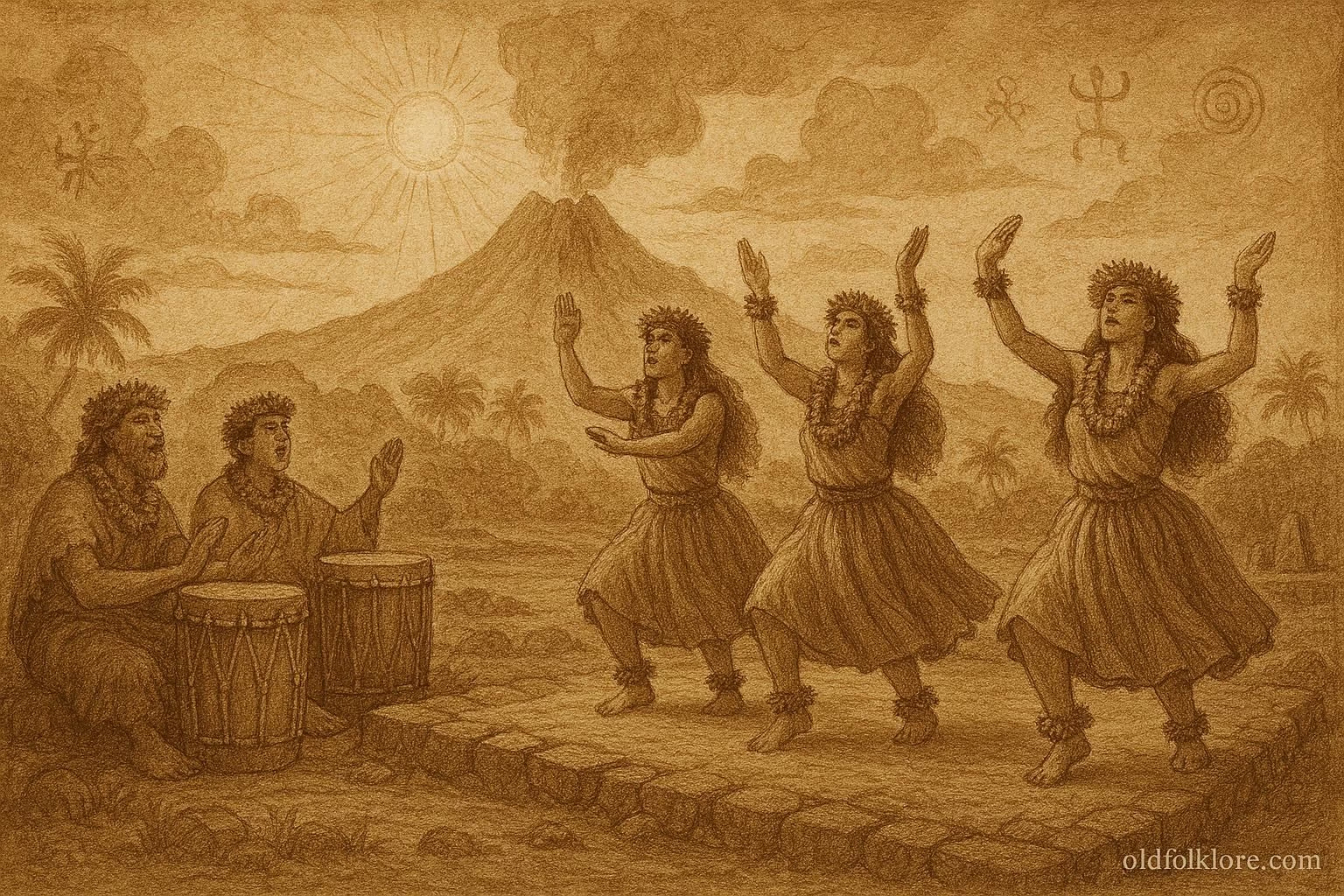
Location and Space: Dances are staged at heiau, sacred groves, or communal ceremonial grounds. The space is consecrated to create a connection between the earthly realm and the spiritual.
-
Attire and Adornments: Dancers wear traditional garments, including kapa cloth skirts, feathered leis, anklets, and wristlets, often incorporating elements symbolic of specific gods, natural phenomena, or genealogical lineages.
-
Chants (Oli): Each movement is accompanied by an ancient mele (chant), narrating myths, historical events, or genealogical accounts. The chants are meticulously memorized and recited in precise sequence, often emphasizing rhythmic intonation and spiritual resonance.
-
Movements and Gestures: Every hand gesture, foot placement, and posture conveys symbolic meaning, such as the flow of water, the eruption of a volcano, or the migration of ancestors. The movements encode cosmology, morality, and cultural memory.
-
Musical Accompaniment: Hula Kahiko uses traditional percussion instruments, including pahu (sharkskin drums) and ipu (gourd drums), to set rhythm and energy for the chant. These instruments, sacred in their own right, are essential to aligning dancers with spiritual frequencies.
The ritual was historically performed on festivals, seasonal celebrations, or rites of passage, marking birth, initiation, or transitions in the community, and reinforcing societal hierarchies and spiritual ethics.
Mythic Connection and Symbolism
Hula Kahiko’s significance stems from its direct embodiment of Hawaiian mythology. The dance enacts divine narratives, such as the creation of the islands, Pele’s fiery journey across the archipelago, or Laka’s teachings to humanity. Each performance invokes the gods for protection, fertility, and prosperity, while also reaffirming the interconnectedness of humans, ancestors, and the natural world.
Symbolically, Hula Kahiko embodies:
-
Spiritual Communication: Through chant and gesture, dancers act as mediators between the spiritual and human realms.
-
Ancestral Continuity: Genealogical chants preserve lineage and heritage, ensuring that cultural memory survives across generations.
-
Natural Reverence: Many movements mimic natural phenomena, waves, wind, volcanoes, expressing respect for the environment and the divine forces embodied within it.
-
Cultural Ethics: The ritual reinforces communal values, social order, and respect for sacred knowledge, reflecting the holistic integration of religion, governance, and ecology in Hawaiian society.
Hula Kahiko is thus more than artistic performance; it is a living archive of cosmology, morality, and ancestral veneration, maintaining a sacred dialogue between the past, present, and future.
Author’s Note
Hula Kahiko exemplifies how ritual, mythology, and community converge in Hawaiian culture. The ancient dance transforms history and cosmology into living memory, using physicality, chant, and sacred space to honor gods, ancestors, and nature. Beyond aesthetics, Hula Kahiko is a spiritual and social compass, teaching respect, continuity, and environmental mindfulness. Observing or participating in Hula Kahiko today provides insight into the profound interweaving of myth and daily life in Hawaiian tradition, a cultural legacy still vibrantly alive.
Knowledge Check
1. Who are the primary deities honored in Hula Kahiko?
Laka, goddess of hula, and Pele, volcano goddess, central to Hawaiian cosmology.
2. Where were Hula Kahiko rituals traditionally performed?
In sacred temples (heiau) and ceremonial grounds, connecting performers to the spiritual realm.
3. What role do chants (mele) play in the ceremony?
They narrate myths, genealogy, and cosmology, synchronizing dancers with spiritual energies.
4. How are movements in Hula Kahiko significant?
Gestures symbolize natural phenomena, ancestral actions, and divine narratives.
5. What instruments accompany Hula Kahiko?
Primarily pahu (drums) and ipu (gourd drums), providing rhythm and spiritual resonance.
6. How does Hula Kahiko connect to Hawaiian society?
It reinforces ancestral memory, community values, environmental respect, and social order.