The Hiri Moale ceremonies are among the most important cultural and spiritual traditions of the Motu people of Papua New Guinea’s southern coast. Rooted in centuries of maritime travel, these rituals commemorate the historic Hiri voyages, long-distance canoe expeditions undertaken to trade clay pots for sago with Gulf communities. More than practical trade missions, these voyages were deeply spiritual events, guided by ancestral blessings and sea deities believed to influence the ocean’s moods.
According to Motu oral histories, the tradition began when a woman named Edai Siabo observed the movement of the wind and tides, gaining sacred knowledge that made the voyages possible. This mythic figure is still honored today, symbolizing courage, foresight, and divine guidance. Because the ocean was understood as a realm inhabited by powerful spirits, the success of each voyage depended not only on skilled navigation but also on strict ritual observance.
Description of the Ritual
The Hiri Moale ceremonies unfold as a rich sequence of preparations, blessings, performances, and feasting. Each step reinforces community unity and spiritual protection.
1. Canoe Creation and Decoration
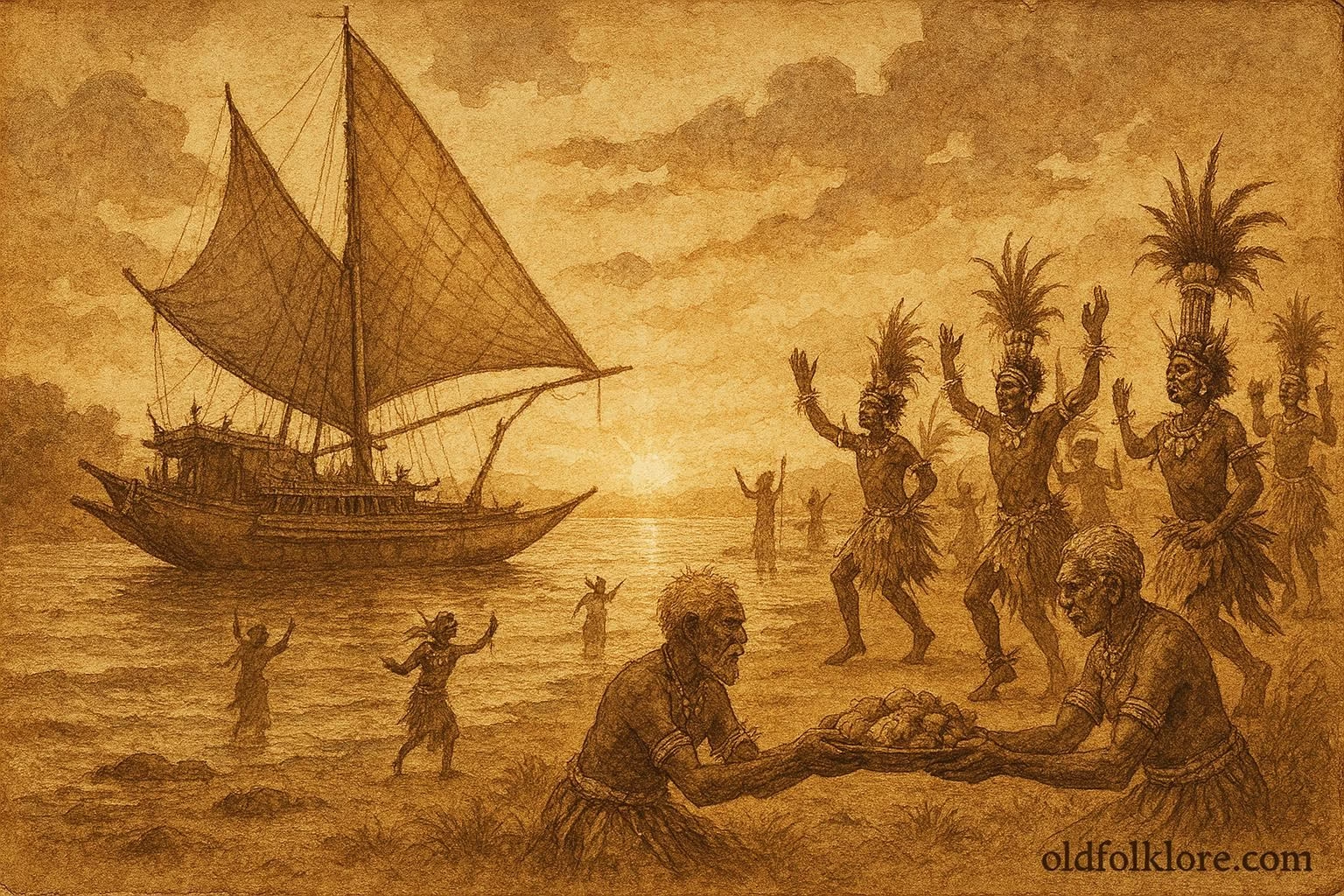
The canoes, known as lakatoi, are crafted with great care. Builders choose timber from specific species believed to contain protective spirit power. The hulls are lashed together with natural fiber ropes, and the distinctive crab-claw sails are woven from pandanus leaves. Before a canoe is declared complete, elders bless it with ritual chants and apply sacred markings to the prow. These symbols honor ancestral navigators and sea guardians, acknowledging their role in guiding the vessel.
2. Ritual Preparation of the Crew
Voyagers undergo a period of spiritual and physical cleansing. Some clans require temporary seclusion, while others emphasize food prohibitions or abstinence to sharpen the crew’s focus. Elders recite protective spells that invoke the spirits of the wind, waves, and deep currents. These rites build confidence while reinforcing the belief that the canoe is not merely a vessel, it is a living companion entrusted with sacred responsibility.
3. Processions and Performances
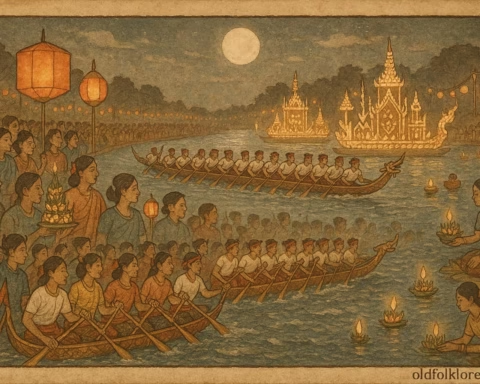
On the morning of the ceremony, the village gathers along the shoreline. The canoe is carried toward the water in a solemn yet celebratory procession. Women sing ancestral songs, their voices rising with the rhythm of drums and rattles. Dancers strike poses representing ocean creatures, ancestral heroes, and mythic journeys, transforming the shore into an animated tableau of Motu cosmology.
Spectators watch as the canoe is placed on the water. The crew boards with deliberate, ceremonial steps, acknowledging the sea spirits who dwell beneath the surface.
4. Blessings and Offerings
Before the canoe begins its symbolic departure, a senior elder delivers a formal blessing. Coconut water may be sprinkled across the bow; pandanus leaves are waved over the sails; and food offerings, often cooked sago, fish, or areca nuts, are cast into the sea. These gestures honor the deities who guard the currents and ensure calm winds on the journey.
Some variants of the ceremony include the sending off of spirits, represented by miniature symbolic canoes pushed gently into the waves. These offerings carry prayers for safe travel, good trade, and successful return.
5. Launch and Community Feast
The ceremonial paddling begins in slow, synchronized strokes. The crowd chants in unison, their voices echoing across the water. Although the Hiri voyages themselves are no longer undertaken, the ritual launch maintains the spiritual significance of the original practice.
After the procession, the community gathers for a large feast of gratitude, emphasizing unity, abundance, and the enduring legacy of Motu maritime life. Foods shared include sago, taro, fish, fresh fruit, and occasionally dishes prepared to honor specific clans.
Mythic Connection and Symbolism
The Hiri Moale ceremonies are deeply interwoven with Motu spiritual beliefs. The ocean is understood as a living being shaped by ancestral power, and each voyage reflects human harmony with this sacred environment.
-
Ancestral Guidance: Elders believe that past navigators, especially Edai Siabo, continue to steer the canoes through dreams and ritual signs.
-
Sea Deities: Spirits of currents, winds, and tides determine the voyage’s success. Their favor is sought through offerings and chants.
-
Symbolic Renewal: Each ceremony represents a rebirth of courage, a renewal of communal unity, and a reminder that survival depends on cooperation with the natural world.
-
Trade as Sacred Exchange: Because the Hiri voyages involved peaceful inter-community exchange, they symbolize the ideals of reciprocity, balance, and shared prosperity, themes central to Motu cosmology.
In this way, the Hiri Moale is not only a cultural event, it is a ritual reenactment of ancestral wisdom and divine partnership with the ocean’s powerful forces.
Author’s Note
The Hiri Moale ceremonies remind us that spiritual heritage often emerges from the everyday needs of survival. For the Motu, the sea was both a pathway and a mystery, requiring courage, skill, and deep reverence. Watching a lakatoi glide into the water today is witnessing a story retold, a narrative shaped by memory, myth, and the enduring relationship between humans and the sacred ocean that sustained them.
Knowledge Check
1. What cultural group created the Hiri Moale tradition?
The Motu people of Papua New Guinea’s southern coast.
2. What inspired the original Hiri voyages?
A need for long-distance trade and guidance from the mythic figure Edai Siabo.
3. Why are canoes ritually blessed?
Blessings honor sea spirits and ensure protection during the symbolic voyage.
4. What materials are used for lakatoi sails?
Pandanus leaves woven into large, distinctive sails.
5. Why are offerings given to the sea?
To appease sea deities and ask for calm waters and safe travel.
6. What does the ceremony symbolize today?
Cultural resilience, ancestral continuity, and spiritual harmony with the sea.