Before memory sharpened into history and before mountains held their present names, the world trembled beneath the breath of the gods. In those primordial days, when the Sun still tested its strength and the Moon glided shyly across the heavens, there lived Yana, born of a mortal woman and fathered by Apu Illapu, lord of thunder and rain.
From the moment of his birth, storms answered to him. Clouds gathered when he cried, and lightning danced when he laughed. The people of the high valleys whispered that he walked in two worlds, the one under the Sun’s warm gaze and the one stretched high above where lightning was forged. Yana knew neither realm completely, yet felt bound to both. This dual nature weighed on him like a stone, for the path of a demigod is never a straight one.
Discover the ceremonies and sacred festivals that honored gods and balanced nature’s powers
One year, the balance of the world faltered. Humanity, swollen with pride, mocked the gods who had raised them from the dust. They forgot offerings, neglected sacred places, and spoke as if they themselves commanded the rivers and skies. Apu Illapu, offended and sorrowful, lifted his spear of storm and declared that a great flood would sweep away the corruption of humankind.
Yana heard this decree whispered across thunderheads. Though he shared blood with the divine, his heart beat with mortal compassion. He walked among the people, saw their fears, their hopes, their small kindnesses that easily escaped divine notice. He pleaded with his father, saying, “Not all have forsaken reverence. Spare those who still carry goodness.”
But the decree of a god, once cast upon the wind, cannot be recalled.
The rains came.
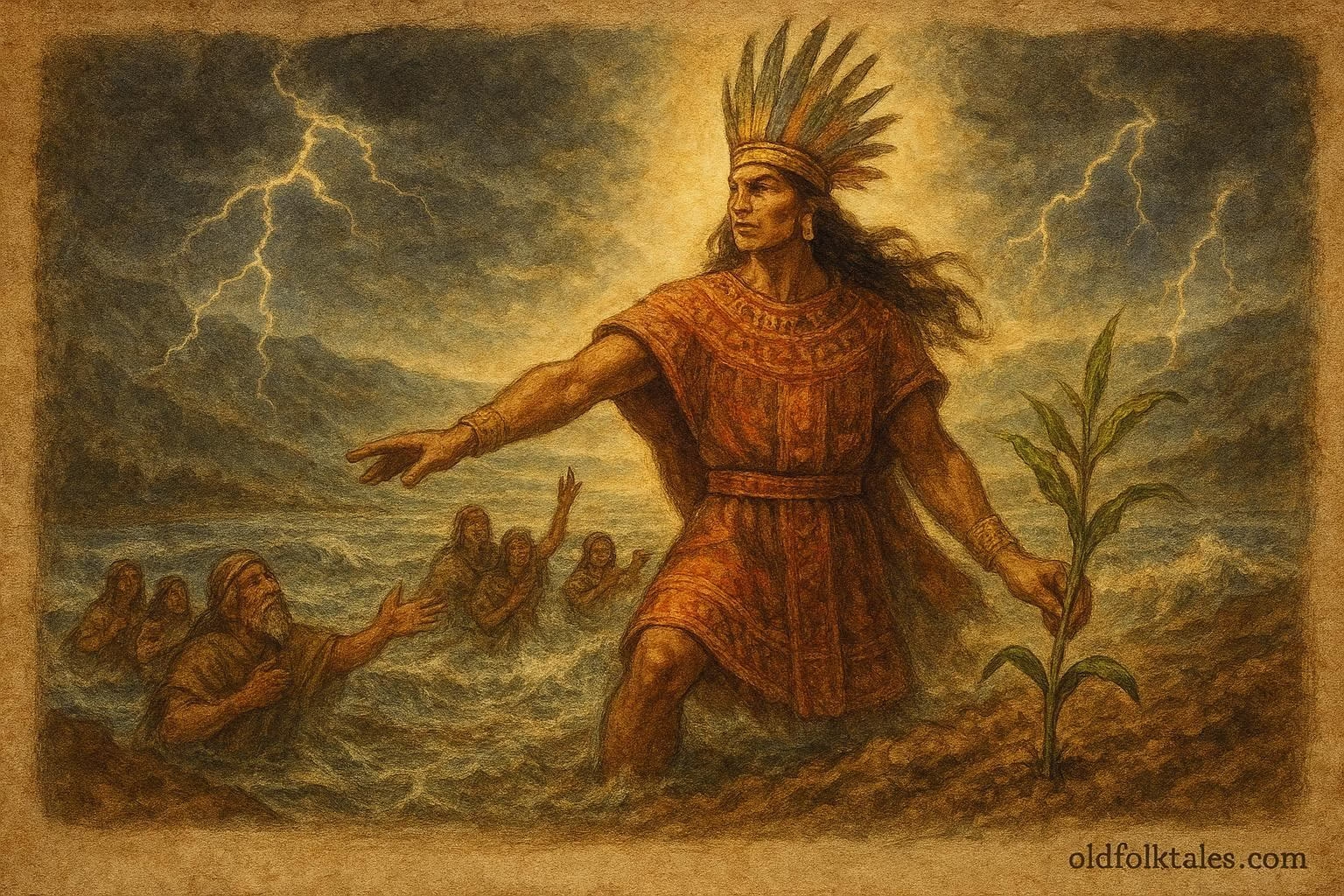
They poured like shattered sky. Rivers grew fangs, lakes rose like beasts, and the valleys filled until only the highest mountains pierced the churning sea. Yana climbed with his sister, Mama Quilla-Warmi, to a peak where the waters could not yet reach. There, as the world drowned below, he made a vow upon the storm: “If life must end, then I will birth a new beginning.”
For days uncounted, the waters pressed against the mountain. But Yana, inheritor of storm and flesh, carved a refuge into the rock with lightning from his own hands. He fed his sister with roots and kept her warm with fire coaxed from soaked wood, no small feat when the world was nothing but rain.
Yet even as he shielded life, Yana felt the weight of his father’s judgment. Was he defying the gods? Or fulfilling a deeper law, one that demanded that life, once sparked, must continue?
When the flood began to retreat, pulling back like a wounded serpent, Yana carried his sister down the reborn land. Where mud covered the plains, he planted the first seeds of maize. Where silence lingered, he taught the first chants of gratitude. And when humanity emerged again, few and trembling, shaped by survival, Yana guided them like a patient guardian.
He journeyed across the mountains and valleys, leaving teachings like footprints for future generations. He taught the people how to coax terraces from steep cliffs, how to read the language of clouds, how to honor the unseen powers in stone and stream. He taught them laws born from the flood’s memory: respect the earth, honor the gods, cherish community, and never let pride drown wisdom.
But Yana’s greatest challenge was not the flood; it was the shadow cast by his divided nature. Mortals saw in him a god. Gods saw in him a mortal. He belonged wholly to neither. And so he walked the world with a quiet sorrow, knowing that the people he had saved would one day forget his voice and remember only echoes.
One night, as he camped alone near the highest peak, Apu Illapu descended in a blaze of blue fire. The storm god regarded his son not with anger, but with a solemn pride.
“You defied the tide of my decree,” Illapu said. “Yet your rebellion gave birth to balance. Because you preserved humanity, they learned humility. Because you taught them order, the world stands stronger than before.”
Yana bowed his head. “Then am I forgiven?”
“There was nothing to forgive,” Illapu replied. “A world without compassion is as incomplete as a sky without rain.”
In that moment, the storm parted, and the stars unveiled themselves like watchers blessing a path. Yana rose into the heavens, becoming a guardian spirit who walks between cloud and earth. Travelers claim that on lonely nights, a figure of silver-blue light treads the mountaintops, ensuring that the balance once lost to the flood shall never again be broken.
Thus ends the tale of Yana, the Dawn-Bearer, the Survivor, the Teacher, he who walked out of the waters carrying the future upon his shoulders.
AUTHOR’S NOTE
Yana’s legacy endures as a symbol of renewal, moral responsibility, and compassion in the face of divine judgment. His teachings reflect the Inca worldview: harmony with nature, reverence for the sacred, and the belief that leaders must guide with wisdom born from hardship. His myth stands as a reminder that even in eras of destruction, new worlds can be shaped by courage and mercy.
KNOWLEDGE CHECK (6 Questions)
-
Who was Yana’s divine father?
-
What caused the gods to send the flood?
-
How did Yana ensure survival during the deluge?
-
What teachings did Yana give to the renewed humanity?
-
What was Yana’s moral struggle throughout the story?
-
How did Apu Illapu ultimately respond to Yana’s actions?
CULTURAL ORIGIN: Inca mythology of the Andean highlands of pre-Columbian South America.
SOURCE: Based on Inca flood traditions recorded by Juan de Betanzos in Narrative of the Incas (1551).