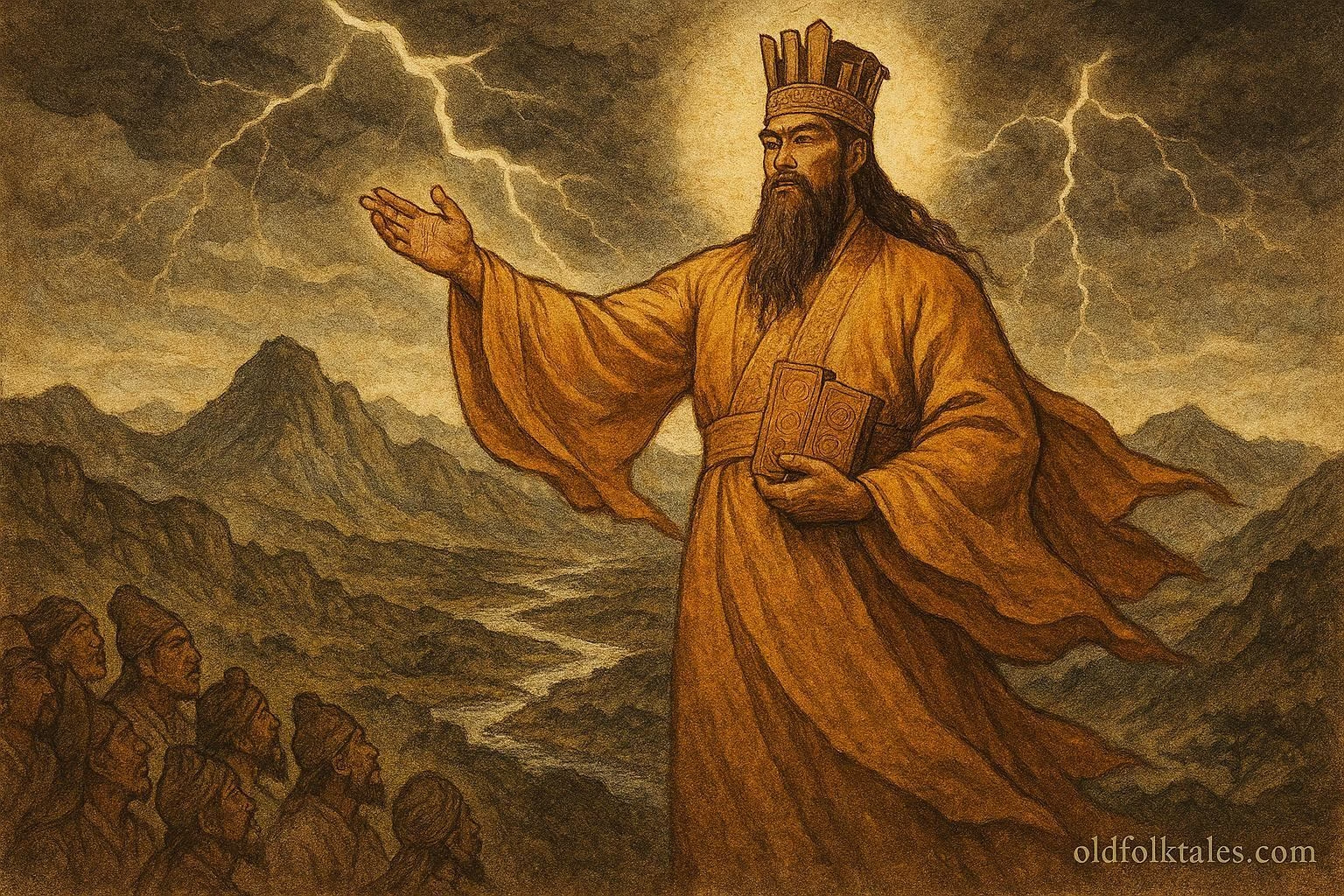
In the age before ages, when mountains still whispered the first names of rivers and the sea had not yet settled its tides, the Heavenly Realm looked down upon the young peninsula resting beneath the clouds. Hwanin, Lord of Heaven, perceived that the earth trembled with longing for wisdom and order. Among humanity rose no leader strong enough to unify the scattered tribes. Thus, father of Dangun, Hwanung, son of Heaven, descended upon Mount Taebaek with a host of spirits at his side, bearing the Three Heavenly Seals to guide the destiny of humankind.
He founded a sacred city upon the mountain slopes, a place where winds carried divine purpose. There he judged right and wrong, sent down blessings of rain and cloud, and taught the first laws of life. Among the creatures who lived near the mountain were a bear and a tiger, each yearning to leave the wild and join the world of humans. They approached Hwanung and bowed low, asking to become human beings of virtue.
Discover the ceremonies and sacred festivals that honored gods and balanced nature’s powers
Hwanung, seeing sincerity in their eyes, gave them a test:
“For one hundred days, dwell in darkness, nourished only by sacred mugwort and garlic. Endure, and you shall be transformed.”
The tiger’s impatience drove it out long before the appointed days. But the bear, steadfast and silent, kept her vigil. On the final day, she stepped from the cave no longer as beast, but as a woman radiating humility and devotion. Though grateful, her heart ached with longing for a child. She prayed each dawn at the divine altar, calling out to Heaven for grace.
Moved by her devotion, Hwanung took her as his companion, and from their union was born a son whose destiny shimmered like dawn over the mountains: Dangun Wanggeom.
Dangun grew swiftly, his mind clear as winter skies and his strength steady as great oaks. He learned from celestial spirits and earthly sages alike. From Heaven he inherited wisdom; from his mother, human compassion. As he walked among the tribes of the land—who lived in scattered clans across mountains, valleys, and riverbanks, he felt within him a calling deeper than lineage: the call to unite the people into one harmonious nation.
Yet obstacles rose like shadows before him. Rival clan leaders guarded their territories with distrust. Others feared that a ruler of divine blood would eclipse their own power. Even nature challenged him; torrential rains, fearful winds, and beasts stirred by ancient magic threatened the scattered settlements. But Dangun pressed on with a heart made firm by purpose.
He traveled across the peninsula, seeking not conquest but understanding. To some clans he brought peace through dialogue; to others, protection from marauding forces; to still others, the sacred teachings of Hongik Ingan, the ideal of “broadly benefiting humankind.” Many found in him a beacon, a promise that they could rise above chaos and live under a shared destiny.
One moonless night, the rival Fire-Clan rose in rebellion, claiming that no ruler descended from spirits should hold dominion over mortals. Their warriors marched with torches, seeking to seize the sacred mountain. Dangun met them at the valley of Asadal, not with sword alone, but with a plea for reason. But their chieftain, consumed by ambition, refused to hear. Battle became inevitable.
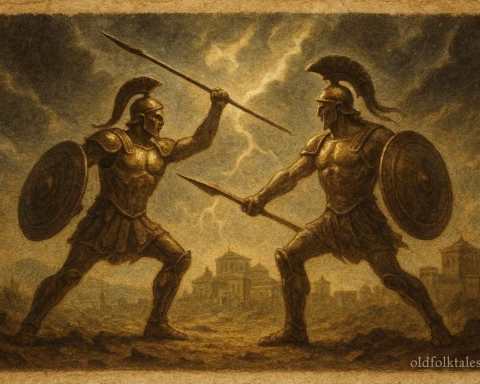
The clash lasted three days. Fire met wind, spear met shield, and chants of courage echoed through the forests. Dangun, though mighty, hesitated to take lives, for he was born to uplift, not destroy. This hesitation weighed on him, and for a moment doubt threatened to undo the clarity of his purpose.
But remembering his mother’s perseverance and his father’s command to guide humankind, he finally lifted his voice above the storm of war:
“If I spill blood, let it be only to protect life. If I raise my hand, let it be only to restore harmony.”
With renewed determination, he subdued the Fire-Clan chieftain, yet spared his life, offering peace in place of punishment. Awed by such mercy, the Fire-Clan laid down their arms and swore loyalty.
With the land now unified, Dangun founded the kingdom of Gojoseon in 2333 BCE, raising the first banners of Korea. Under his rule, villages became cities, laws were written to honor justice, and agriculture flourished. People spoke of a golden age when harmony between Heaven, Earth, and humanity blossomed in every field and hearth.
For fifteen hundred years he reigned, guiding his people through prosperity and hardship. When at last he perceived that his earthly mission had been fulfilled, Dangun did not pass into death as mortals do. Instead, he journeyed to the sacred mountain and vanished into its mists, becoming a mountain spirit, an eternal guardian of the Korean people.
Thus, the nation born from Heaven and Earth carried onward his legacy of virtue, unity, and the divine ideal of Hongik Ingan.
Author’s Note
Dangun stands not only as the legendary founder of the first Korean kingdom but also as a symbol of moral rulership rooted in compassion and celestial wisdom. His story merges myth with national identity, offering a timeless message: that the greatest leaders rise not from power, but from the desire to benefit all humankind.
Knowledge Check
-
Who were Dangun’s parents, and what did each contribute to his identity?
-
Why did the bear succeed in Hwanung’s trial while the tiger did not?
-
What guiding ideal did Dangun promote while unifying the tribes?
-
How did Dangun resolve the conflict with the Fire-Clan?
-
What was the symbolic importance of founding Gojoseon?
-
How does Dangun’s departure at the end reflect his divine nature?
Cultural Origin: Korean mythic and national foundation tradition; East Asian cosmology emphasizing harmony between Heaven, Earth, and humanity.
Source: Samguk Yusa (13th century), a Korean collection of legends, chronicles, and Buddhist tales compiled by the monk Iryeon.