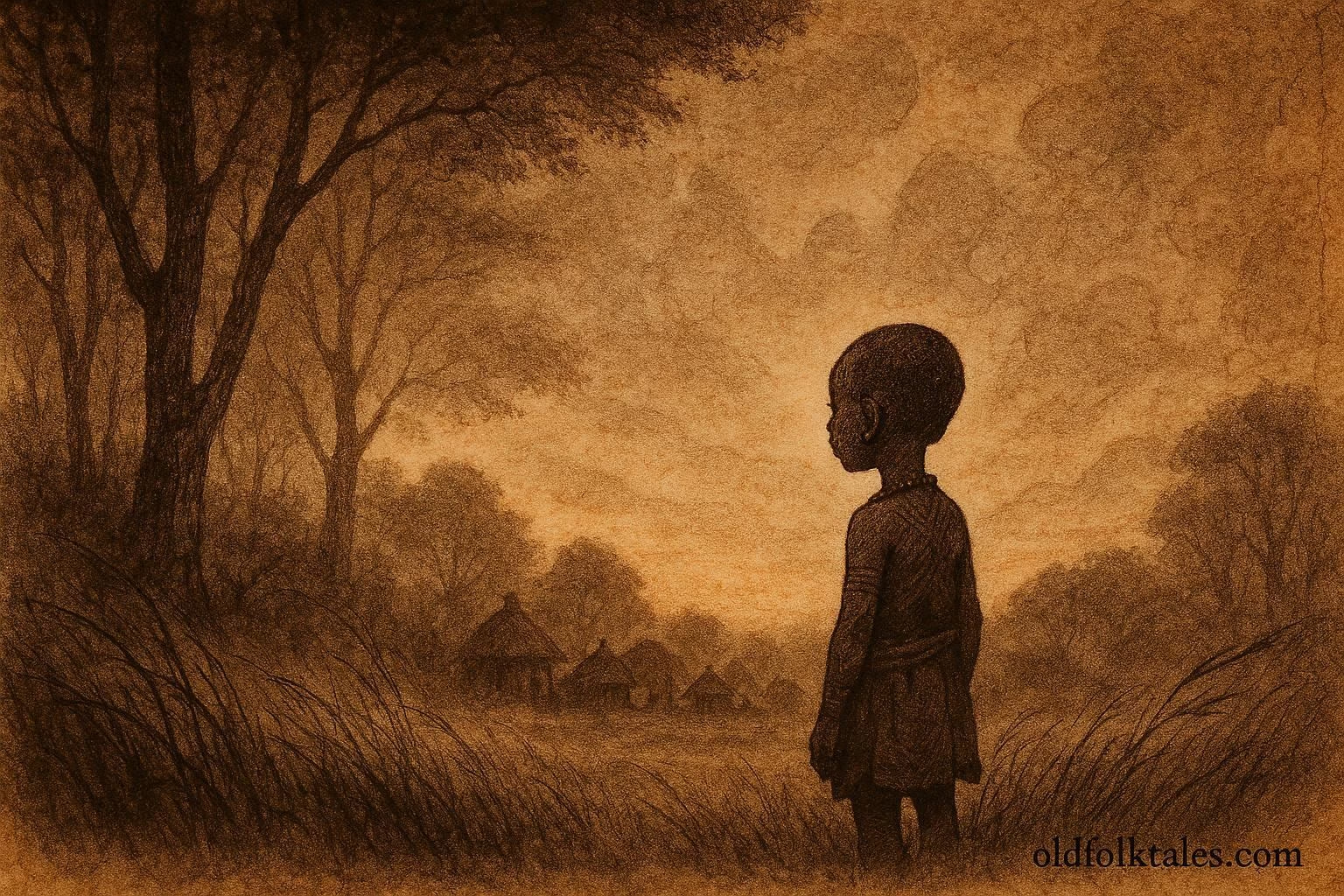
Among the most haunting and emotionally charged beings in West African mythology are the Abiku, spirit-children who enter a human family only to die young, return to the spirit world, and be born again to the same mother, repeating a painful cycle of birth and loss. Their name, most commonly preserved in the Yoruba language, translates roughly as “born to die” or “predestined to die.” Yet the concept resonates far beyond the Yoruba world; similar beliefs appear among the Edo, Igbo, Fon, and other neighboring cultures. Across these traditions, Abiku are understood not merely as spirits but as agents of a profound mystery: the fragile boundary between life and death, the unseen contracts of spirits, and the suffering that binds families to forces beyond human control.
Appearance and Nature
Abiku typically appear just like human children, beautiful, delicate, often unusually intelligent or precocious. Many tales say they possess a luminous quality in the eyes or an uncanny calmness, suggesting their otherworldly origin. Some versions describe birthmarks, scars, or subtle signs that distinguish them from ordinary children. In others, nothing reveals their true identity until illness descends swiftly and inexplicably.
Explore the shadows of world mythology, where demons test the soul and spirits watch over mankind
In Yoruba cosmology, Abiku belong to a spirit society, a hidden community that lives parallel to the human world. Before birth, they make a pact with their spirit companions, promising to return soon after entering the mortal realm. Their early death is not random: it is the fulfillment of this pact. Once they die, they rejoin their spirit peers, who celebrate their return and may send them back again, creating an unending cycle of grief for human parents.
Powers and Behaviors
The Abiku’s key “power” lies not in physical abilities but in spiritual agency:
- Recurrent Return / Reincarnation Cycle: The spirit-child is born, dies early, returns to the spirit world, and can be reborn to the same mother. This cyclical pattern is central to the myth.
- Influence of Spirit Companions: Abiku are bound to a spirit-group that encourages them to keep dying and returning. These companions may “call” the child back through dreams, illnesses, or invisible summons.
- Resistance to Healing: Illnesses associated with Abiku rarely respond to ordinary treatments. Only specialized rituals, charms, or divination can slow the cycle.
- Awareness Beyond Their Age: Some tales describe Abiku as eerily perceptive, speaking like adults, predicting events, or revealing knowledge impossible for a young child.
- Emotional Ambiguity: Abiku are not inherently malicious. Though their actions bring sorrow, many stories portray them as torn between two worlds, loving their human families yet unable to break their spiritual vows.
Stories and Oral Traditions
The world of the Abiku is dense with metaphor, fear, love, and the attempt to explain tragic realities. Several themes reappear across stories:
The Child Who Laughs at Rituals
In some tales, families perform protective rites, scarification, charms, incantations, but the child seems aware of everything, smiling knowingly, as though the rituals cannot touch them.
The Secret Names
Some Abiku bear names meant to confuse or discourage the spirit:
- Kokúmó:“He will not die again”
- Malọmọ:“Don’t go again”
- Kosoko:“There is no hoe to dig another grave”
These names reflect both desperation and hope: attempts to bind the child to life through language itself.
The Covenant Broken
A rare but powerful narrative is the story of an Abiku who chooses to remain with the human family. Through the intervention of a skilled diviner, a sacrifice to the child’s spirit-companions, or the fierce love of a mother, the cycle is broken. Such children often grow into extraordinary adults, healers, diviners, or individuals believed to possess a spiritual calling.
Cultural Role and Symbolism
The myth of the Abiku is not simply superstition, it carries profound emotional, philosophical, and historical weight.
- Explanation of Infant Mortality: For centuries, high infant mortality rates shaped West African communities. Abiku beliefs offered a spiritual explanation for repeated tragedy, allowing families to frame loss as part of a cosmic cycle rather than meaningless suffering.
- A Dialogue with the Spirit World: The Abiku story underscores the Yoruba worldview in which life is a continuous negotiation between humans and spirits. Existence is not random but guided by contracts, destinies, and invisible obligations.
- The Power of Names, Rituals, and Community: Naming, scarification, and ritual work were ways communities asserted agency against forces beyond control. They reaffirmed collective care in the face of grief.
- Ambivalence Toward Life and Death: Abiku symbolize the tension between longing and loss. They represent children who belong to two worlds, beloved yet distant, present but transient.
- Artistic and Literary Influence: Modern writers like J.P. Clark and Wole Soyinka have explored the Abiku theme, using it to express cycles of suffering, colonial trauma, and the deep resilience of African communities.
- Moral Lessons: Abiku myths teach perseverance, compassion, and the sacred duty of caring for the vulnerable, even when fate appears unyielding.
Encounter dragons, spirits, and beasts that roamed the myths of every civilization
Author’s Note
Abiku stories are among the most emotionally powerful in West African mythology. They confront the deepest fears and hopes of human life: the uncertainty of birth, the fragility of childhood, and the belief that the spiritual world is always intertwined with the physical. While some modern interpretations read Abiku simply as metaphors for childhood illness, the traditional worldview treats them as complex, sentient beings whose stories help families process grief, endurance, and love.
Knowledge Check
- What does “Abiku” mean in Yoruba?
“Born to die” or “one who is predestined to die young.” - Why do Abiku repeatedly die and return?
They have a spiritual pact with their spirit-group to leave the human world early. - How do families attempt to stop the cycle?
Through naming rituals, divination, charms, and protective scarification. - Are Abiku considered evil spirits?
Not necessarily; they are spirits caught between obligations to both worlds. - How are Abiku identified in stories?
Through unusual awareness, rapid illness, or spiritual signs. - What cultural idea does Abiku symbolism address?
The emotional and spiritual response to infant mortality and the fragility of life.
Source: Yoruba oral tradition; cross-ethnic West African cosmologies (Yoruba, Edo, Igbo, Fon)
Origin: Southwestern Nigeria and wider West African cultural sphere