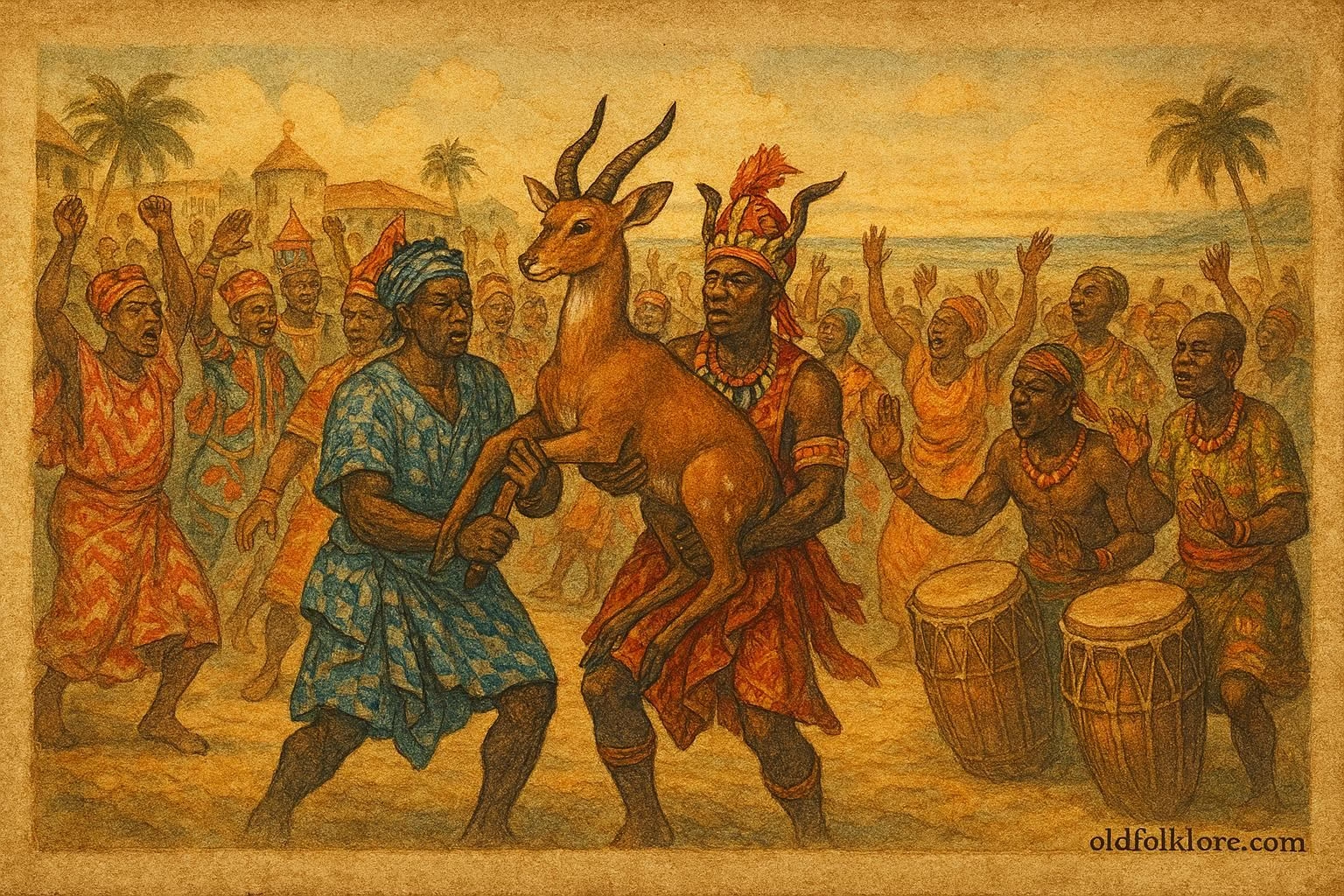
Aboakyir, meaning “hunting for the animal,” is the signature annual festival of the Effutu people of Winneba, a historic coastal community in Ghana’s Central Region. The festival is anchored in the origin story of the Effutu, who trace their lineage to ancient migratory movements guided by divine instruction. Oral traditions recount that the early Effutu sought protection from a powerful coastal deity, variously known as Penkye Otu, who demanded a yearly offering to secure the people’s survival and prosperity. At first, the sacrifice required a human royal, but over time, through negotiation and divine mercy, the requirement shifted to the capture of a live bushbuck. This transition marked a turning point in Effutu religious and civic identity. The hunt became a covenant of remembrance, gratitude, and renewal, connecting the living community to its founding ancestors and protective spirits.
Today, Aboakyir stands as one of Ghana’s most culturally distinctive festivals, attracting thousands of participants and visitors. Although modern influences have introduced music shows, civic parades, and tourism events, the ritual core, the competitive hunt and ceremonial presentation, remains unchanged and deeply revered.
Description
Preparations for Aboakyir begin long before the first drums are heard in Winneba. Two Asafo companies, the Tuafo (No. 1) and the Dentsifo (No. 2), ready themselves for the central task: to enter the forest and return with a live bushbuck. The Asafo companies are not merely “warrior groups”; they are guardians of Effutu history, custodians of sacred responsibilities, and embodiments of the town’s internal balance. Their rivalry is longstanding, yet it is ritualized and dignified, meant to motivate excellence rather than division.
In the days leading up to the festival, the town transforms. Flags are raised, sacred spaces are cleansed, and elders deliver prayers invoking the guidance of ancestors and deities. Youths polish drums, singers rehearse call-and-response chants, and families prepare festive clothing. At dawn on the appointed day, the Asafo companies gather in full regalia, bold cloths, symbolic body paint, and historical emblems, marching through Winneba with energy and purpose. Their movements echo the ancient journeys of Effutu hunters who once sought game in dense forests guided by spiritual intuition.
The hunt begins as each company enters the bushland outside Winneba. Although the details differ slightly each year, the principle remains: the bushbuck must be captured alive, using skill, speed, and teamwork. When one company succeeds, they return triumphantly, lifting the animal in a public display that announces their victory. The moment is electrifying, drumming intensifies, crowds surge, and the winning company’s chants fill the streets.
Upon returning to the ceremonial grounds, the captured animal is presented to the traditional authorities. Elders and priests offer blessings and acknowledgments, linking the hunt to the original covenant between the Effutu and their protective deity. The bushbuck, treated with ritual respect, becomes the symbolic bridge through which gratitude, protection, and communal identity are reaffirmed. A sacrificial rite follows, framed in spiritual honor rather than spectacle, and prayers are recited for peace, rainfall, fertility, and the wellbeing of Winneba.
After the rite, the festival shifts into its celebratory phase. Dancers whirl to the beating of drums; Asafo companies perform choreographed displays that combine historical memory with martial artistry. Families feast, friends reunite, and visitors join the crowd in appreciation of Effutu heritage. The day ends with speeches, blessings, and the quiet satisfaction that a covenant has once again been fulfilled.
Aboakyir is not simply a hunt. It is a civic ritual that binds the Effutu to their past, aligns them with the sacred forces that protect their land, and strengthens social cohesion through shared celebration. Each year the festival reminds the community that identity is both inherited and renewed.
Mythic Connection
The mythological heart of Aboakyir lies in the Effutu relationship with Penkye Otu, the deity who shaped their early survival and guided their migration. In Effutu cosmology, deities are not remote beings but guardians who anchor the community to place, destiny, and collective wellbeing. The annual offering is an act of remembrance, acknowledging that human prosperity depends on divine support.
The bushbuck itself carries layered symbolism. It represents vitality, fertility, and the wild abundance of the natural world. By capturing the animal alive, the Asafo demonstrate harmony with the forest’s spirit and mastery over ancestral land. The ceremonial presentation reenacts the foundational moment when the Effutu entered into covenant with the divine, transforming collective memory into ritual action. Thus Aboakyir is both historical narrative and living myth, an annual retelling of how devotion, courage, and divine favor shaped the identity of a people.
Author’s Note
This article examines Aboakyir as a ritual of identity, remembrance, and spiritual reciprocity within Effutu culture. It highlights how the festival’s competitive hunt, ceremonial offering, and communal celebration reenact foundational myths, reinforce social unity, and sustain the sacred covenant linking the Effutu community to its gods and ancestors.
Knowledge Check
1. What does “Aboakyir” mean?
It means “hunting for the animal,” referring to the ritual capture of a live bushbuck.
2. Which groups conduct the hunt?
The two Effutu Asafo companies: Tuafo (No. 1) and Dentsifo (No. 2).
3. What deity is honored during Aboakyir?
Penkye Otu, the protective deity associated with Effutu origins.
4. Why must the bushbuck be captured alive?
It symbolizes respect, skill, and a harmonious offering aligned with ancestral tradition.
5. How does Aboakyir reinforce community identity?
Through shared ritual duties, competition, celebration, and ancestral remembrance.
6. What modern elements now accompany the festival?
Civic parades, music shows, and tourism activities, alongside the ancient rites.