The people of the Solomon Islands have always lived close to the sea. It fed them, carried their canoes from one island to another, and gave them the rhythm by which their days were measured. The elders taught that the ocean was alive with spirits both kind and fierce, and none were more feared than the Adaro, the half human and half fish beings born from the violent thoughts of the great ocean god.
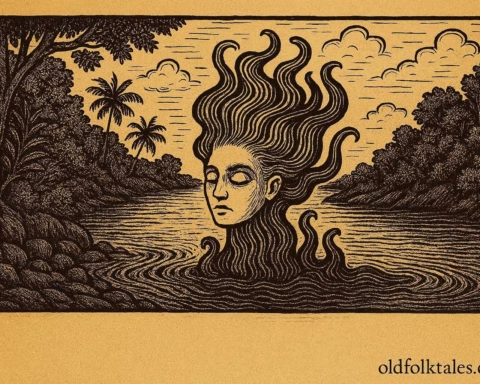
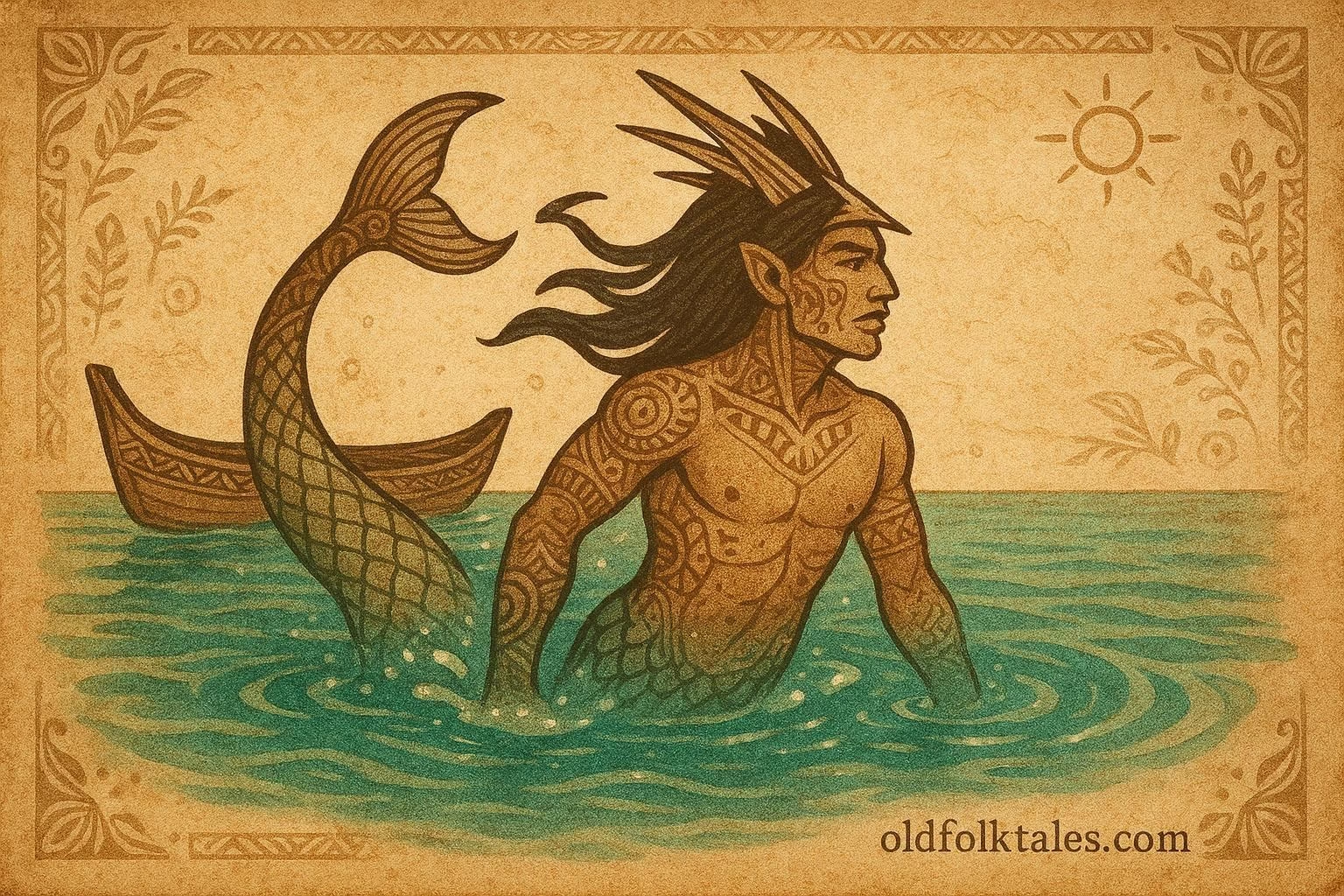
It was said that the Adaro lived where the sunbeams touched the water. They rose not from darkness but from light itself, slipping just beneath the shimmering surface. Their upper bodies resembled tall warriors with long hair that floated around them like seaweed, while their lower halves were scaled tails that moved with frightening speed. They carried spears invisible to human eyes, spears that struck not with wounds but with sudden sickness. If a fisherman grew careless with offerings or spoke arrogantly about his skill, the Adaro would hear it, and punishment would follow.
Among the people of Malaita lived a young fisherman named Tano. He was known for his quick laugh and his bold ways, and although he loved the sea, he did not always listen to the rituals taught by the elders. His grandmother had often warned him, The Adaro punish the heart that forgets gratitude. But Tano would shrug and say, The sea knows me. It gives me what I need.
Encounter dragons, spirits, and beasts that roamed the myths of every civilization
For a long time, this seemed true. Tano returned from every fishing trip with full nets and stories of large shadows gliding beneath his canoe. When others saw only waves, Tano claimed to see flashes of silver as if unseen guardians swam beside him. Pride grew in his heart. He began leaving for the sea at dawn without offerings of shell money or prayers of thanks. His friends reminded him of the traditions, but Tano laughed them off, certain that the sea favored him above all others.
One morning, the water glowed with a strange brightness. The sunlight shimmered so clearly that it was hard to tell where the sky ended and the sea began. Tano paddled out alone, humming to himself. At the reef edge, he felt a sudden warmth on his back, as though the sun itself had settled there. He ignored it, believing it was only the heat of the morning.
But beneath his canoe something stirred.
A long shadow slid past him, followed by another. The water rose in a single smooth swell, and from the top of that swell emerged a face. It was human yet not human, beautiful yet dangerous. Its eyes flashed like polished shell, and its hair drifted like strands of living coral.
Tano froze. He knew instantly what it was. An Adaro.
The spirit lifted its spear shaped hand. No wind moved. No wave broke. The world fell into perfect stillness.
Then something struck Tano in the chest. Not a blow but a cold that spread through him like deep water filling his lungs. The spirit vanished beneath the surface, leaving only a faint ripple.
Tano collapsed inside his canoe.
When he was found drifting hours later, fever had taken his strength. His skin burned. His breath came in short gasps. His people carried him home and cried out for the elders. They knew exactly what had happened. The Adaro had hurled their invisible spear.
The healer of the village came at once. She placed cool leaves on Tano’s body and whispered prayers older than memory. His grandmother sat at his side, weeping softly. She reminded him of every warning she had ever spoken. You forgot to thank the sea, she said. You forgot to honor the ones who guard its depths.
For three days Tano lay in darkness. He dreamed of currents pulling at him, of bright eyes watching from below, of the sound of a spear striking the surface like a drop of rain. On the fourth day, the healer instructed the family to take offerings of shell money, coconut oil, and the finest fish from the village to the shoreline. There they performed the ritual known as the Asking of Calm Waters. They placed the gifts at the tide line and sang chants of gratitude that rose and fell with the waves.
That night the sea grew quiet. The stars reflected on the water like a carpet of light stretching to the horizon. A gentle wind touched Tano’s home, entering through the doorway with a coolness that smelled of salt and peace.
By dawn, Tano awoke.
His grandmother knelt beside him, relief washing over her face. He tried to sit up, and though he was weak, he felt the fever leaving him like a departing tide. The elders told him that the Adaro had heard the offerings. The sea had accepted the ritual. He had been given another chance.
From that day forward, Tano changed. He never stepped into his canoe without placing gifts into the water. He never spoke of the sea as if he owned it. He understood that the Adaro were not cruel but guardians of a balance that humans must honor.
When children asked him why the Adaro attacked him, Tano would answer, Because I forgot gratitude. The sea gives life, but it also remembers disrespect. Treat the water as your elder and it will protect you. Forget its spirit and even sunlight can hide danger.
And so the people of the Solomon Islands continued to live with the ocean as their oldest companion, knowing that beneath its shining surface swam spirits who defended its beauty, its rhythm, and its mystery. The Adaro remained a reminder that every gift demands respect and that harmony with the natural world is not a choice but a way of life.
Author’s Note
This folktale reflects the cultural message that the sea is alive, aware, and deserving of gratitude. Through the actions of the Adaro, the story teaches the importance of humility and respect for the natural world, reminding readers that balance between humans and nature is essential for survival.
Knowledge Check
1. Who are the Adaro in Solomon Islands tradition?
They are half human and half fish spirits born from violent thoughts of the ocean god.
2. What triggers the anger of the Adaro?
Disrespect for the sea and failure to observe rituals of gratitude.
3. What weapon do the Adaro use against humans?
Invisible spears that cause sudden illness.
4. Why did Tano fall ill in the story?
Because he neglected offerings and acted pridefully toward the sea.
5. How did the villagers restore balance after Tano’s illness?
They offered shell money, fine fish, and chants of gratitude through the Asking of Calm Waters ritual.
6. What is the main moral teaching of this tale?
Respect for nature and honoring ancestral rituals ensures safety and harmony.