
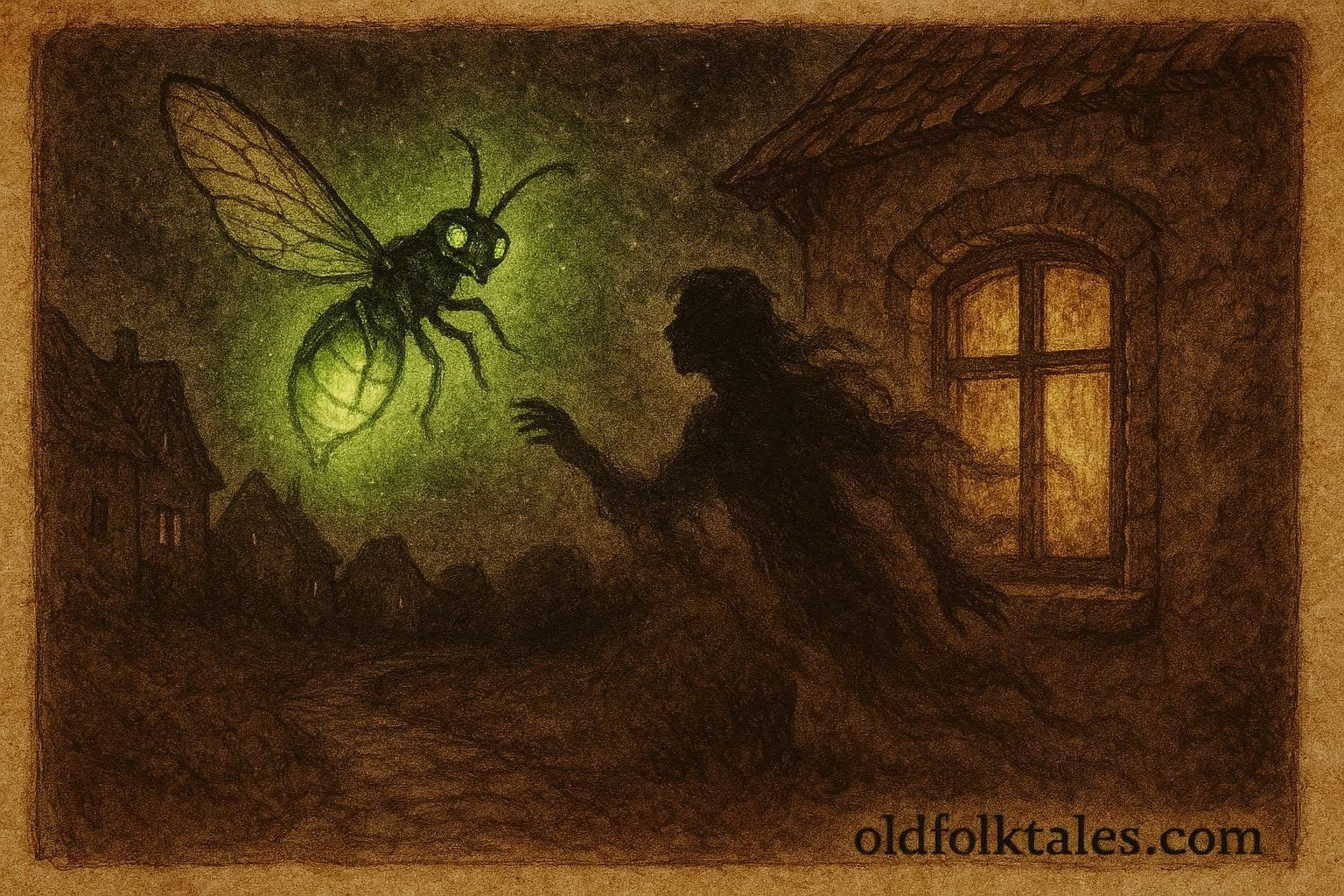
In the dense forests and coastal villages of Ghana and Togo, the night sky often sparkles with the glow of countless fireflies. Among the Ewe people, however, not every light is harmless. Some are said to belong to the Adze, a spirit that drifts unseen through the night, entering homes as a firefly or mosquito to drain the life of sleeping victims.
The Adze is more than a simple spirit. It embodies envy, gossip, and the corrosive power of hidden malice. Its light is a lure, a reminder that appearances can deceive. Stories warn children and adults alike to guard their hearts and avoid jealousy, for the Adze can turn it into a weapon.
Long ago, in a village near the banks of the Volta River, there lived a young woman named Afua. She was known for her kindness, her weaving skill, and her devotion to her family. Yet not all admired her virtues. One neighbor, consumed by envy, wished secretly that Afua’s success would vanish.
One humid night, Afua awoke feeling unusually weak. Her body ached, and her energy was gone. She noticed a faint green light dancing near her window. Unaware, she reached toward it, and the light darted closer, almost like a playful insect. By dawn, her strength had been greatly diminished.
Learn the ancient stories behind deities of light, storm, and shadow from cultures across the world
Afua’s family called the village elders, who recognized the signs immediately. “The Adze walks among you,” said the oldest elder. “It hides in form, feeds on life, and thrives on envy. If we do not act, it will consume more than the body. It will poison hearts and spread misfortune.”
The elders performed a ritual that night, gathering iron, salt, and sacred herbs. They summoned the protective spirits of the river and forest, chanting until the fireflies seemed to flicker uneasily in the darkness. In the early hours, the Adze revealed itself, not as a firefly, but as a human figure shrouded in shadow, the face of the envious neighbor revealed.
The village watched as the spirit shrank back, powerless in the face of honesty and protective rites. Afua regained her strength, and the community learned a vital lesson: evil often hides in plain sight, and jealousy left unchecked can harm more than one life.
From that night onward, villagers practiced vigilance. Windows were left open for air but covered with fine nets. Children were taught to speak kindly and avoid envy. Offerings of herbs and firewood were placed at thresholds to guard against nocturnal spirits. Songs and stories reminded everyone that the Adze could take flight in the smallest form, yet its consequences were vast.
The Adze continues to serve as a moral lesson among the Ewe. When someone spreads gossip or desires another’s success without goodwill, elders remind them, “Do not feed the Adze.” Its presence in folklore reflects a culture attuned to the dangers of envy and the importance of ethical behavior in maintaining communal harmony.
Some claim that even today, fireflies that hover too long near a window at night are watched carefully. If a green glow lingers unusually, people recite prayers or leave protective charms, honoring both the spirits of the forest and the lessons of their ancestors.
In these stories, the Adze is not simply a demon or a predator. It is a mirror of human emotion, a warning that jealousy, deceit, and ill-will can manifest in unexpected ways. By recognizing its presence, communities learn to cultivate honesty, humility, and care for one another.
Author’s Note:
The tale of the Adze reminds us that danger often arises not only from the visible world but also from hidden emotions within communities. By personifying envy and malice in a spirit, Ewe folklore teaches that vigilance, honesty, and compassion are essential to protect both body and spirit. The Adze is a reminder that morality, when practiced collectively, preserves life and harmony.
Knowledge Check:
1. What is the Adze in Ewe folklore?
It is a spirit that can take the form of a firefly or mosquito to drain vitality from sleeping victims.
2. How does the Adze enter the human world?
It appears as a small flying insect, often near windows or in homes, hiding its true nature.
3. What emotions or human behaviors does the Adze represent?
Envy, gossip, and hidden malice that can harm both individuals and communities.
4. How did the villagers protect Afua from the Adze?
Through ritual offerings of iron, salt, sacred herbs, and invoking protective spirits.
5. What moral lesson does the Adze legend teach?
That jealousy and ill intent can have real consequences and must be controlled to maintain harmony.
6. How is the Adze relevant to Ewe culture today?
It serves as a cautionary tale to encourage honesty, humility, and care within the community.






