In the dense and lively forests of the Fang people in Cameroon, the trees towered high into the sky, their thick leaves forming a canopy that filtered sunlight into soft, shifting patterns on the forest floor. Streams wound silently among the roots, reflecting the sky above, while the calls of birds and the rustle of small animals filled the air. Life in this forest was governed not only by strength and agility but also by cleverness, patience, and wisdom.
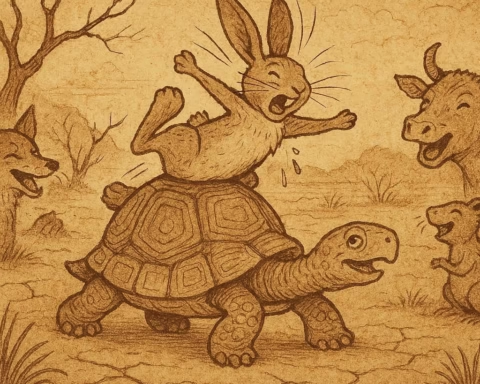
One day, a gathering of the animals took place in a broad clearing near a sparkling river. A debate had arisen concerning the age of a venerable tortoise whose years were in question. Some animals insisted he was extremely old and deserving of respect, while others argued he was younger than he claimed. The disagreement grew heated, for in the forest, age determined honor, influence, and sometimes the right to lead.
Explore more stories from our Cameroonian Folktales Collections archive.
The tortoise himself remained quiet, listening to the arguments with a knowing smile. His eyes, wise and gleaming, reflected both patience and amusement. The smaller animals whispered among themselves, and even the Leopard and Elephant, typically confident in their authority, found themselves unsure of how to settle the matter. Observing this, a clever monkey named M’Beka realized that the dispute needed a fair and thoughtful resolution. Known for his intelligence and tact, he decided to guide the animals through a process that would reveal the truth without conflict.
M’Beka spoke calmly, drawing the attention of all gathered. “Friends of the forest,” he said, “the years of a creature are not always obvious at first glance. We must look carefully, consider the evidence, and allow wisdom and observation to guide our decision. Let us approach this matter with both fairness and care, for the forest thrives when harmony prevails.”
The animals listened intently. M’Beka then suggested a series of questions and tests to determine the tortoise’s true age. He asked the tortoise to recount events from the past, particularly those that many animals could remember. The tortoise described moments that only someone of great experience would know, recounting details of past seasons, migrations, and communal gatherings. Each story was vivid and precise, revealing not only the passage of time but also the tortoise’s sharp memory and insight.
Next, M’Beka guided the animals in observing the tortoise’s behavior and mannerisms. The Elephant, the Leopard, and the buffalo watched closely, noting the patience, caution, and methodical movements of the tortoise. Even in small actions, they recognized wisdom acquired over many years. The smaller animals, too, observed carefully, seeing that the tortoise’s decisions and advice reflected experience beyond what one might expect from his outward appearance.
Through these exercises, the forest animals gained a clearer understanding of the tortoise’s age. It became evident that the tortoise’s wisdom and knowledge were earned over many seasons, and his experience warranted the respect and recognition due to an elder. Yet the process also taught the animals that age alone does not define a creature; observation, insight, and behavior reveal true wisdom.
Finally, M’Beka summarized the lessons of the gathering. “We have seen that appearances may deceive, but careful observation, questioning, and patience uncover the truth. Let us honor those whose experience and wisdom benefit the forest, and let our actions reflect fairness and insight rather than hasty judgment.” The animals agreed, relieved that the debate had ended peacefully and that harmony had been maintained.
As the gathering concluded, the forest returned to its usual rhythm. Birds sang from the treetops, monkeys leaped between branches, and even the tortoises moved slowly yet confidently across the forest floor. The tortoise, now recognized for both age and wisdom, shared stories and advice with others, reinforcing the forest’s sense of community and respect for experience.
Explore our complete Historic Folklore & Fairy-Tale Collections archive.
Moral Lesson
A Question as to Age teaches that true wisdom is revealed through observation, experience, and thoughtful behavior rather than mere appearance or claims. The story emphasizes that patience, careful questioning, and respect for insight are essential in understanding the value of experience. It reminds us that fairness and attention to detail allow communities to honor those who have genuinely earned their place.
Knowledge Check
-
What caused the debate among the forest animals?
The animals disagreed about the age of a venerable tortoise, which determined respect, influence, and leadership in the forest. -
Who helped guide the animals toward a fair resolution?
M’Beka, the clever monkey, used wisdom, observation, and tact to resolve the dispute peacefully. -
What method did M’Beka use to determine the tortoise’s age?
He asked the tortoise to recount past events and guided the animals in observing his behavior, memory, and decision-making. -
What lesson did the animals learn about judging age and wisdom?
They learned that appearances can be deceiving and that careful observation and insight reveal true experience and wisdom. -
Why was the tortoise recognized and respected in the end?
Because his memory, stories, and methodical behavior demonstrated knowledge and experience gained over many years. -
How does this folktale reflect the values of the Fang people?
It emphasizes patience, observation, respect for elders, and the importance of wisdom over mere appearance in community decision-making.
Cultural Origin: Source: Fang folktale, Cameroon. Recorded by Robert H. Nassau in Where Animals Talk: West African Folklore Tales (1914).
Explore More Cameroonian Folktales
- The Sacred Forests of the Bakossi
- The Water Ceremony
- The Keeper of the Royal Drum of Bafut
- The Great Canoes of the Wouri
- The Festival of the Elephant Masks
- The Iron Masters of the Mandara Hills
- The Great Market of Maroua
- The Counsel of the Bamum Queen Mother
- The Night Market Where Humans Trade with Spirits