Across the vast open plains of Mongolia, where the horizon stretches endlessly beneath the blue sky, the herders and nomads tell stories of Agan, the Bone Gathering Spirit. Unlike malevolent demons that hunt the living for pleasure, Agan is a guardian of the boundary between life and death, walking the steppes with solemn purpose. With each gust of wind that stirs the dry grasses, the faint sound of rattling bones is said to echo across the plains, warning travelers that the spirit is near.
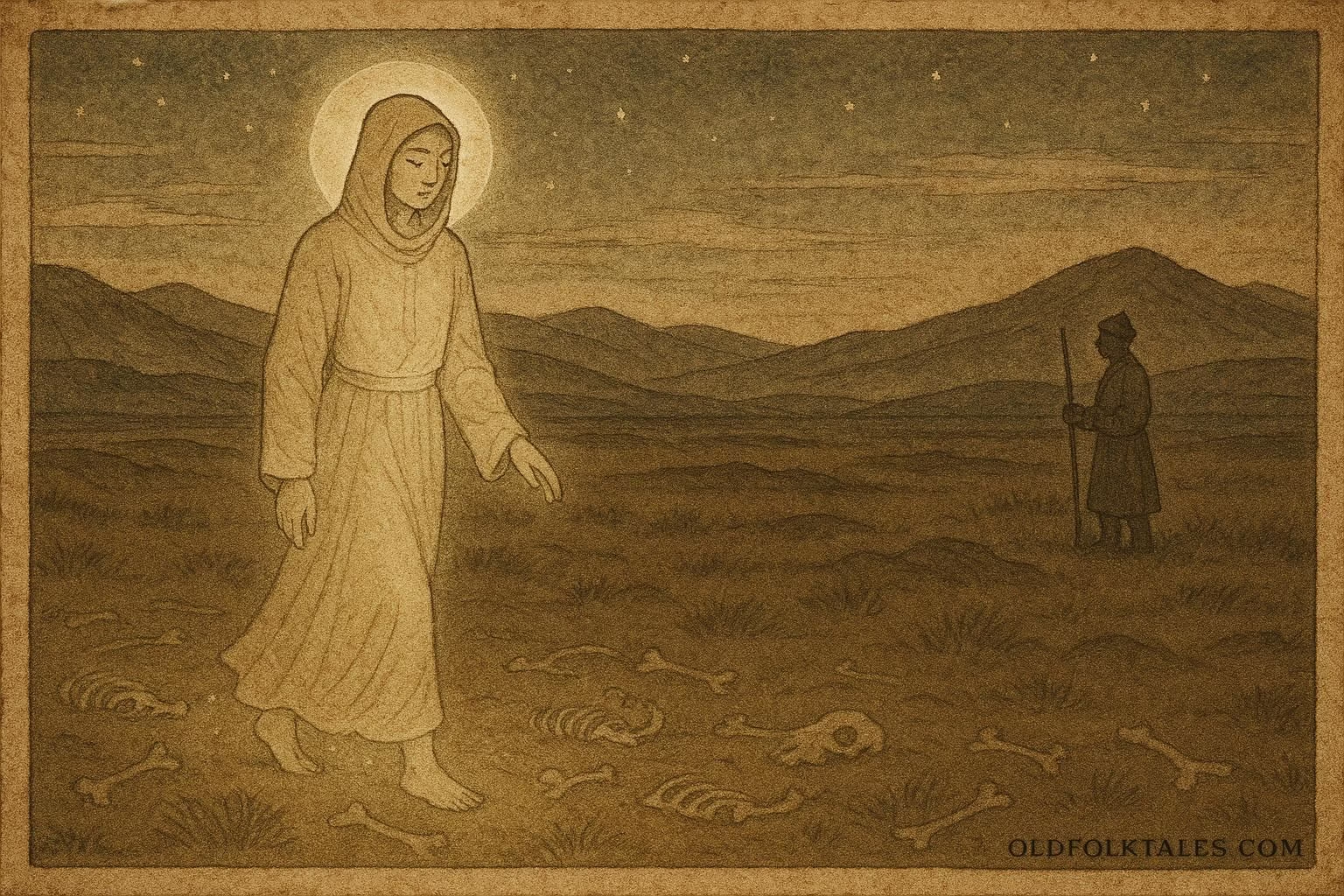
Legends recount the tale of Batu, a young herder who ignored the customs of his ancestors. One night, he ventured far from his yurt, driven by pride and curiosity, to hunt wild horses without offering the proper ritual of respect for the land and its spirits. As the moon rose high over the plain, a cold wind swept through the grasses, carrying with it the clattering of bones. Batu froze. In the distance, faint shapes began to form: the white remnants of animals and humans rearranged in grotesque patterns, moving silently across the steppe.
The villagers called this manifestation Agan. It was said that the spirit could gather the bones of those who died far from home or without proper rites and fashion them into spectral images that mimic the living, a warning to those who dared disrespect the sacred laws of the land. Batu’s heart pounded as the ghostly forms seemed to follow his every step. No matter how fast he ran, Agan’s influence pressed on him, a cold reminder of the consequences of negligence and disrespect.
Discover the gods, goddesses, and divine spirits who ruled the heavens and shaped human fate
Panic gave way to fear, and Batu remembered the lessons taught by his grandfather: always offer a prayer, a grain of food, or a small token to honor the spirits of the land and the ancestors before venturing into the steppe. Frantically, he gathered small offerings from his bag, whispering apologies and prayers to the spirits of those who had passed, to Agan, and to the earth itself. Slowly, the spectral forms stopped advancing, and the wind grew still. Agan did not vanish entirely, but the spirit allowed Batu to return safely to his family.
From that day onward, Batu became a devout observer of the steppe rituals. He left offerings at crossroads, around burial mounds, and near the grazing fields, honoring both the land and the ancestors who once lived on it. Other travelers heard of his experience and understood the lesson: Agan is not vengeful out of cruelty but serves as a guardian, ensuring that the boundary between the living and the dead is respected.
In the vast Mongolian expanse, where survival depends on understanding the rhythms of nature and the invisible forces that shape life, Agan reminds humans that arrogance and neglect of spiritual duties can bring consequences that are as chilling as the winter winds. Travelers, herders, and nomads continue to tell the story of Agan, warning one another that the dead are never truly gone, and the living must honor them with humility, reverence, and careful observance of ritual.
Even today, some claim that the ghostly formations of bones still appear in the dead of night, drifting silently across the steppes. They serve as a reminder that life and death coexist in balance, and that every act of disrespect toward the spirits or ancestors can ripple across the land with consequences beyond mortal comprehension. The story of Agan endures, teaching the importance of mindfulness, respect, and the quiet power of unseen guardians in preserving harmony between the worlds.
Explore the shadows of world mythology, where demons test the soul and spirits watch over mankind
Author’s Note
The tale of Agan underscores the Mongolian belief in spiritual balance and the sacred connection between the living and the dead. By honoring ancestors and respecting the spirits of the land, humans maintain harmony with the natural and supernatural worlds. Agan is not merely a fearsome figure but a teacher, guiding people to reflect on humility, reverence, and the consequences of neglecting spiritual obligations.
Knowledge Check
-
Who is Agan in Mongolian folklore?
Answer: A wandering steppe spirit that gathers the bones of the dead and creates ghostly forms. -
Why does Agan follow travelers across the plains?
Answer: To remind them of the importance of honoring ancestors and respecting the spirits of the land. -
What lesson did Batu learn from encountering Agan?
Answer: That neglecting rituals and disrespecting the land brings misfortune and fear. -
How can people protect themselves from Agan?
Answer: By offering prayers, food, or tokens to the spirits and observing ancestral rituals. -
What does Agan symbolize in Mongolian belief?
Answer: The boundary between the living and the dead and the need for spiritual harmony. -
Where are the stories of Agan traditionally told?
Answer: Across the Mongolian steppes among Mongolian peoples.