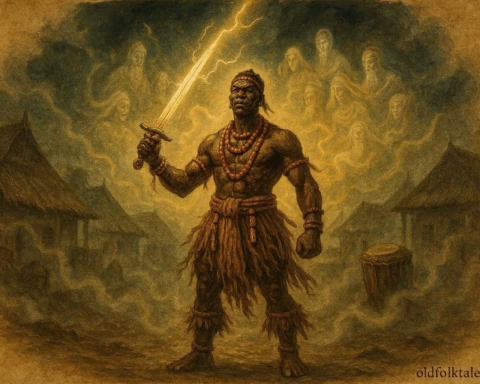
From the high blue vault where Tangaloa the Sky-Father shaped winds and tides, a child was conceived, born not of earth, nor wholly of heaven, but woven from the meeting of both worlds. His mother, Ilaheva, dwelt in the quiet green of the mortal realm, yet her gaze often lifted skyward, drawn by dreams she could not name. When Tangaloa descended in a cloak of thunderlight, she knew destiny had crossed her threshold. And so Ahoeitu was born, a child with eyes like pale dawn and a voice that carried the calm of distant horizons.
In his youth, Ahoeitu was gentle and curious, but a longing tugged at him, an ache for something beyond mortal fields. Ilaheva, knowing the blood in his veins, told him of his father’s realm in the heavens. She spoke of Tangaloa’s high court, of divine brothers who fed on ambrosial fruits and governed the skies. Ahoeitu listened with wonder, unaware of the storm his presence would soon stir.
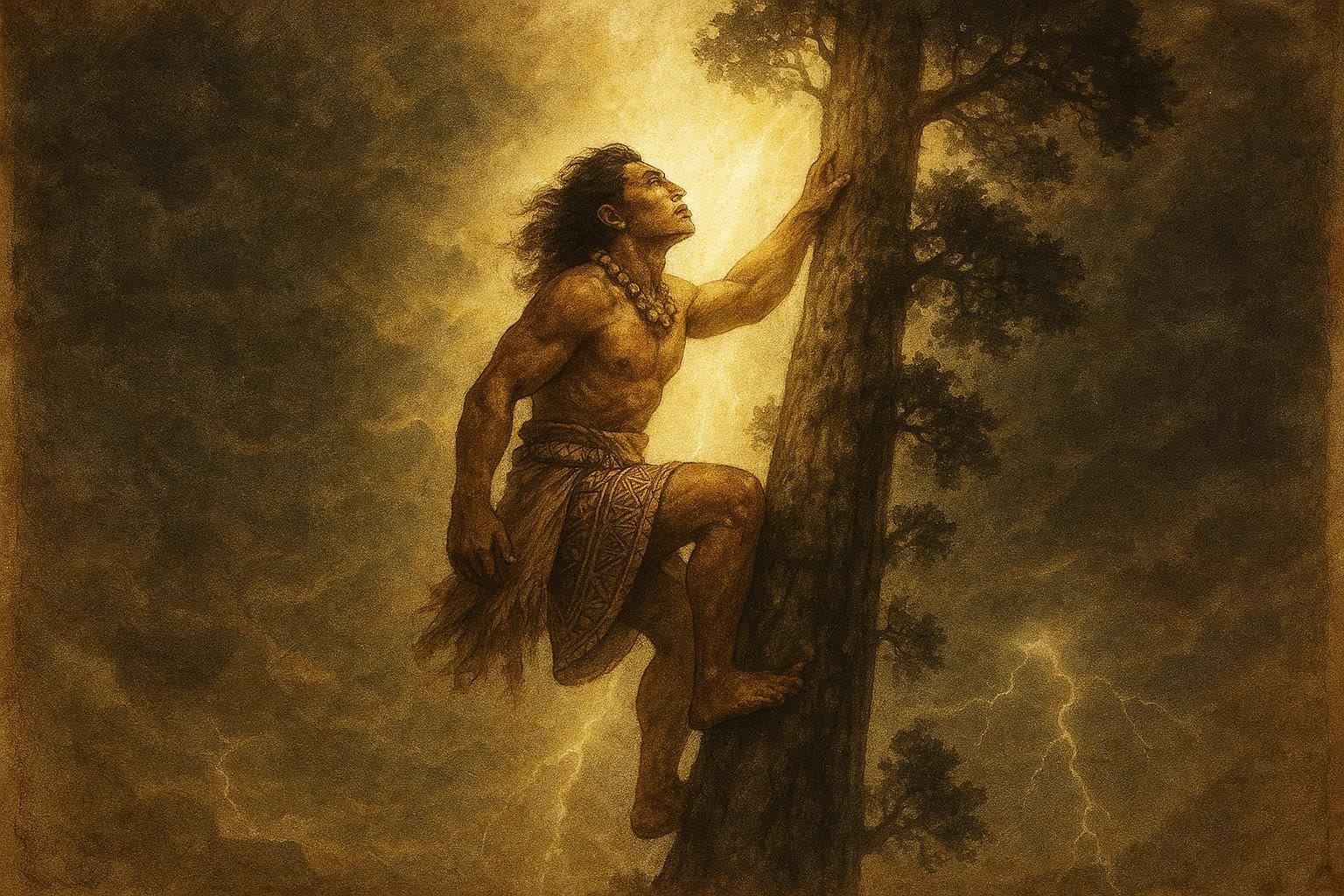
When he reached manhood, he climbed the towering toa tree, whose crown was said to brush the lowest cloud. Step by step he ascended, the winds guiding him, the branches bending as if welcoming back their kin. At the summit, he stepped into light, and crossed into Tangaloa’s celestial domain.
There he found his father, radiant as the sun’s first flare. Tangaloa welcomed him with pride, naming him son before the assembly of gods. But not all hearts warmed. Tangaloa’s elder sons, noble in posture yet sharp in envy, gazed upon Ahoeitu with growing bitterness. How could a child of earth share their father’s favor? How could mortal blood stand before them?
They hid their resentment beneath ceremonial smiles, but Ahoeitu, unaccustomed to deceit, saw only kinship.
One day, the divine brothers proposed a feast at the edge of the sky, where clouds broke like surf upon the firmament. They invited Ahoeitu with warm gestures and painted words. He followed, grateful to be included. When they reached the feast-ground, they set before him a bowl of fruit and nectar. But behind him, they circled like shadows.
Their jealousy had festered into cruelty.
The assault came swift, a blow between the shoulders, a crack across the temple. Ahoeitu fell, bewildered, betrayed without reason. The gods beat him until breath failed and limbs grew still. Then, fearing their father’s wrath, they hid the broken body of their brother in a woven basket and prepared to erase the evidence of their deed.
But no secret endures beneath heaven.
Tangaloa, sensing a sudden hollow in the world, descended upon the scene like a typhoon. With eyes burning storm-blue, he demanded the truth. The brothers trembled, their lies dissolving beneath the weight of his fury. He tore open the basket and lifted Ahoeitu’s lifeless form. But gods hold power beyond death.
Tangaloa commanded his sons to gather sacred leaves, cooling waters, and the shining worms of the sky that carried life’s renewing spark. Under his instruction, they washed Ahoeitu’s bones, anointed his body, and chanted the words that turn darkness back toward light. Piece by piece, breath returned. Color rose. Ahoeitu opened his eyes once more.
But resurrected life carries deeper understanding.
He beheld his brothers, not with innocence, but with sorrow. Yet there was no hatred in him. Tangaloa, expecting righteous vengeance, instead witnessed compassion take root.
Ahoeitu knelt before the Sky-Father.
“Let my anger die in the place where my body died,” he said. “If I am to lead, let it be through justice, not vengeance.”
Tangaloa declared this mercy a sign of true kingship.
As punishment, and as lesson, the divine brothers were sent to earth with Ahoeitu, sworn to serve and uphold him. Thus the heavenly court descended into mortal soil, and Ahoeitu became the first Tu‘i Tonga, the sacred king whose line bridged sky and land.
He ruled not with the lightning of his father but with steady tides of wisdom. He established laws that echoed the order of the heavens. He taught peace before war, humility before pride, and harmony between clans. Under his guidance, Tonga blossomed into a realm of voyagers, poets, and warriors whose spirits aligned with both sea and sky.
Yet Ahoeitu never forgot the tree that joined his worlds. At times he climbed its vast trunk, touching the bark as one might greet an old friend. At its peak, he would gaze into the sky-realm, not with yearning, but with understanding. He was born of the heavens, shaped by mortal sorrow, and crowned by forgiveness. His kingship was not simply lineage but symbol: harmony between realms, tempered by mercy.
And so Ahoeitu’s story became the root of the Tongan monarchy, where divine ancestry met human destiny, and where the first king, once betrayed, once broken, rose to embody the power not of might, but of grace.
Author’s Note
Ahoeitu stands as one of Polynesia’s most profound symbols of sacred leadership. His tale suggests that true kingship is not forged by divine right alone, but by moral strength, by the refusal to let vengeance rule the heart. In Tongan tradition, his legacy anchors the Tu‘i Tonga line, affirming the union of heaven and earth and the spiritual responsibility of rulers to their people.
Knowledge Check
-
Who is Ahoeitu’s divine father in Tongan mythology?
-
What motivates Ahoeitu to climb the toa tree?
-
Why do his heavenly brothers betray him?
-
How is Ahoeitu restored to life?
-
What action proves Ahoeitu worthy of kingship?
-
What is the symbolic significance of his rule in Tongan culture?
Cultural Origin: Tongan (Polynesian, South Pacific)
Source: E.W. Gifford, Tongan Myths and Tales (1924).