In the age when the world was young and the spirits of the earth still wandered freely among mortals, there was born a child whose fate was intertwined with the sorrow of the miraculous girl Hainuwele. Hainuwele, whose gifts of life and abundance sprang from her very flesh, had been cruelly slain by men blinded with greed, casting a shadow of despair over the islands of Wemale. From this shadow, Ameta arose, a being neither fully mortal nor wholly divine, whose breath carried the fire of retribution and whose gaze reflected the sorrow of the heavens.
Ameta’s birth was heralded by winds that whispered across the coconut palms and by the tremor of the soil beneath sacred groves. The elders spoke of a child born of the lingering spirits of Hainuwele herself, a child who would walk the line between the human and the sacred. As he grew, it became clear that his limbs were strong as ironwood, and his senses could perceive the whispers of corrupted hearts. He wandered among the villages, listening to the secret murmurings of men who coveted the gifts of the gods.
It was not long before the first challenge appeared. A tribe, swollen with pride and disrespect for the sacred, had begun to desecrate the groves where Hainuwele once danced. They burned the coconut groves, mocked the ancestral spirits, and sought to claim the magic of life as if it were mere plunder. Ameta descended upon them, his arrival heralded by the roar of storms and the flaring of the sun upon the waves.
Yet Ameta’s task was not only to strike fear into the hearts of men; it was to confront the corruption that lingered even in his own spirit. The elders had warned him that vengeance without wisdom would become a shadow greater than the one he sought to banish. And so, beneath the silver moon, Ameta wrestled with doubt. Could he punish the guilty without destroying the innocent? Could he honor Hainuwele’s memory without becoming like those who had slain her?
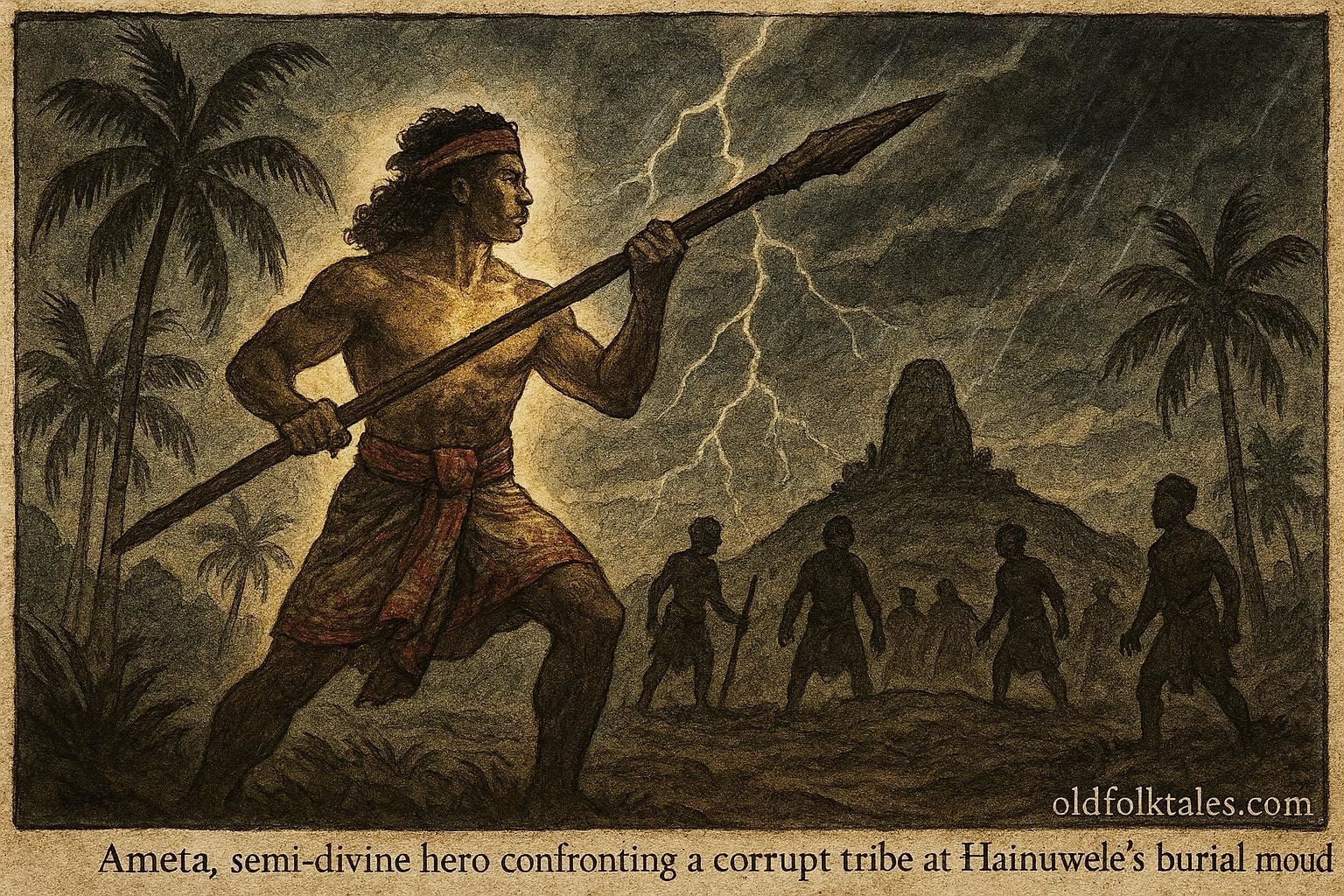
Guided by dreams in which Hainuwele herself appeared as a radiant flame, Ameta journeyed through the forests and mountains, seeking the source of the corruption. He encountered spirits who had fallen from grace, creatures twisted by greed and envy, who sought to tempt him with power and blind him with fury. He fought them with both strength and cunning, wielding a spear carved from the heart of a sacred tree, its tip glimmering with a light that seemed drawn from the stars themselves.
The final confrontation came at the sacred mound where Hainuwele had been buried. Here, the tribe’s chief had conjured a talisman of power, a vile echo of the gifts Hainuwele once bore. Ameta faced him, not with blind rage, but with the fierce clarity of one who understood the balance of life and death. Their battle shook the earth; the air burned with the clash of spirit and steel. With a cry that carried the grief of the world, Ameta shattered the talisman, and the corrupt chief fell, his darkness dissipating like mist under the morning sun.
Yet Ameta did not celebrate. He knelt beside the mound, planting the seeds of the coconut palms from Hainuwele’s own body, ensuring that life would rise again from death. The tribes witnessed this, and they learned that true power lay not in domination or greed, but in reverence and stewardship. From that day, the islands flourished with abundance, and Ameta walked among the people as both protector and teacher, reminding them that the gifts of the divine were never to be hoarded, only honored.
And so, Ameta became legend, a semi-divine hero whose deeds echoed across generations. He embodied the sorrow of loss and the hope of renewal, a reminder that even the deepest grief could be transformed into justice and life.
Author’s Note
Ameta’s legacy endures in the oral traditions of the Wemale people. He is a symbol of balance between vengeance and wisdom, a semi-divine figure who teaches that moral courage and reverence for the sacred are inseparable. Through his actions, the tale reinforces the consequences of greed and the redemptive power of honoring life, demonstrating that heroes are measured not by the destruction they wield, but by the life they restore.
Knowledge Check
-
What event sparked Ameta’s quest for vengeance?
-
How is Ameta described in terms of his origin?
-
What moral struggle does Ameta face during his journey?
-
How does Ameta defeat the corrupt chief?
-
What symbolic action does Ameta take at Hainuwele’s burial mound?
-
What lesson does the epic convey about the use of divine gifts?
Cultural Origin
Banda, Indonesia/Oceania borderland, Wemale people
Source
Adolf Jensen, Mythologie der Inselwelt von Südost-Neuguinea, 1939