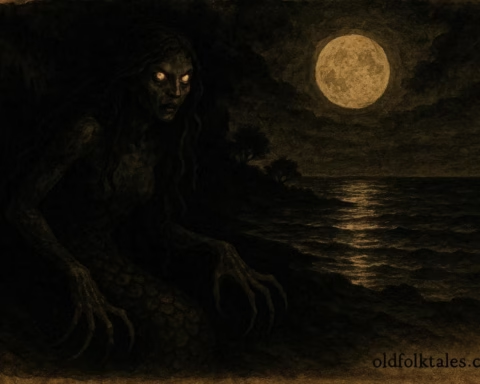
The Amikuk is one of the most unsettling beings in Yup’ik folklore, a creature that blurs the boundary between the living land and the shifting waters of the Arctic. While many spirits in Indigenous circumpolar traditions are tied to the unpredictability of nature, the Amikuk uniquely embodies danger from both below the waves and beneath the earth. Legends describe it as long, lean, and sinewy, its body coated in slick, seal-like skin that glistens in low light and repels snow or icy slush. This skin is often described as thick and rubbery, sometimes tinted a dark, wet gray or mottled blue-black like glacial ice.
Its limbs, two or four, depending on the narrator, are flexible and elongated, ending in hooked claws capable of shredding hide and piercing ice. Some versions say it possesses four arms that move like oars, allowing it to “swim” through snow and frozen ground the same way it slices through seawater. In other accounts, it appears more serpentine, undulating beneath the ice like a trapped shadow.
Explore the shadows of world mythology, where demons test the soul and spirits watch over mankind
A key feature across many stories is its ability to travel unseen, gliding silently beneath layers of snow or tundra crust, creating only the faintest tremor before erupting upward to seize a victim. Yup’ik narrators often describe the creature as a spirit felt before it is seen. Hunters claim that dogs grow restless, kayaks rock without wind, or the ice beneath one’s feet suddenly vibrates, a sign that the Amikuk is tunneling beneath.
Some storytellers emphasize its shapeshifting nature: the Amikuk may adopt more humanoid features, sprouting legs to chase prey across land, or flattening its body to slip through thin cracks in lake ice. In these forms it is humanoid but distorted, limbs too long, posture too flexible, movements too smooth to belong to an ordinary creature.
Most frightening is its ability to attack from beneath a person, whether they stand on ice, tundra, or in a kayak. Without warning, the surface breaks or the ground collapses, and the Amikuk drags its prey into the dark.
Powers and Behavior
The Amikuk’s abilities reflect the unforgiving nature of the Arctic landscape:
- Subterranean Swimming: Its most iconic power is its capacity to “swim” through earth, snow, and ice. This makes it an invisible predator, never bound by terrain, never slowed by frozen obstacles.
- Water Mastery: In water it moves like a monstrous seal or eel, fast enough to overturn small boats and drag hunters into icy depths.
- Ambush Predation: Stealth is the Amikuk’s defining behavior. It rarely confronts openly; instead it burrows beneath a target, breaks the surface, and pulls victims under with crushing force.
- Shapeshifting: Some versions say it can adopt humanlike structure, extra limbs, bent posture, or a monstrous humanoid shape, to adapt to different terrain.
- Territory and Aggression: It is associated with remote, treacherous areas: unstable sea ice, deep inlets, and thin tundra crust. Encounters often happen when someone travels alone, especially in transitional seasons when ice is unpredictable.
- Resistance to Weapons: Like many Arctic spirit-beings, it is said to resist ordinary harm. Spears and arrows bounce off its rubbery hide unless a ritual or shamanic intervention is used.
Myths and Beliefs Surrounding Amikuk
Stories of Amikuk often appear in the context of survival teachings. Elders warn children and young hunters not to travel alone on early spring ice, not to ignore trembling ground, and not to assume safety simply because the weather is calm. These warnings take mythic form in Amikuk stories.
In some tales, an Amikuk attacks a lone kayaker, turning their small boat over from beneath. In another, it stalks a traveling party by swimming beneath the tundra, mimicking the behavior of real under-ice animals like seals or fish, only far more aggressive and intelligent. Some modern retellings describe encounters at river mouths or on sea ice, noting how the creature bursts upward in a shower of slush and cracks.
A recurring motif is the creature’s elusiveness. Sightings are scarce because the Amikuk appears only when it intends to kill. Even then, many stories emphasize that survivors never get a good look, reinforcing its role as a spiritual embodiment of danger.
Though not associated with morality in a traditional sense, the Amikuk is a cautionary spirit. It does not punish human wrongdoing; it punishes human carelessness, venturing onto unsafe waters, ignoring elders’ warnings, or traveling without proper preparation. In this way, the Amikuk embodies the Arctic’s lethal unpredictability.
Cultural Role and Symbolism
In Yup’ik worldview, the land and sea are alive, animated by spirits that can help or harm. Amikuk represents:
- Environmental Danger: Its ability to attack from beneath ice symbolizes the hidden hazards of the Arctic: thin ice, crevasses, shifting permafrost, and unstable shores.
- Respect for Nature: Amikuk stories remind people to treat the land with humility and awareness; arrogance or haste can be fatal.
- The Boundary Between Worlds: Its movement through earth and water connects the visible world to a hidden, spiritual under-realm beneath the tundra and sea.
- Adaptability and Survival: Its shapeshifting and terrain-sliding abilities mirror the adaptive skill needed to survive in the Arctic environment.
Though not as anciently attested as some Arctic spirits, the Amikuk fits seamlessly into Indigenous ecological spiritualism, an ever-changing myth reflecting an ever-changing world.
Explore the mysterious creatures of legend, from guardians of the sacred to bringers of chaos
Author’s Note
This entry is based on modern Yup’ik oral retellings and folkloric summaries rather than ancient ethnographic documentation. Because Amikuk lore varies and is not standardized, I’ve focused on themes consistent across narrators, environmental danger, subterranean movement, and Arctic unpredictability, while avoiding unsupported sensationalism.
Knowledge Check
- What is the Amikuk’s most famous ability?
Its power to “swim” beneath earth, snow, and ice as easily as through water. - Why is the Amikuk considered dangerous?
It can ambush prey from below and overturn kayaks or break through ice unexpectedly. - How is its appearance typically described?
Long, sinewy, with slick skin and flexible limbs ending in claws. - What natural concept does Amikuk symbolize?
The hidden dangers of the Arctic environment, especially unstable ice and terrain. - Is Amikuk inherently evil?
No, it’s more a cautionary spirit than a moral punisher, representing environmental hazards. - Why do descriptions of Amikuk vary widely?
The lore is based on modern oral tradition, with storytellers emphasizing different traits.
Source: Modern Yup’ik oral retellings; Mythlok summary; Leanbh Pearson folkloric analysis
Origin: Yup’ik Inuit (Alaska, Arctic/Subarctic regions)