Amun, the “Hidden One” of Egyptian religion, emerges from the Theban hills as a god of mystery, wind, and creative power. Initially a local deity associated with air and invisibility, he was revered for his unseen but vital presence, the life-giving force behind all creation. Over time, his cult expanded across Egypt, merging with Rā to form Amun-Ra, a synthesis of hidden and visible divine power.
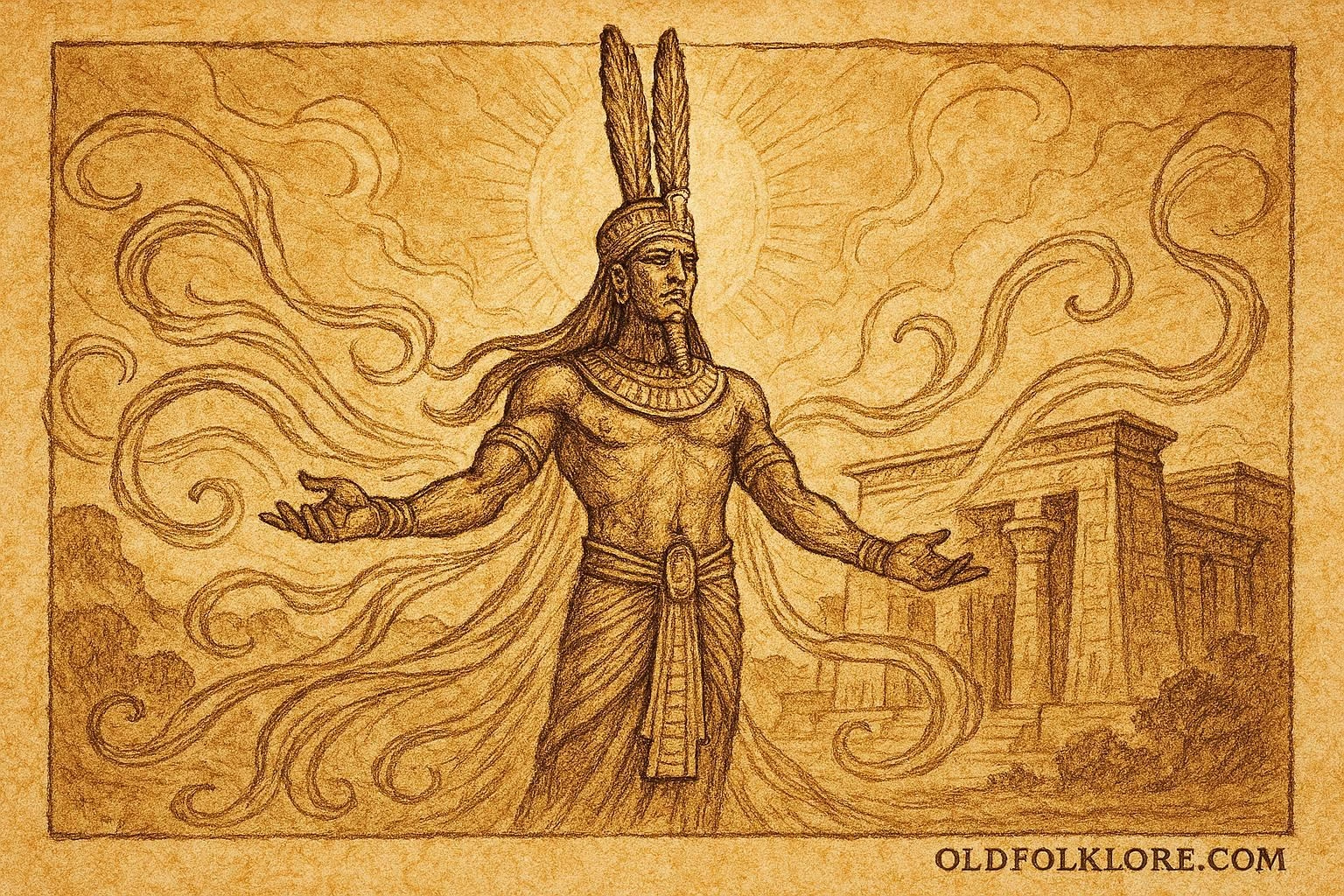
Amun’s domains include the invisible forces of the cosmos, kingship, and fertility, symbolizing the hidden principles that sustain the world. Depictions range from a human figure crowned with two tall plumes, representing his majestic presence, to integration with solar imagery after syncretism with Rā. He was central to royal ideology, regarded as the divine source of pharaonic authority, often invoked in hymns and inscriptions to legitimize the ruler’s power.
Temples dedicated to Amun, most notably Karnak in Thebes, feature vast hypostyle halls, ritual lakes, and sacred chambers. Priests performed daily offerings, reciting hymns to his hidden essence and invoking blessings of life, justice, and prosperity. Festivals such as the Opet Festival celebrated his divine manifestation and connection to the pharaoh, blending awe, ritual, and political affirmation.
Mythic Story: “Amun, the Breath of Hidden Creation”
Long before the Nile carved fertile valleys through Egypt, the world lay in potential, a quiet expanse of waters and shadows, ruled by the unseen. It was in this hidden void that Amun stirred, a god invisible yet potent, his breath the essence of life. Though unseen, his presence was everywhere: the wind that rippled across the desert, the pulse in the rivers, the force animating humans and animals alike.
In Thebes, his devotees understood that what is unseen is often the most powerful, for Amun’s hiddenness did not lessen his influence; it magnified it. In the morning, the priests entered the temple, casting incense and chanting sacred hymns:
“O Amun, hidden yet manifest, ruler of truth and justice, thy breath gives life to all.”
Each breath of Amun was said to shape the cosmos. He whispered into the chaos, calling into being mountains, the fertile Nile, and the rhythms of the heavens. His voice, though imperceptible to mortals, orchestrated harmony among gods, ensuring the cycles of day and night, birth and death, flood and drought were balanced.
One tale describes Amun’s intervention in royal affairs, an invisible hand guiding the pharaoh’s ascent. During the reign of Amenhotep, a rebellion threatened the unity of Upper and Lower Egypt. The king, in despair, visited Karnak, seeking divine counsel. Entering the hypostyle hall, he knelt before the statue of Amun, and the temple priests recited the ancient hymn.
As they chanted, a sudden wind swirled through the columns, scattering lotus petals and incense smoke. The king felt a surge within him, an unseen force affirming his rule. Villagers recounted that the rebellion faltered inexplicably: soldiers hesitated, messages were delayed, and the land itself seemed to resist upheaval. All recognized that Amun’s hidden power had guided events, preserving the kingdom through invisible but decisive influence.
Amun’s essence also governed creation itself. In myths, he breathed life into clay figures, animating humans and animals, infusing the world with movement, thought, and spirit. When merged with Rā as Amun-Ra, he assumed the duality of hidden mystery and visible brilliance: the invisible force behind life and the sun that illuminates it. He became the king of gods and pharaohs alike, a deity whose concealment made him omnipotent, his revelations rare and sacred.
Even within the temple rituals, Amun’s hidden nature reminded mortals that the divine is not always seen. Just as wind cannot be held, yet shapes the sails and whispers across the land, Amun’s presence suffused the universe, a constant but imperceptible guide. Worshippers learned that devotion, humility, and reverence for the unseen were as vital as offerings of incense and food.
Through centuries, Amun’s power endured. From the Middle Kingdom to the New Kingdom, kings, priests, and commoners alike honored the Hidden One, recognizing that life, law, and prosperity stemmed from forces beyond sight. Even when merged with the solar Ra, Amun’s invisible breath reminded Egypt that true power often lies in the unseen, shaping the world in silence and mystery.
Learn the ancient stories behind deities of light, storm, and shadow from cultures across the world
Author’s Note
Amun teaches that the most profound forces may be hidden from sight, guiding life, society, and the cosmos without spectacle. His myth underscores the importance of faith, patience, and reverence for unseen principles, suggesting that true power and wisdom are often subtle, yet eternal. In honoring Amun, we acknowledge that the invisible currents of life, morality, and creation are as vital as the visible world they shape.
Knowledge Check
Q1. What does Amun represent in Egyptian mythology?
A: Amun symbolizes hidden power, creation, wind, and kingship.
Q2. How is Amun visually depicted?
A: As a human figure with two tall plumes, or later combined with the sun as Amun-Ra.
Q3. What is the significance of the Opet Festival?
A: It celebrated Amun’s manifestation and his connection to the pharaoh, reinforcing divine authority.
Q4. How did Amun influence royal authority?
A: By guiding kings invisibly, legitimizing rule, and preserving order in the kingdom.
Q5. Where was Amun primarily worshipped?
A: At Thebes, especially the temple complex of Karnak.
Q6. How does Amun’s hidden nature relate to his power?
A: His invisibility signifies omnipotence and mystery; unseen forces govern life and creation.
Source: Temple Inscriptions, Karnak, Ancient Egypt
Source Origin: Thebes, Egypt