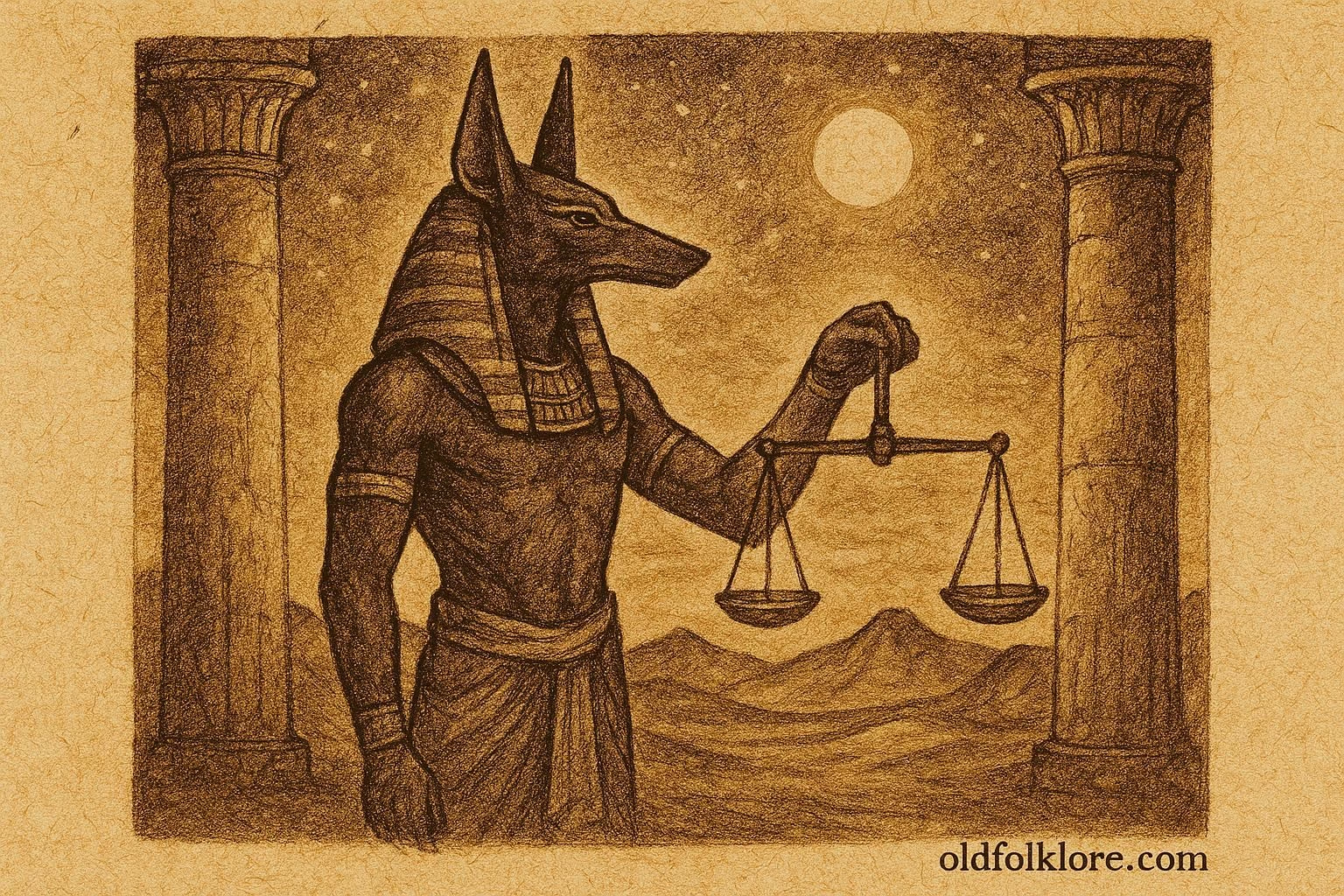
Anubis (Egyptian: Inpw) stands among the most ancient and enduring deities of the Egyptian pantheon. Known as the god of embalming, mummification, necropolises, and the transition from mortal life to the eternal realm, he is typically depicted as a black jackal or a man with the head of a jackal. The coloration symbolizes both the fertile black soil of the Nile and the promise of rebirth after death. Long before Osiris assumed kingship over the dead, Anubis was the foremost protector of graves and the divine embalmer.
His sacred symbols include the embalming tools used in funerary rituals, the flail, the jackal, and the scales used in the Weighing of the Heart ceremony. In tomb paintings and papyri, Anubis appears performing the “Opening of the Mouth” ritual, preparing the deceased for resurrection. As “He Who Is Upon His Mountain,” he watches over necropolises, especially at the desert’s edge where jackals roamed, creatures believed to sense the boundary between life and the afterlife.
Priests serving Anubis wore jackal masks during funerary rites, embodying the god as they purified and wrapped bodies with sacred oils and linens. Through these acts, Anubis was invoked to protect the spirit’s journey and ensure safe passage through the halls of judgment.
Mythic Story: The Weighing of the Heart
In the stillness of the underworld, where the air shimmered like black velvet threaded with gold, a soul approached the Hall of Ma’at. The chamber was vast, silent, illuminated only by the unearthly glow that rose from the polished obsidian floor. Pillars carved with images of gods and royal ancestors lined the hall like solemn guardians of truth.
At the far end stood a great scale, its beam perfectly balanced, its plates gleaming with divine brilliance. Beside it waited a tall figure, still as a statue yet alive with quiet power. His body was human, robed in white linen, but his head was that of a jackal: dark, sharp, ageless. His eyes glowed with amber light.
It was Anubis, the Judge of the Heart.
The newly arrived soul trembled. The moment of truth had come.
Anubis gestured gently. “Step forward,” he said, his voice calm as a desert night. “You stand before the balance of eternity.”
From the shadows emerged Thoth, the scribe of the gods, holding a tablet ready to record the verdict. To his side fluttered Ma’at, goddess of harmony, her feather, the feather of truth, floating lightly upon the air.
Anubis extended a hand, and from within the chest of the soul’s spiritual form, the heart emerged: glowing softly, warm with the memories of a lifetime. He lifted it with care and set it upon one side of the scale. On the opposite plate he placed the feather of Ma’at.
The scales trembled.
The soul watched in terror, though no words could be spoken now. All deeds, every kindness, every lie, every cruelty hidden in shadow, now revealed themselves in the silent measure of the heart.
As the beam settled, Anubis lowered his head in contemplation. His jackal ears tilted ever so slightly, listening not only to the weight but to the truth within it.
Long ago, the texts said, Anubis had embalmed the body of Osiris himself, wrapping him with reverence, guarding him from decay, and thus granting the first pharaoh of the afterlife the perfection of eternal form. Because of that sacred act, he was entrusted with the hearts of all who came after. He understood death not as an end, but as a crossing, a careful journey requiring purity and balance.
The scales dipped.
The soul gasped.
But before the plate could fall heavily, Anubis laid a steadying hand upon the beam. His amber eyes met the soul’s gaze.
“You have known fear,” he said softly. “You have known desire. But you have also known compassion and restraint. The heart leans, but not beyond redemption.”
The soul shuddered, hope sparking like a flame in the darkness.
From a distant corner of the hall, the monstrous Ammit, part lion, part crocodile, part hippopotamus, watched with hunger. Her jaws opened slightly, for she fed only on hearts proven too heavy with wrongdoing. But Anubis did not yet turn to her.
Instead, he lifted the heart, weighed it once more in his hands, and nodded.
“Your heart is lighter than the feather of truth,” he pronounced.
Relief washed over the hall like a gentle wind.
Ammit slunk back into shadow, denied her feast.
Thoth carved the verdict into his tablet: True of voice. Justified.
Anubis returned the heart to the soul’s chest. “You may enter the fields of the blessed,” he said. “For your deeds have made your spirit whole.”
The gates at the far end of the hall opened, revealing a horizon of golden fields, where the Nile flowed in eternal abundance and the sun never set. The soul stepped forward, weeping with gratitude.
Anubis watched silently, his gaze softening. Though feared among mortals, he was not a god of terror. He was a guardian, patient, impartial, devoted to the sacred order.
Another soul would come soon. Another heart would be carried in trembling hands. And Anubis would remain, steadfast, jackal-headed sentinel of the silent halls.
For as long as humans lived and died, his scales would weigh truth against eternity.
Author’s Note
Anubis embodies the ancient truth that integrity outlives flesh. Through him, the Egyptians expressed a profound belief: that every action carries weight, and the heart must remain in harmony with Ma’at. His myth teaches that justice is both merciful and precise, and that the path to eternity begins with honesty within oneself.
Knowledge Check
Q1: What domains does Anubis rule over?
A: Embalming, mummification, funerary rites, necropolises, and the judgment of souls.
Q2: What animal form is associated with Anubis?
A: A black jackal or a jackal-headed man.
Q3: Which ceremony involves Anubis weighing the soul?
A: The Weighing of the Heart in the Hall of Ma’at.
Q4: What primary funerary ritual is he shown performing in tomb art?
A: The “Opening of the Mouth” ritual.
Q5: What text contains some of the oldest references to Anubis?
A: The Pyramid Texts.
Q6: What core lesson does Anubis symbolize?
A: That true judgment comes from the balance of one’s deeds and integrity.
Source: Egyptian Mythology, Egypt.
Origin: Egypt