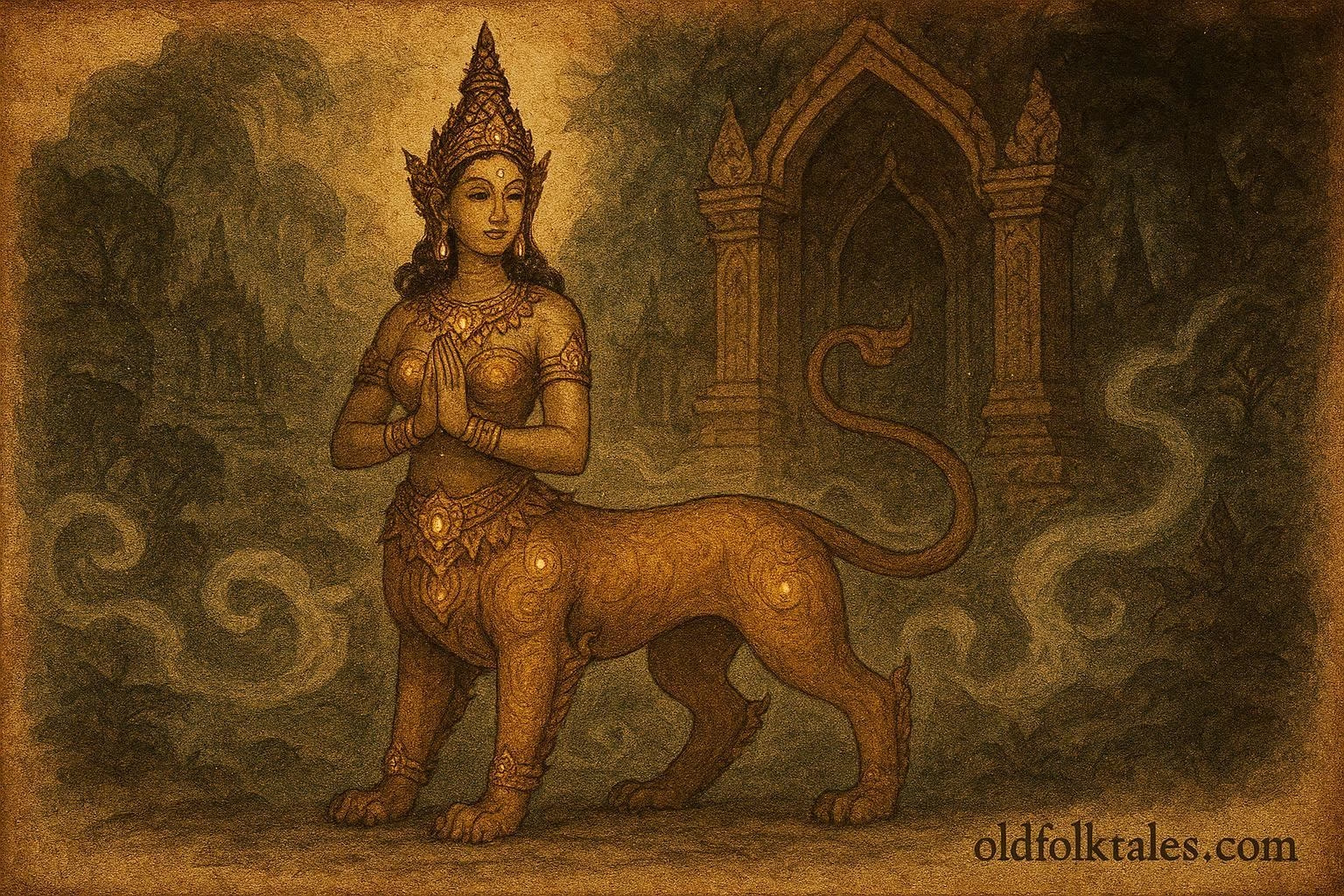
The Apsonsi, a striking hybrid of apsara (celestial nymph) and lion (singh), is one of the most majestic and symbolically rich guardians in Thai mythology. She blends the serenity and beauty of heavenly maidens with the strength and regality of the lion, forming a creature who embodies both divine elegance and formidable protection. Her presence in Thai religious art, particularly in temple complexes, is not merely decorative: it speaks to a deep cultural tradition of hybrid guardians who stand at the threshold between the human world and the sacred realms.
Appearance
The Apsonsi is traditionally depicted with the upper body of a woman, often modeled after apsaras, celestial dancers who embody grace, fertility, and spiritual allure, and the lower body of a lion, symbolizing power, courage, and sovereignty. Her face is serene, and her posture poised, yet the lion half conveys readiness and vigilance.
Explore traditional sayings that reveal how humanity found meaning, patience, and strength
Her feminine features may include:
- Flowing celestial garments (often stylized in Thai classical art)
- Elaborate crowns, earrings, and divine ornaments
- Long, graceful hair or a radiant halo-like glow
Her leonine features include:
- A strong muscular body
- Golden fur, sometimes adorned with swirling Thai motifs
- Clawed paws ready to leap
- A poised tail, sometimes stylized with flame-like curls
Apsonsi statues often appear in pairs flanking temple staircases, gateways, or sacred shrines, their dual identities representing the harmony of heavenly charm and earthly strength.
Mythic Habitat: The Himavanta Forest
Apsonsi is said to reside in the Himavanta (Himmapan) forest, a mythical wilderness located in Himalayan regions according to Southeast Asian cosmology. Himavanta serves as a spiritual borderland between the realm of humans and the celestial heavens. In this enchanted forest, countless hybrid beings, half-human, half-animal forms, roam freely, serving divine functions.
Apsonsi is only one of many such beings, alongside creatures such as:
- Kinnari(half-woman, half-bird)
- Narasimha-like guardians
- Manussiha(half-man, half-lion), her Burmese counterpart
- Makara, Naga, and other protective spirits
Within this forest, the Apsonsi is believed to guard the pathways that lead from the human realm toward higher spiritual realms, guiding seekers and defending against malevolent beings.
Powers and Abilities
As a hybrid of celestial nymph and lion, Apsonsi possesses abilities derived from both celestial and beastly domains:
- Divine Presence: As a part-apsara being, she emits an aura of peace, purity, and spiritual refinement. Her presence can calm fear, uplift the heart, and create a sense of sanctity.
- Guardian Strength: Her leonine half grants her strength capable of subduing demons and wandering spirits. In symbolic terms, she protects temples from spiritual pollution, greed, envy, or destructive energies.
- Boundary Protection: Apsonsi is a liminal being, a guardian of thresholds. She stands at temple entrances, gates, and stairways where the sacred and mundane intersect, ensuring only purity (of thought, intent, or energy) may pass.
- Celestial Intelligence: Like apsaras, she possesses wisdom linked to dance, cosmology, and the celestial arts. She represents the harmony of intellect and instinct.
- Fear-Dispelling Beauty: Her beauty is not seductive in the earthly sense; rather, it is spiritual radiance. Her presence dispels fear by reminding worshippers of divine benevolence and order.
Behavior and Symbolic Function
Apsonsi is not typically associated with specific narrative myths (like heroes or tricksters), but with iconographic symbolism. Her behavior, therefore, is interpreted through temple art and cultural practice.
She is:
- Noble and vigilant, defending sacred ground
- Compassionate, guiding mortals toward spiritual understanding
- Watchful, ever-present in spaces bridging heaven and earth
Temples often position Apsonsi at the base of stairs, where mortals ascend to meet the divine. Symbolically, she helps the worshipper “climb” spiritually, not through physical assistance, but through her reminder of balance, virtue, clarity, and courage.
Cultural Role
- A Guardian of Sacred Space: In Thai Buddhist architecture, guardians serve a vital purpose: they protect the sanctity of the temple. Apsonsi’s hybrid form makes her uniquely suited for this role. She is both supernatural and earthly, celestial and grounded.
- Embodiment of Balance: Her dual form symbolizes balance between:
- Masculine (lion strength) and feminine (apsara grace)
- Earthly power and heavenly beauty
- Physical protection and spiritual guidance
This balance echoes Buddhist teachings about the Middle Way, where extremes are avoided in favor of harmonious coexistence.
- Symbol of Virtue and Moral Clarity: Her leonine half symbolizes courage, truth, and righteousness; her apsara half symbolizes purity, compassion, and serenity. Together, they form a guardian who represents the pursuit of moral clarity in a world of distraction.
- Artistic and Architectural Significance: Apsonsi is a mainstay in Thai classical art, sculpture, and mural tradition. Her presence in temples like Wat Phra Kaew and others affirms the protective, pedagogical, and aesthetic values embedded in Buddhist sacred architecture.
- Connection to Southeast Asian Hybrid Traditions: In Southeast Asian mythic typology, hybrid beings (man-lion, woman-bird, etc.) represent cosmic harmony. Apsonsi occupies a role similar to her Burmese relative, Manussiha, though Apsonsi remains distinctly feminine with a protective elegance rather than martial ferocity.
Encounter dragons, spirits, and beasts that roamed the myths of every civilization
Author’s Note
Apsonsi is one of the most visually captivating figures in Thai myth, yet her value goes beyond aesthetics. She is a reminder that the sacred is protected by beings who embody both gentleness and power. Her presence is a lesson in balance—how beauty can guard, how strength can protect without aggression, and how the sacred requires both heart and spine to preserve.
Knowledge Check (Q&A)
- Q: What two beings form the hybrid nature of Apsonsi?
A: An apsara (celestial nymph) and a lion (singh). - Q: Where is Apsonsi said to live mythologically?
A: The Himavanta (Himmapan) forest. - Q: What is Apsonsi’s main cultural role?
A: Guardian of sacred spaces, especially temples. - Q: What does her hybrid form symbolize?
A: Balance of beauty and strength, compassion and protection. - Q: Where are Apsonsi statues commonly found?
A: At temple entrances, stairways, and sacred gateways in Thailand. - Q: What is her closest related creature in Burmese mythology?
A: The Manussiha (half-man, half-lion guardian).
Source: Adapted from Thai mythological iconography, temple art traditions, and summaries from Wikipedia and Southeast Asian mythological encyclopedias.
Origin: Thailand (Southeast Asia), rooted in the mythic forest of Himavanta and classical hybrid guardian motifs.