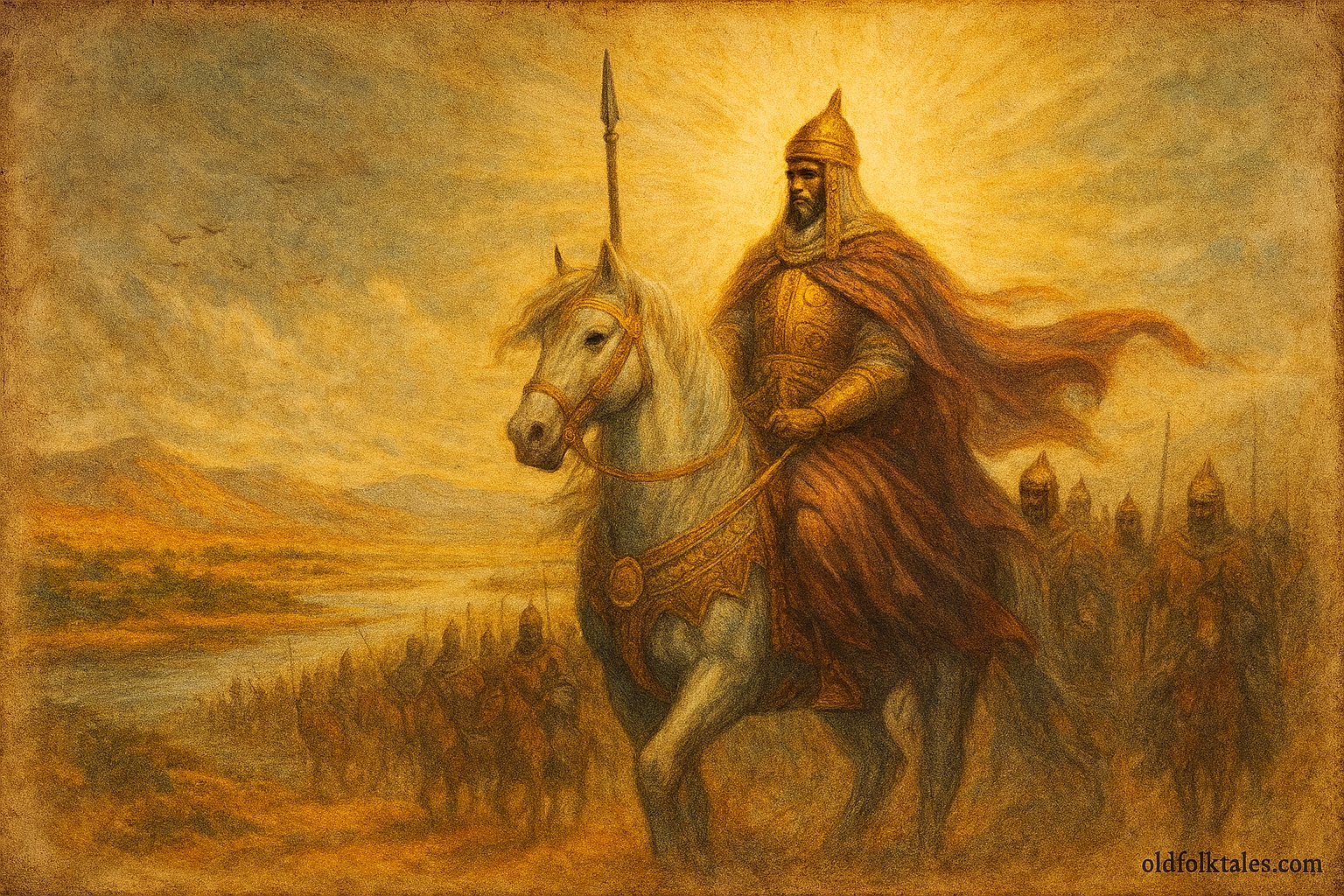
In the seasons when the Niger bent like a crescent of liquid moonlight and the desert winds carried whispers of fate, a child was born whose coming had been foretold by wandering marabouts and desert seers. They said a rider of light would rise in Gao, one whose spirit was stitched from the breath of angels and the resolve of warriors. Thus came Mohammed Ture, son of the Songhai soil, marked from infancy by dreams that shone brighter than waking reality.
From childhood he walked between worlds. He saw visions of blazing rivers, celestial riders descending with books of justice, and a crescent of fire crowning his brow. At night he would stand beneath the desert stars, listening, for he believed the heavens spoke not in thunder but in gentle stirrings of the soul. Elders called him strange; scholars called him touched; but the wise called him chosen.
Yet the world he inherited trembled under the iron rule of Sunni Baru, whose fear darkened the courts of Gao like a storm cloud. Tributes grew heavy. Justice slept. Merchants, scholars, and warriors muttered, for the Empire of Sunni Ali, great though it had once been, now strained beneath tyranny. Mohammed Ture, captain of cavalry and guardian of faith, felt the people’s pain throb like a wound in his own chest.
One night, as he knelt in prayer, a vision struck him with the force of desert lightning. He saw a white-robed figure standing upon the Niger, the water unmoving beneath his feet. “Rise,” the figure whispered, “for you are not born to serve darkness but to restore balance. Lead the people to justice. The throne of Songhai shall be carried by righteousness, not fear.” When the vision faded, Mohammed rose knowing the time for silence had ended.
He gathered loyal warriors, men who believed not in plunder but in purpose. Word spread through villages and caravans that Mohammed Ture rode for reform, for faith, for the broken and the voiceless. When he reached the city gates, the people poured from their homes, murmuring the prophecy long forgotten: A leader shall rise, guided by visions, shining like the desert dawn.
Sunni Baru met him at the plains outside Gao, armored in suspicion. “You seek to topple me with false holiness?” he roared.
“I seek only what is just,” Mohammed replied. “If you fear justice, then you fear God.”
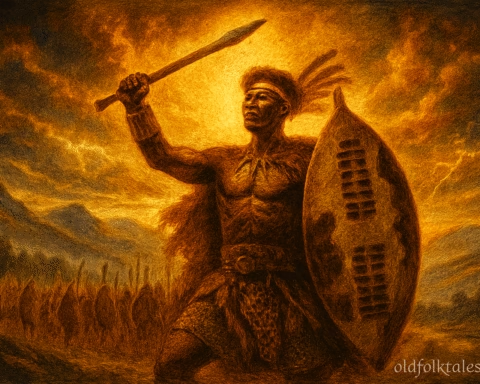
The armies clashed beneath a sky crackling with portent. Dust rose in swirls like desert spirits. Mohammed rode at the front, spear gleaming like a sliver of sunlight. But the true battle raged not in steel but in his heart, for he wondered: Is rebellion righteousness, or is it pride disguised as piety?
As the tide turned in his favor, he hesitated, until another vision came, sudden as birds scattering at dawn. He saw Songhai’s scholars teaching freely again, caravans moving without extortion, mosques flourishing in peace. A just future, not born of ambition, but of obedience to the divine command, flashed before him. And so his resolve hardened like tempered iron.
Sunni Baru fled; the tyrant’s shadow lifted. Mohammed Ture was crowned Askia, meaning “he who replaces,” though many claimed the title itself came from the stunned exclamation of the defeated ruler’s mother: “A si kayé!”, “He shall not be this!” Yet fate had spoken. Askia Mohammed Ture ascended the throne not as a conqueror, but as a reformer.
He rebuilt the empire with the precision of a master calligrapher. Laws were re-inked with justice. Scholars from Timbuktu and beyond found patronage in his court. He standardized weights, revived trade, and restored dignity to governance. The poor knew his mercy; the corrupt feared his gaze. Caravan lords praised him; marabouts prayed for him; mothers told their children, “This is how a righteous ruler walks the earth.”
When he journeyed to Mecca, the sands themselves seemed to bow before his caravan. He was hailed as Caliph of the Sudan, a title that glowed like a second sun. On the pilgrimage, he sought not glory but wisdom, gathering teachings and allies. But even in holy lands, visions followed him, not of conquest, but of responsibility. He dreamt often of a great tree whose branches sheltered the earth; yet he knew that even trees must weather winds.
In his later years, challenges rose like dunes: conspirators, jealous kin, shifting loyalties. Empires rarely remain still. But Askia never relinquished the guiding thread of justice. Even when betrayed and exiled by his own son, he carried himself with the calm of a man who knows victory is measured not by crowns seized but by legacies shaped.
In the twilight of his days, blind yet unbroken, he whispered to his companions, “A ruler’s sight fades, but the light he brings to his people never dies.” And so his legacy endured, woven into the fabric of West Africa, shimmering across centuries like desert heat.
AUTHOR’S NOTE
Askia Mohammed Ture stands among the greatest leaders of pre-colonial Africa, an emperor whose rule fused Islamic scholarship, administrative reform, and profound moral vision. His story symbolizes the triumph of justice over tyranny and the enduring power of righteous leadership.
KNOWLEDGE CHECK
-
What divine signs marked Mohammed Ture in his youth?
-
Why was Sunni Baru’s rule considered oppressive?
-
What internal moral struggle did Mohammed face before overthrowing Baru?
-
How did Askia reform the Songhai Empire after taking the throne?
-
Why was the Mecca pilgrimage significant to his rule?
-
What final lesson does Askia’s twilight years teach about leadership?
CULTURAL ORIGIN: West African Islamic-Songhai Imperial Tradition (15th–16th century)
SOURCE: John Hunwick, Timbuktu and the Songhay Empire (1999).