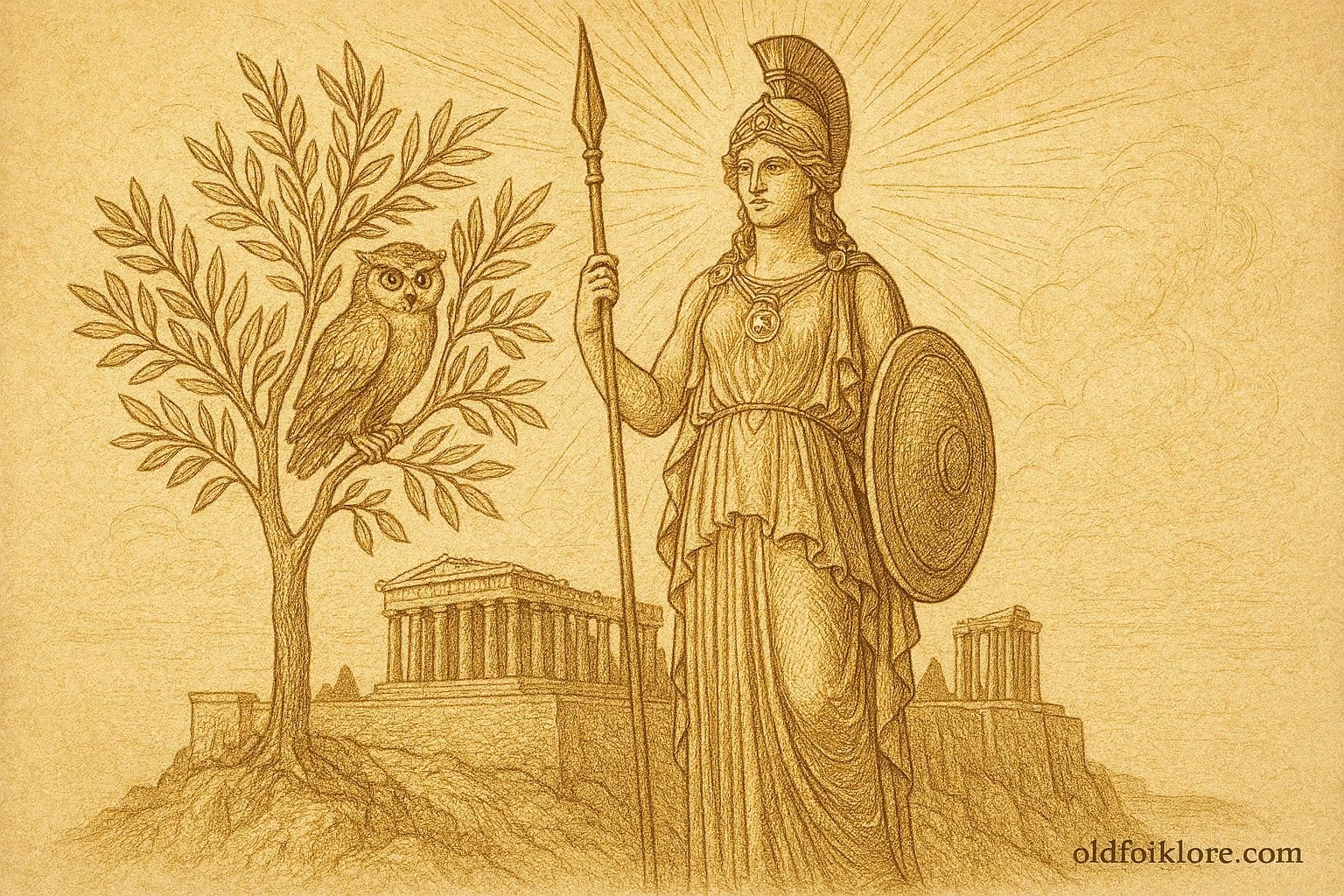
Athena (Greek: Ἀθηνᾶ) stands among the most revered deities of the Greek pantheon, goddess of wisdom, strategy, crafts, and just warfare. She is the divine intelligence that tempers strength with reason, and invention with foresight. Unlike Ares, who revels in battle’s chaos, Athena governs the discipline and moral purpose of war. Her symbols, the owl, the olive tree, and the aegis, represent insight, peace, and protection.
Athena was the favored daughter of Zeus, born not from the womb but from his mind. She is known as Pallas Athena, the “shining-eyed maiden,” and as Polias, protector of cities. Her presence graced the Parthenon atop the Acropolis of Athens, the city that bore her name. Craftsmen, warriors, and philosophers alike prayed to her for skill, prudence, and inspiration. She embodies the harmony between intellect and courage, the light that illuminates both mind and city.
Mythic Story: The Birth of Athena and the Gift of the Olive Tree
Long before Athens bore her name, the gods of Olympus ruled a still-young world, where the powers of wisdom, sea, and sky competed for the hearts of humankind.
Zeus, the thunder-wielding king, once took to wife the Titaness Metis, goddess of counsel and deep thought. Yet when an oracle warned that Metis would bear a child more powerful than her father, Zeus, fearing the cycle of rebellion that had undone the Titans, swallowed her whole. For a time, all was silent, until the wisdom of Metis began to stir within him.
Days turned to nights, and Zeus felt a mighty pain pierce his skull. His cry resounded across Olympus like thunder. Summoning the smith-god Hephaestus, he demanded release from his agony. Hephaestus struck Zeus’ forehead with his hammer, and from the cleft sprang Athena, fully grown and clad in gleaming armor, her spear flashing like morning light.
The heavens fell silent. The gods watched in awe as she saluted her father with calm composure. No infant’s cry, no chaos, only wisdom incarnate. Thus Athena came into being, not from womb or desire, but from intellect and divine power. She was the mind of Zeus made manifest, the perfect union of strength and thought.
In time, her counsel became indispensable to both gods and heroes. She guided Perseus against Medusa, aided Heracles through his labors, and stood beside Odysseus as the patron of cunning and endurance. But her most defining tale belongs to the founding of her beloved city, Athens.
The Contest for Athens
In the early days of Greece, a beautiful region by the sea sought divine protection. Both Poseidon, god of the sea, and Athena, goddess of wisdom, desired to be its patron. The people of the land, led by King Cecrops, prayed to Zeus to decide which god would receive the honor. Zeus decreed that each deity must offer a gift, and the people would choose whose blessing would serve them best.
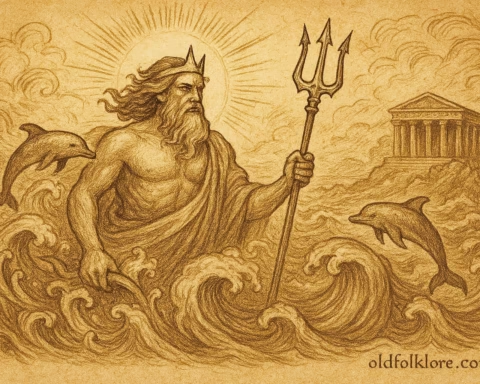
Poseidon strode forward first. Striking the rock of the Acropolis with his trident, he brought forth a fountain of seawater that shimmered with divine light. The crowd gasped at its power, but when they tasted it, the water was bitter and salty, a reflection of the sea’s fury.
Then Athena stepped forward, her gray eyes calm as dawn. She struck her spear into the earth, and from that spot grew a slender tree with silver-green leaves. It was the olive tree, symbol of peace, nourishment, and endurance. The people marveled, for its fruit could feed them, its oil could light their homes, and its wood could build their ships.
King Cecrops lifted his hands to the sky and declared Athena the victor. The city would henceforth bear her name, Athēnai, “the city of Athena.” Poseidon, in anger, flooded the plains, but Athena calmed the waters and blessed her people with wisdom to prosper.
From that day, Athenians revered her as their guardian and guide. Every four years, they held the Panathenaic Festival, carrying a woven robe to clothe her ancient statue within the Parthenon. Her temples overlooked the city like a crown of marble light, symbols of intellect’s triumph over impulse, and peace’s victory over wrath.
Discover the gods, goddesses, and divine spirits who ruled the heavens and shaped human fate
Author’s Note
The myth of Athena is a testament to the divine in human reason. Her birth from the mind of Zeus reveals the sacred nature of thought, while her contest with Poseidon teaches that true power lies not in dominance but in creation. The olive tree endures as her eternal emblem, a reminder that wisdom, once planted, bears fruit across generations. In Athena, the Greeks found not just a goddess, but a mirror of their highest ideals: intellect, restraint, and enlightened strength.
Knowledge Check
Q1. How was Athena born?
A: She sprang fully grown and armored from Zeus’ head after he swallowed her mother, Metis.
Q2. What symbols are associated with Athena?
A: The owl, olive tree, spear, and aegis (protective shield).
Q3. What gift did Athena give to the Athenians?
A: The olive tree, symbolizing peace, prosperity, and endurance.
Q4. How did Poseidon’s gift differ from Athena’s?
A: He created a saltwater spring, powerful but useless for daily life.
Q5. What does Athena represent beyond warfare?
A: Wisdom, crafts, strategy, and moral intelligence.
Q6. What major temple was dedicated to her?
A: The Parthenon, located on the Acropolis in Athens.
Source: Homeric Hymns; Hesiod, Theogony; Pausanias, Description of Greece — Greece.
Origin: Greece