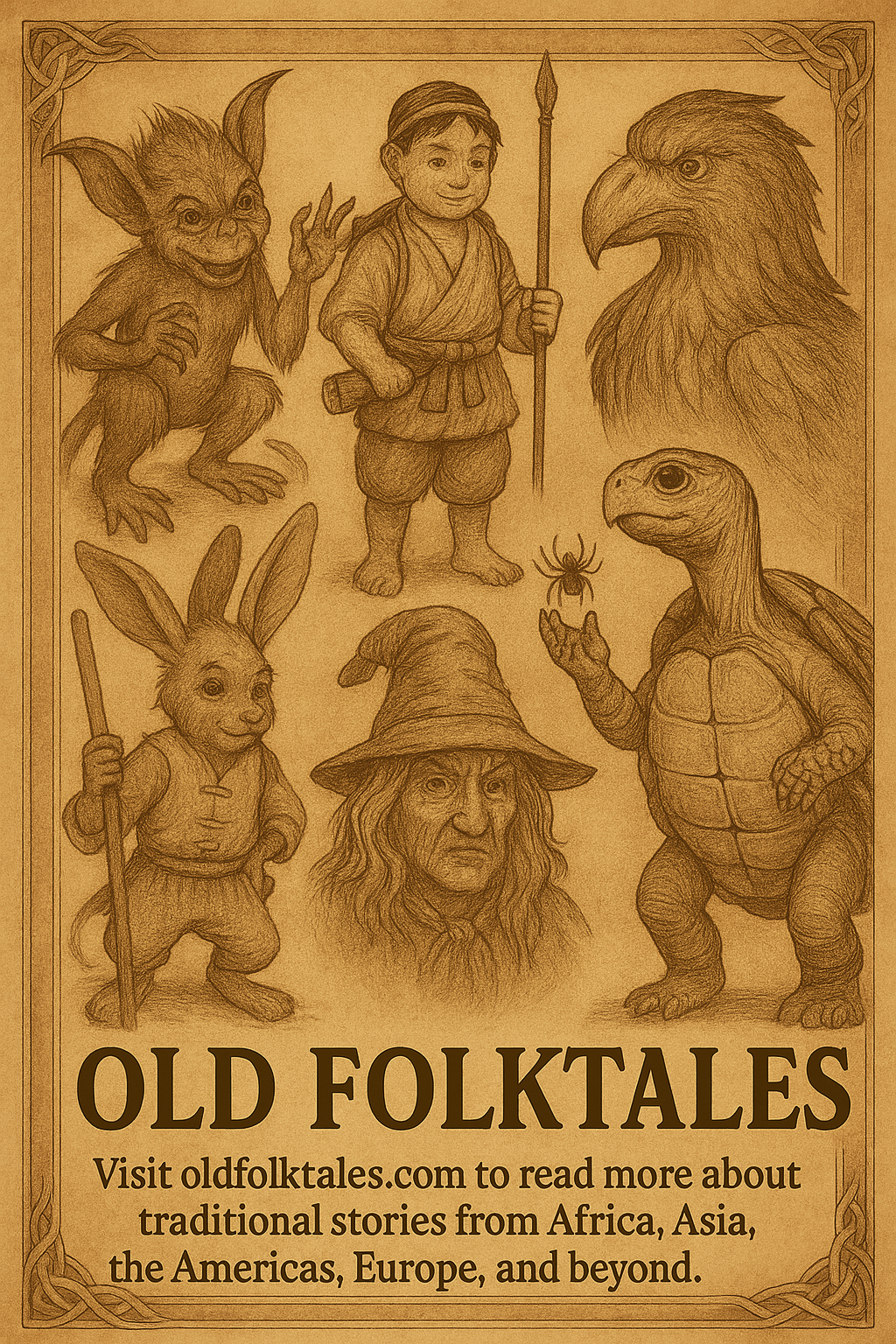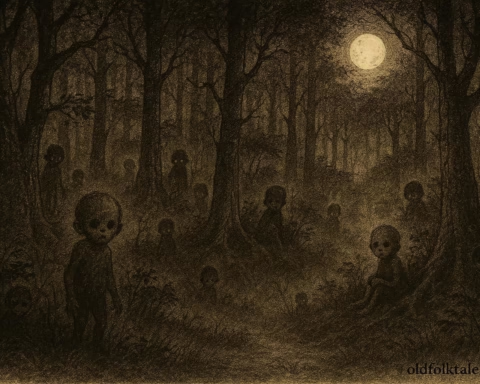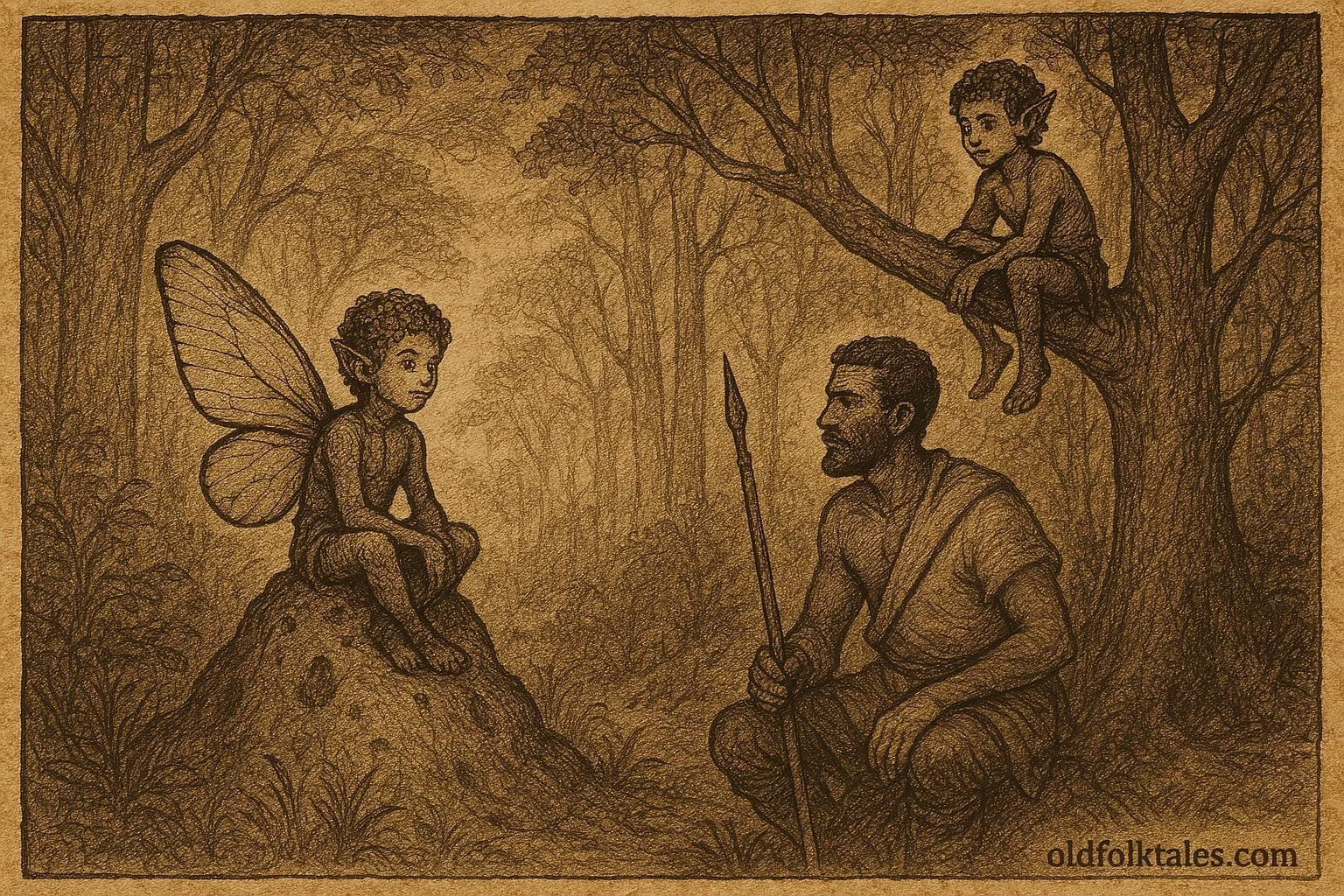
The Aziza are diminutive forest spirits, often described as “little people” inhabiting the deep forests of Fon-speaking regions. Typically wingless in older oral accounts, they dwell in anthills, hollow trees, or sacred groves, blending seamlessly into their environment. Later ethnographic sources sometimes depict them as winged, butterfly-like fairies, but this is widely regarded as a post-contact European-influenced interpretation.
Physically, Aziza are tiny, childlike humanoids, agile and adapted for arboreal life. Their small stature allows them to move stealthily among trees and shrubs, making them nearly invisible to ordinary human eyes. They may have ruddy or dark skin to match the forest surroundings, emphasizing camouflage and subtlety. In later accounts, winged Aziza appear luminous, delicate, and ethereal, signaling benevolence and magical capability.
Behaviorally, Aziza are beneficent and protective:
- Guides for hunters: They provide knowledge of animal tracks, forest paths, and survival techniques. Some accounts even credit them with introducing humans to the use of fire or medicinal herbs.
- Forest guardians: They maintain sacred boundaries, warning against destructive harvesting or disrespectful behavior.
- Cautious moral arbiters: While friendly to those who respect their forest, Aziza may withhold help or subtly punish those who transgress ethical or ritual norms.
- Spiritual companions: Some hunters and villagers report receiving visions or signs of Aziza presence, often interpreted as guidance or blessings.
The Aziza embody knowledge, subtlety, and reciprocity, reflecting the Akan and Fon worldview that humans and spirits coexist in a shared ecological and moral space. Their small size symbolizes the value of attentiveness, humility, and respect for the unseen forces of nature.
Cultural Role
Aziza occupy a central place in Fon and Dahomey forest cosmology, serving multiple roles:
- Practical teachers: Hunters, gatherers, and village elders regard Aziza as sources of forest wisdom, teaching not only hunting and tracking but also herbal medicine, firecraft, and sacred grove etiquette.
- Moral enforcers: By rewarding respectful behavior and withholding aid from transgressors, Aziza instill lessons about reciprocity, environmental stewardship, and community ethics.
- Forest guardians: Their presence designates ecologically and spiritually significant areas, discouraging reckless exploitation of natural resources. Sacred trees, anthills, or groves often bear signs of Aziza habitation, and local customs protect these sites.
- Agents of human-forest reciprocity: Folklore emphasizes that humans must acknowledge and respect forest spirits, reinforcing ecological consciousness and sustainable interaction with nature.
- Oral tradition transmitters: Aziza stories are told around fires, during forest expeditions, or in ritual ceremonies, preserving intergenerational knowledge about survival, ethics, and spiritual practice. The narratives convey both practical survival wisdom and moral guidance, merging physical and spiritual instruction.
Connection to local ritual practice: While rarely violent, Aziza may be invoked in small offerings, prayers, or ritual gestures to ensure safe passage through forests or to seek their assistance in hunting. These practices underscore their role in maintaining harmony between humans and spiritual ecology.
Variant and Historical Notes
Older, pre-contact accounts describe Aziza as:
- Wingless little people living in anthills or forest trees.
- Helpers and forest guides, particularly for hunters.
- Non-aggressive, though they may withhold aid if humans violate moral or ecological rules.
Later ethnographic accounts introduce winged, fairy-like Aziza, often luminescent, reflecting European fairy imagery introduced during colonial-era contact. Scholars emphasize that the winged form is likely a syncretic reinterpretation, not part of original Fon belief.
Across West Africa, similar “forest little people” motifs exist, showing a shared cultural logic: small forest beings act as intermediaries between humans and the wild, offering guidance while enforcing moral or ecological norms.
Comparative Mythology
Aziza resemble other forest-dwelling helper spirits in Africa:
- Akan forest spirits (Ghana)– like the Kishi or smaller benevolent entities, mediating human-forest interaction.
- Azande forest spirits (Central Africa)– small, morally discerning, guiding humans with wisdom.
- European fairies (post-contact syncretism)– the winged Aziza form mirrors fairy imagery, illustrating cultural adaptation after European contact.
These cross-cultural parallels highlight a pattern of forest “mediator spirits” in African mythology: small, subtle beings teaching, guiding, and enforcing ethical interaction with natural environments.
Author’s Note
The Aziza are fascinating because they exemplify benevolence within African spiritual ecology. Their tiny size and forest dwelling symbolize attentiveness, humility, and respect for the unseen forces of nature. Stories of the Aziza preserve both practical survival skills and moral instruction, blending ecological knowledge with spiritual guidance. By carefully distinguishing pre-contact wingless forms from later winged reinterpretations, this entry respects Fon traditions while situating them within broader ethnographic and comparative contexts.
Knowledge Check
- Q: Who are the Aziza?
A: Small forest spirits or “little people” in Fon/Dahomey folklore who assist humans and guard sacred groves. - Q: Where do they live?
A: Anthills, hollow trees, and sacred forest groves. - Q: What assistance do they provide?
A: Guidance for hunters, knowledge of fire, medicinal herbs, and forest survival skills. - Q: How do they enforce moral behavior?
A: By rewarding respect and proper conduct while withholding help from those who violate forest rules. - Q: What distinguishes older Aziza accounts from later depictions?
A: Older accounts describe wingless little people; later accounts sometimes show winged, fairy-like forms influenced by European imagery. - Q: What broader lesson do the Aziza teach?
A: Respect for nature, ecological responsibility, and attentiveness to hidden or subtle forces in the forest.
Source: Peek, Philip M., & Kwesi Yankah, eds. African Folklore: An Encyclopedia. Entry: “Aziza.”
Reference motif: Ethnographic compendia of 19th–20th-century Dahomey/Fon oral traditions.
Origin:
Fon (historical Dahomey, modern Benin) and neighboring West African traditions; oral tradition recorded by ethnographers and compilers during the 19th–20th centuries. Winged variants likely emerge post-contact with European fairy imagery.