Beltane, or Bealtaine in Gaelic, is one of the principal seasonal festivals of the Celtic calendar, historically celebrated across Ireland, Scotland, and the Isle of Man. Its roots trace back to pre-Christian times, though references appear in medieval Irish literature. Beltane marked the beginning of summer and the transhumance of cattle to highland pastures, intertwining agrarian necessity with sacred ritual.
The festival is fundamentally a fire festival, reflecting ancient beliefs in fire as a purifying and protective force. Early Gaelic communities believed that the flames could protect people, livestock, and crops from disease or misfortune while encouraging fertility and abundance. In essence, Beltane ritualized the rhythms of life, aligning human activity with seasonal transitions and the cycles of nature.
Description of the Festival
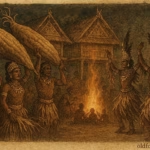
Traditionally, Beltane involved the lighting of large community bonfires, often located on hilltops or near village boundaries. People and cattle were driven between or around these fires, a symbolic act intended to confer protection and vitality. Ashes, embers, and smoke were considered potent, families might carry embers back to their homes to rekindle hearth fires, ensuring the household remained under the safeguarding power of the Beltane flame.
Decorations were integral to the festival. May bushes, garlands, and flowers adorned homes, boundaries, and livestock enclosures. Certain plants, such as hawthorn, were imbued with magical significance, believed to ward off evil spirits and ensure fertility. In some regions, elaborate ritual dances and processions accompanied the fires, combining communal joy with spiritual observance.
Modern revivals of Beltane celebrate its historical themes with torch-lit processions, public bonfires, and artistic interpretations. Communities gather to honor seasonal transitions, incorporating storytelling, music, and ceremonial acts that echo the original agricultural and protective functions. Though contemporary Beltane often emphasizes cultural identity and celebration, the underlying themes of renewal, fertility, and alignment with nature remain central.
Mythic Connection and Symbolism
Beltane embodies a profound interaction between humans, livestock, the environment, and supernatural forces. Fire serves as the primary conduit for spiritual and protective energy. By passing between flames, both cattle and humans symbolically pass through purification, cleansing the body and spirit while ensuring prosperity for the coming season.
The festival also celebrates fertility, of the land, animals, and people. The May bush, flowers, and other vegetation function as tokens of growth and fecundity, connecting the ritual to the cycles of nature. Ancient Gaelic belief systems positioned festivals like Beltane as interfaces between the human and otherworldly realms, where seasonal deities or spirits could be invoked to bless or guard the community.
In medieval literature, Beltane is often associated with liminal moments: the threshold of summer, the movement of cattle to fresh pastures, and the activation of protective rites. The festival’s persistence in folklore reflects the enduring Gaelic worldview in which humans are deeply enmeshed in natural cycles and supernatural oversight. Today, ceremonial acts, processions, and bonfires maintain these mythic threads, ensuring that modern participants engage with both tangible and symbolic aspects of Beltane.
Author’s Note
This article highlights Beltane as a foundational Gaelic festival connecting human communities to seasonal change, fertility, and protective ritual. By examining historical practice and modern revival, it underscores how fire, vegetation, and ceremonial acts conveyed symbolic meaning while safeguarding people and livestock. Beltane’s enduring appeal lies in its integration of myth, ecology, and communal celebration, reflecting the deep relationship between the Gaelic people and the natural world.
Knowledge Check
1. What seasonal transition does Beltane mark?
The beginning of summer and the transhumance of cattle to highland pastures.
2. What is the primary ritual element of Beltane?
The lighting of protective community bonfires.
3. Why were cattle driven between or around fires?
To ensure their health, vitality, and protection from misfortune.
4. What is the symbolic significance of May bushes and flowers?
They represent fertility, growth, and protection from evil spirits.
5. How do modern Beltane revivals differ from historical practices?
They emphasize cultural celebration, torch-lit processions, and artistic performances, while retaining symbolic themes of renewal and protection.
6. What broader cultural function did Beltane serve in Gaelic society?
It aligned human activity with natural cycles, reinforced community bonds, and invoked spiritual oversight for prosperity and safety.