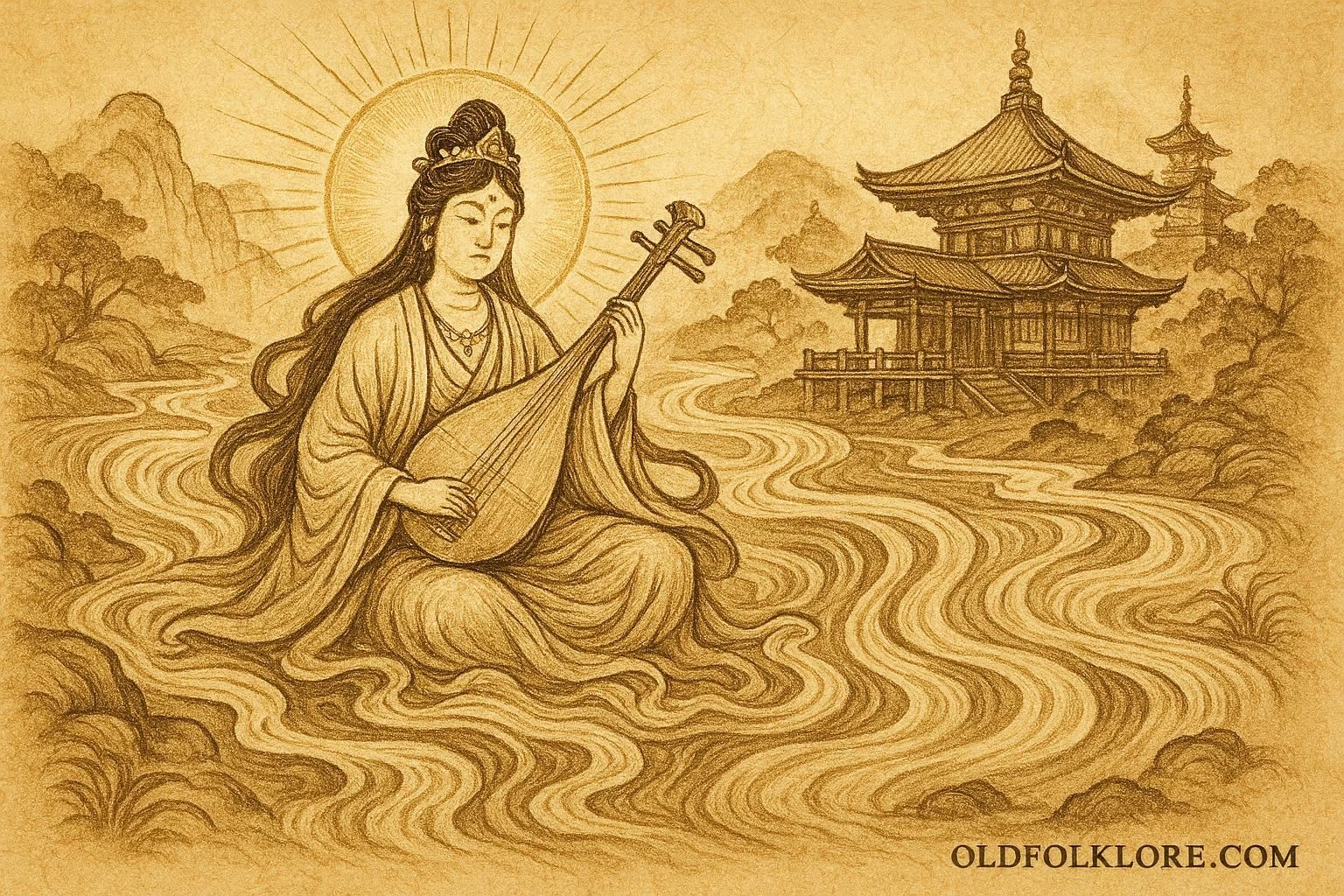
Benzaiten is the luminous goddess of music, eloquence, knowledge, and fortune, embodying the harmony between human creativity and the sacred. Originally derived from the Hindu goddess Saraswati, she entered Japanese spiritual life through Buddhism and gradually merged with local beliefs, often associated with rivers, wells, and flowing waters.
She is traditionally depicted holding a biwa, a Japanese lute, or occasionally a scroll or jewel, representing artistic mastery and wisdom. Temples and shrines dedicated to Benzaiten often perch beside rivers, lakes, or the sea, emphasizing her connection to water, movement, and fluidity, both literal and metaphorical. Worshipers seek her favor for success in music, literature, scholarly pursuits, and eloquence. Offerings of art, performance, or literary work are customary, along with prayers for prosperity and intellectual clarity.
Benzaiten is a rare deity who bridges worlds: the earthly and the divine, the secular arts and sacred ritual. She illustrates how human creativity is intertwined with the spiritual currents of nature, and how devotion and expression coexist harmoniously in Japanese culture.
Mythic Story
Long ago, in a land of shimmering rivers and misted mountains, there lived a deity whose voice could shape the hearts of men and gods alike. Benzaiten, radiant as a morning sun reflected in flowing waters, descended upon the shores of Japan to inspire mortals with the sacred rhythm of music, the clarity of knowledge, and the power of eloquence.
Her arrival was first noticed along the shores of Enoshima, where fishermen and villagers struggled to calm the tumultuous waves that threatened their livelihood. From the sea, Benzaiten emerged, draped in flowing robes that mirrored the motion of rivers, her biwa cradled gently in her hands. When she played, the ocean responded, waves softened, the winds stilled, and the land breathed relief. The villagers, awed and fearful, offered her simple tokens of respect: incense, flowers, and songs of praise, recognizing her as both protector and muse.
One famous legend recounts the story of a young court musician, Hoshihime, whose talent was brilliant yet unpolished. Her compositions, though full of raw emotion, failed to move the nobles or the spirits alike. Distraught, she wandered to the banks of a sacred river at dusk, crying out to the heavens for guidance. There, Benzaiten appeared, her presence glowing in the twilight. The goddess plucked the strings of her biwa, and a melody poured forth that shimmered like the river’s current, intertwining with the whispers of the wind. Hoshihime, enraptured, listened with her heart open, and the divine rhythm coursed through her fingertips. From that moment, her music became transcendent, capturing the subtle harmony of nature and spirit.
Benzaiten’s influence extended beyond the arts. She was a guardian of wisdom and eloquence, blessing scholars and statesmen who approached her with humility. Monks in Heian-period temples spoke of her appearing at night beside the scrolls of diligent students, guiding their brushstrokes and sharpening their insight. Legends say that a well-crafted verse offered to the goddess would echo through eternity, influencing both mortal and immortal ears alike.
She also taught that artistic brilliance was inseparable from ethical conduct. Those who sought her gifts for selfish gain, vain accolades or material wealth, found that her favor would fade, and their efforts became hollow, lacking the subtle grace that characterized her blessing. True devotion, humility, and reverence for both craft and creation were required to partake of her divine inspiration.
One enduring tale describes the construction of Enoshima Shrine, built upon the rocky island where Benzaiten had first emerged. Villagers had struggled to raise a temple upon the jagged cliffs, facing relentless storms that tore away their efforts. They prayed to Benzaiten, offering music, poetry, and sincere devotion, asking her to bless the labor. Moved by their dedication, she calmed the seas and winds, and the shrine rose intact, a sanctuary that became a beacon for worshipers and artists alike. To this day, pilgrims visit Enoshima and other Benzaiten shrines, bringing instruments, verses, and art, perpetuating a cycle of inspiration and reverence that began over a millennium ago.
Through these stories, Benzaiten teaches that the currents of human creativity are inseparable from spiritual awareness. She is a living metaphor for the flow of life, intelligence, and beauty, reminding mortals that artistic expression, wisdom, and eloquence are gifts to cultivate, protect, and share. Her association with rivers and oceans emphasizes that creativity is never stagnant: it moves, adapts, and nourishes, touching both the mundane and the divine.
Learn the ancient stories behind deities of light, storm, and shadow from cultures across the world
Author’s Note
Benzaiten’s myth illuminates the sacred dimension of creativity and knowledge. She reminds us that human gifts are reflections of divine currents, flowing from nature, spirituality, and disciplined practice. True mastery arises not from ego, but from alignment with forces greater than oneself, a lesson resonating across art, scholarship, and daily life.
Knowledge Check
Q1: What domains does Benzaiten govern?
A: Music, eloquence, knowledge, and fortune.
Q2: From which goddess did Benzaiten originate?
A: The Hindu goddess Saraswati.
Q3: What is Benzaiten’s most iconic attribute?
A: The biwa (Japanese lute) she holds and plays.
Q4: How is human creativity connected to Benzaiten?
A: She inspires artistic, musical, and intellectual endeavors in those who are humble and devoted.
Q5: What happens to those who seek her favor selfishly?
A: Her blessings fade, and their work lacks grace and lasting impact.
Q6: Where is one of the most famous Benzaiten shrines located?
A: Enoshima Island, Japan.
Source: Heian-period texts and temple records, Japan.
Source Origin: Japan, introduced via Buddhism, 6th–8th century CE