
In the days when the world was young and wild, when mead-halls glowed like beacons against the endless northern darkness, there lived a warrior whose name would echo through the centuries. His name was Beowulf, a Geat from the windswept lands across the cold, gray seas. He was strong beyond measure, his arms like iron, his heart like flame, a man born to face the terrors that haunted the night.
Word reached Beowulf’s ears of a terrible affliction that had befallen King Hrothgar of Denmark, a noble ruler whose generosity and wisdom were known throughout the northern kingdoms. Hrothgar had built a magnificent mead-hall called Heorot, a place of feasting and fellowship where warriors gathered to celebrate victories and share stories beneath the flickering firelight. But joy had turned to horror, for a monster named Grendel a cursed descendant of Cain, twisted and filled with hatred for human happiness came stalking through the fog each night to slaughter Hrothgar’s men. For twelve long winters, the hall stood empty after dark, its benches stained with blood, its songs silenced by fear.
When Beowulf heard of Hrothgar’s plight, he did not hesitate. With fourteen loyal warriors, he sailed across the whale-road, his ship cutting through the waves like a blade through silk. The journey was perilous, but Beowulf’s resolve never wavered. Upon reaching Denmark’s shores, he presented himself before King Hrothgar and pledged to rid Heorot of its tormentor.
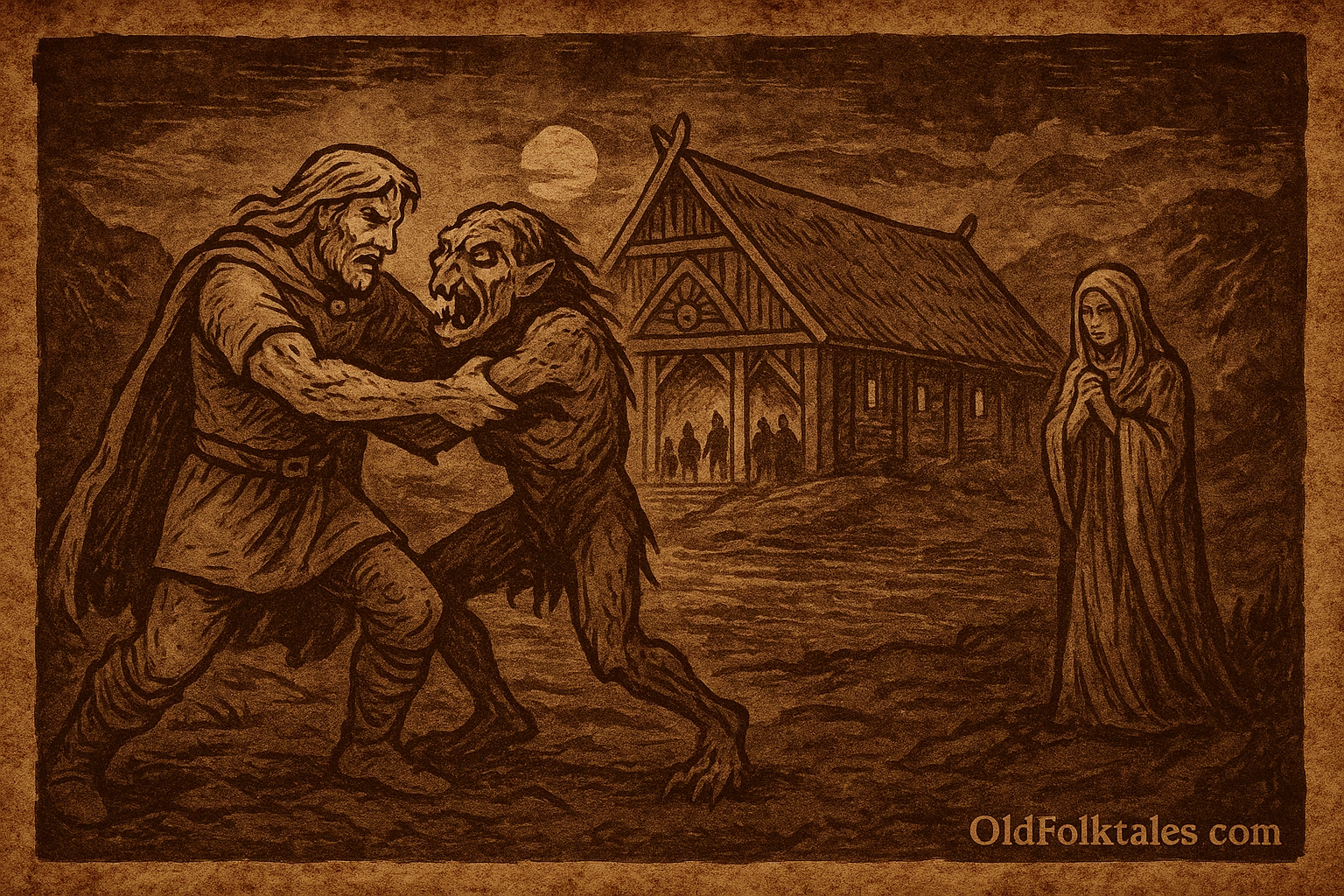
That night, as darkness draped itself over the land like a shroud, Beowulf and his men waited in the hall. They heard it first the heavy footfalls, the scraping of claws against stone. Then Grendel burst through the doors, his eyes burning with malice, his mouth dripping with hunger. The monster seized one of Beowulf’s warriors and devoured him in moments, crunching bone and sinew with savage glee.
But when Grendel reached for Beowulf, he met resistance unlike any he had known. Beowulf gripped the creature’s arm with superhuman strength, refusing to release his hold. They grappled in the darkness, crashing against walls, splintering benches, shaking the very foundations of the hall. Grendel howled in pain and rage, desperate to escape this iron grasp. With a sickening tear, Beowulf ripped the monster’s arm from its socket. Grendel fled into the night, leaving a trail of black blood, returning to his marsh-home to die in agony.
The Danes rejoiced, believing their nightmare had ended. They hung Grendel’s arm from the rafters as a trophy and held a great feast in Beowulf’s honor. But their celebration was premature. For Grendel’s mother an even more ancient and terrible creature dwelled in the dark depths of a cursed lake. When she learned of her son’s death, she rose from the cold waters, consumed by the need for vengeance.
That night, she descended upon Heorot and carried away Hrothgar’s most trusted counselor, reclaiming her son’s severed arm and returning to her underwater lair. Hrothgar, grief-stricken and weary, begged Beowulf for help once more. Without hesitation, the hero agreed to pursue the she-monster to her dwelling place, no matter how deep or dark.
Beowulf donned his armor and descended into the murky lake, swimming down through waters so cold they could freeze a man’s heart. He entered a vast underwater cave where Grendel’s mother waited. They fought with savage fury, and Beowulf’s sword even the legendary blade Hrunting failed to pierce her enchanted hide. Desperately searching the cave, Beowulf spotted an ancient sword forged by giants in ages past, so massive that no ordinary man could lift it. With all his strength, he seized the weapon and struck a mighty blow, severing the monster’s head and ending her reign of terror forever.
Triumphant, Beowulf returned to the surface carrying Grendel’s head as proof of his victory. The Danes honored him with treasure and praise, and he sailed home to the land of the Geats, where he eventually became king. For fifty winters, Beowulf ruled his people with wisdom and strength, bringing prosperity and peace to his kingdom.
But fate had one final test for the aging hero. A dragon, ancient and terrible, was awakened when a slave stole a jeweled cup from its treasure hoard. Enraged, the beast emerged from its barrow to rain fire upon Beowulf’s kingdom, burning villages and slaughtering innocents. Though Beowulf was now old, his hair gray and his joints stiff, he could not stand idle while his people suffered.
He went to face the dragon, knowing in his heart it might be his last battle. Most of his warriors fled in terror when they saw the monster’s flames, but one young thane named Wiglaf remained loyal. Together, they fought the dragon with desperate courage. Beowulf struck the fatal blow, driving his blade deep into the creature’s throat, but not before the dragon’s venomous fangs sank into his neck.
As Beowulf lay dying, he asked Wiglaf to bring him treasures from the dragon’s hoard so he might see what his sacrifice had won for his people. He spoke of his life without regret, grateful for the years he had been given, the enemies he had defeated, the people he had served. He instructed Wiglaf to build a great burial mound by the sea, a beacon for sailors that would keep his memory alive through the ages.
And so, it was done. Beowulf’s followers built a magnificent barrow on the windswept cliffs, and they placed the dragon’s treasure within it, along with their beloved king. The flames of his funeral pyre rose high into the sky, visible for miles across the water, and his people mourned the passing of the greatest hero their land had ever known.
Click to read all Myths & Legends – timeless stories of creation, fate, and the divine across every culture and continent
The Moral Lesson
Beowulf teaches us that true heroism lies not in seeking glory for its own sake, but in selflessly serving others, even at great personal cost. The poem reminds us that all earthly power and fame are temporary that mortality comes for even the mightiest warriors. What endures is the legacy we leave through our actions: courage in the face of terror, loyalty to those who depend on us, and the willingness to sacrifice for the greater good. Beowulf’s life demonstrates that a hero’s worth is measured not by victories alone, but by unwavering commitment to duty, honor, and protecting the innocent until the very end.
Knowledge Check
Q1: Who was Beowulf and where did he come from?
A: Beowulf was a legendary Geatish warrior from what is now southern Sweden. He was renowned for his extraordinary strength and courage, eventually becoming king of the Geats and ruling for fifty years.
Q2: What monster terrorized King Hrothgar’s mead-hall and why did Beowulf fight it?
A: Grendel, a descendant of Cain cursed to wander in darkness, terrorized Heorot hall for twelve years. Beowulf traveled to Denmark to help King Hrothgar because he heard of the suffering and felt honor-bound to defeat the monster.
Q3: How did Beowulf defeat Grendel?
A: Beowulf fought Grendel without weapons, relying on his superhuman grip strength. During their violent struggle in Heorot, Beowulf tore off Grendel’s arm, causing the monster to flee to his marsh-home where he died from the wound.
Q4: What symbolism does the dragon represent in Beowulf’s final battle?
A: The dragon symbolizes the inevitable challenges of mortality and the destructive power of greed and vengeance. It also represents Beowulf’s final test a confrontation with death itself that demonstrates his unwavering commitment to protecting his people even in old age.
Q5: What is the cultural significance of Beowulf in Anglo-Saxon literature?
A: Beowulf is the oldest surviving epic poem in Old English and represents the foundation of English literature. It preserves Anglo-Saxon values of heroism, loyalty, and honor while exploring timeless themes of mortality, legacy, and the transient nature of earthly glory.
Q6: What lesson does Beowulf’s death scene teach about leadership and sacrifice?
A: Beowulf’s death teaches that true leadership requires self-sacrifice and courage until the end. Even as an old king, he faced the dragon to protect his people, demonstrating that a leader’s duty transcends personal safety and that how one faces death can define one’s entire legacy.
Cultural Origin: Anglo-Saxon England, with Danish and Geatish






