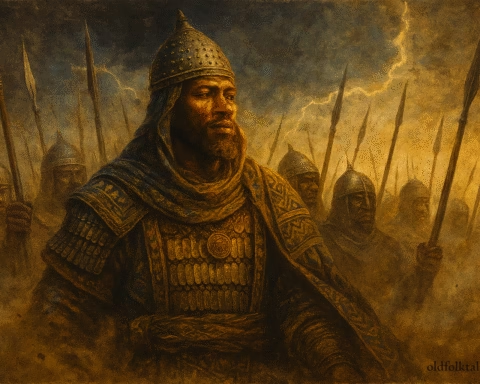
Before the first songs of the Muisca rose from the high plains of Cundinamarca, before the lakes mirrored the faces of gods, the world was dim and unmeasured. Out of the eastern horizon—out of the first trembling gold of dawn, came a radiant being whose steps left ripples in the air. His hair shone like woven sunlight, and a long beard flowed over garments brighter than salt in the noonday blaze. This was Bochica, the divine messenger, shaped from the breath of Chiminigagua, the supreme giver of light.
He descended upon the world not in thunder but in quiet brilliance. Where he walked, birds learned new melodies, and the mist curled away as though shy before his presence. The people who dwelled in scattered huts across the savanna looked upon him with awe. They had known the world as a maze of storms, passions, and wandering shadows, but Bochica brought calm with every measured word.
He taught first the harmony of the land: how to plant maize with patience, how to weave cotton so it could hold warmth through the cold nights, how to guide llamas across the ridges without fear. He spoke of measured conduct, of honoring the ancestors, of holding truth close, and of living not for the whims of desire but for the balance of community. To each village he traveled, walking with the staff that glowed like a captured star, and where he set his hand, order blossomed.
Yet even the brightest light draws the anger of the dark.
Far to the west dwelled Huitaca, the moon-sorceress of revelry and rebellion. She was radiant in her own way, night-silver hair, eyes of blue twilight, but her heart bent toward temptation, not balance. She saw humans following Bochica’s teachings and sought to unweave them. If Bochica preached discipline, she offered ecstasy. If he praised truth, she encouraged indulgence. Her laughter stirred winds that loosened the beams of houses, and her dancing cast illusions that pulled people away from duty.
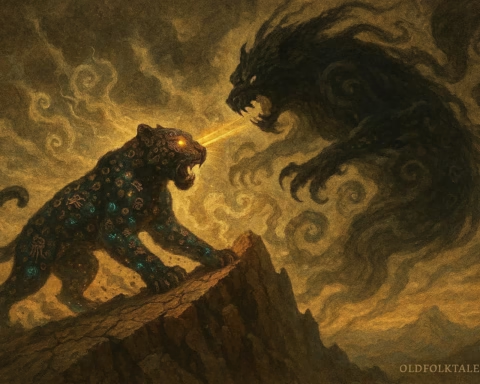
The world trembled between these two forces, one of order and one of unmoored freedom.
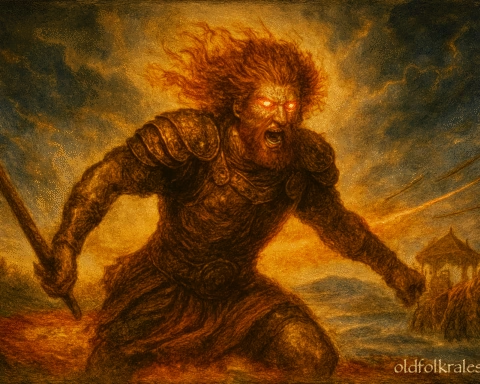
In time, Huitaca’s mischief swelled into calamity. Clouds gathered thick as obsidian slabs, and rains fell with such fury that rivers swelled beyond memory. Lakes merged with valleys. Crops drowned in their fields. Thunder boomed like the footsteps of enraged giants. The people cried out as waters swallowed their homes. Entire hamlets became islands drifting toward oblivion.
It was said that Huitaca, in defiance of the laws Bochica had set, breathed her magic into the storm until the world leaned toward destruction.
The flood raged for days that felt like years.
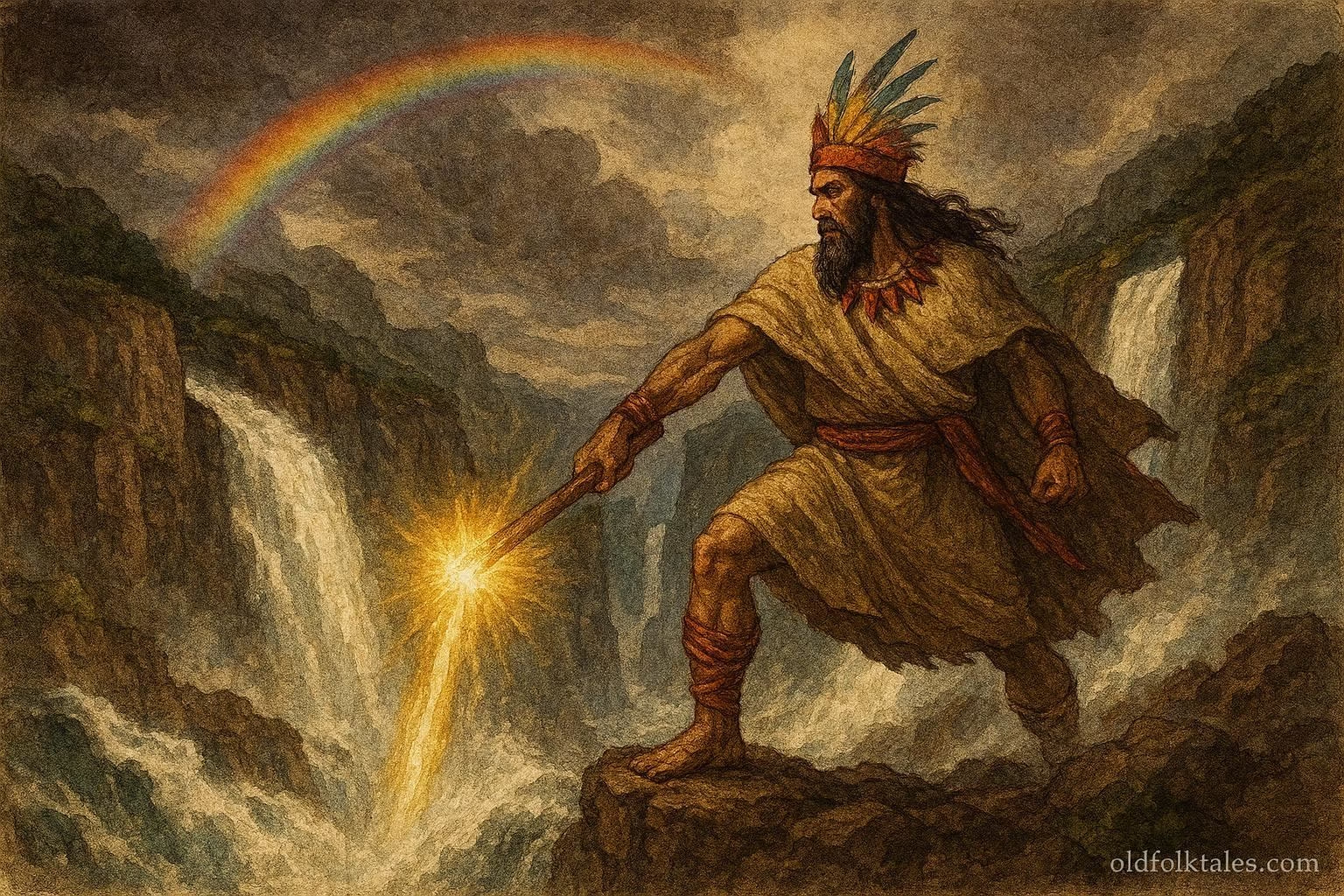
From the peak of Mount Chía, the last dry refuge, the Muisca prayed. Their torches burned low, and their voices cracked with desperation. Then, as dawn broke on the seventh day, a golden arc split the sky. Bochica descended on a rainbow, vast as a bridge of fire, his staff blazing white against the storm.
He surveyed the drowning world with sorrow, sorrow for the suffering of the people, for the land he loved, and even for Huitaca, whose gifts had twisted into chaos. Raising his staff, he struck the mountains of Tequendama. The earth shuddered. Stone cracked, and a mighty chasm opened. Through this wound in the rock, the floodwaters roared and plunged downward in a torrent that carved the great Tequendama Falls, releasing the world from the grip of the storm.
Where silence had been drowned by water, the land exhaled.
Bochica stood before the people, his figure shimmering with tired radiance. He warned them that every blessing carries its shadow, and every shadow must be met with wisdom, not indulgence. “The world is fragile,” he said. “You must keep balance within yourselves if the land is to remain in balance.”
As for Huitaca, Bochica could not destroy her, hers was a necessary force in the weaving of the cosmos. Joy, after all, was not a sin. But unrestrained joy was ruin. So he transformed her into an owl, a creature of night whose beauty remained but whose mischief would be limited. She took flight into the darkness, her wings gleaming silver, a reminder that chaos still existed but now at the edges of the circle of life.
Having restored harmony, Bochica withdrew from the villages. Some say he walked into the eastern mountains and became one with the dawn. Others believe he ascended again on a rainbow, returning to the realm of Chiminigagua. But the laws he left behind, the moral order, the rituals, the teachings of justice, became the foundation upon which the Muisca built their world.
And when the sun rises each morning, spilling gold across the savanna, the people remember the bearded prophet who descended from light to rescue them from darkness.
Author’s Note
Bochica stands among the great culture heroes of the Americas, a bringer of order, a judge of imbalance, and a bridge between the divine and human realms. His legacy is preserved not only in the myths of the Muisca but also in the enduring symbolism of Tequendama Falls, which remains a natural monument to his triumph over chaos. His story echoes the universal theme of balance: that neither strict order nor unrestrained freedom can sustain a world, but harmony between them can.
Knowledge Check
-
What divine source does Bochica originate from?
-
How did Bochica first aid the Muisca people?
-
What role did Huitaca play in the flood?
-
How did Bochica end the great deluge?
-
Why did Bochica transform Huitaca instead of destroying her?
-
What natural landmark symbolizes Bochica’s intervention?
Cultural Origin: Muisca (Colombia), Andean highlands of the Eastern Cordillera.
Source: Pedro Simón, Noticias Historiales de las Conquistas de Tierra Firme (1627).