Bon Om Touk, known as the Cambodian Water Festival, is rooted in the natural and spiritual rhythm of the Tonlé Sap River. For centuries the Khmer people have observed the dramatic annual reversal of the river’s current, a hydrological event caused by the monsoon-fed Mekong swelling against the Tonlé Sap’s channel. This turning point once marked a shift in agricultural seasons, fish migrations, and Cambodia’s economic prosperity. Over time, the reversal became more than a natural phenomenon. It evolved into a national celebration of gratitude, renewal, and cosmic balance. The festival’s origins reach into the era of the Angkor kings, when waterways powered the empire’s agriculture, trade, and ceremonial life. Historical records describe naval displays, offerings to river spirits, and royal support for rituals that honored the forces guiding the kingdom’s prosperity.
Description
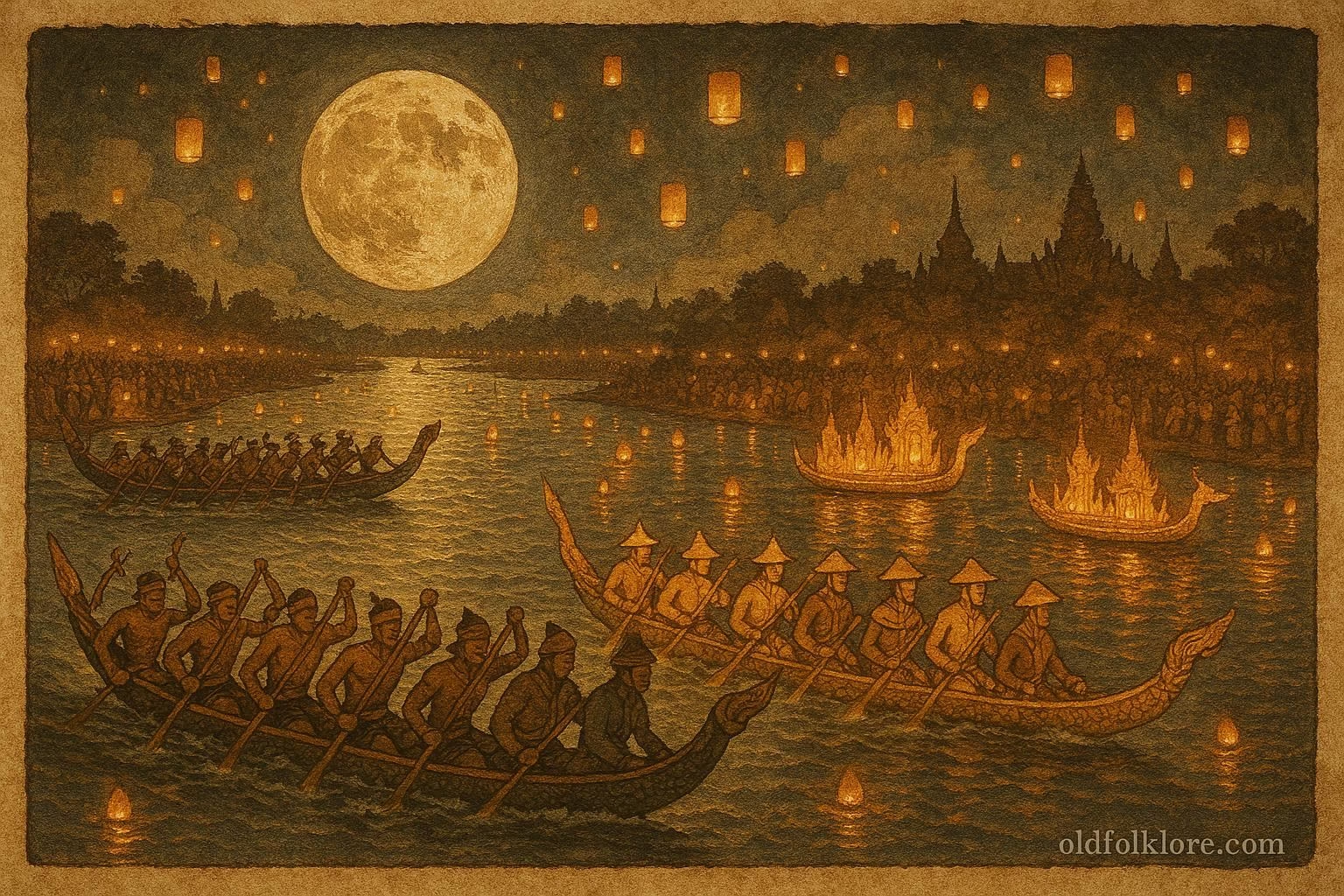
Bon Om Touk occurs in early November during the full moon of the Buddhist lunar calendar. This period signals the end of the rainy season and the approach of cooler months. Communities gather along the banks of the Tonlé Sap and Mekong Rivers, transforming Phnom Penh and other river towns into vast arenas of celebration. One of the most iconic features of the festival is the longboat racing tradition. Each boat, narrow and brightly painted, carries dozens of rowers whose synchronized strokes echo the powerful movement of the river. Villages train for months, treating the races as acts of devotion, community pride, and thanksgiving for the river’s life-giving abundance.
As evening unfolds, the waterways glow with illuminated boats, lanterns, and moonlit reflections. These glowing vessels honor the river spirits and royal guardians associated with Cambodia’s maritime past. Fireworks burst above the water, signaling joy and the hope for good harvests in the coming year. Families gather to offer food at temples, visit shrines, and release small floating lanterns as symbols of gratitude and renewal. Monks chant blessings that link moral merit with the rhythm of the natural world. Even in modern celebrations, participants recognize that the festival marks the balance between human effort and nature’s generosity.
Another important practice is Sampeah Preah Khe, a ceremony held at the royal palace. Here, water is blessed and released to acknowledge the harmony between the monarchy, the people, and the riverine cosmos that has shaped Cambodia’s identity. Though the public celebrations have grown larger, the core values, gratitude, harmony, and spiritual renewal, remain central to the festival.
Mythic Connection
Water is central to Khmer cosmology. Ancient myths describe rivers as pathways of divine motion, governed by spirits who maintain the world’s balance. In Cambodian tradition, rivers are inhabited by neak ta, local guardian spirits, and by serpentine naga beings that connect the underwater realm to the heavens. The reversal of the Tonlé Sap’s flow is viewed not simply as a seasonal event but as a cosmological turning. It symbolizes the world’s renewal and the cooperation between natural cycles and divine will.
The illuminated boats, moonlit rites, and offerings to the rivers honor Preah Mae Kongkea, the Mother of Waters, whose protection ensures fertility and prosperity. The festival also reflects Buddhist interpretations of interdependence. Just as the river reverses course, human beings can return to ethical living, gratitude, and compassion. The full moon represents clarity, enlightenment, and the perfection of cycles. Bon Om Touk therefore unites indigenous water worship, the legacy of the Angkor kings, and Buddhist renewal practices into a single ritual that affirms Cambodia’s long-standing dependence on and reverence for the natural world.
Even the boat races carry mythic weight. They echo the martial and ceremonial traditions of the Angkor period, when the kingdom’s strength was tied to mastery of water. In races, the synchronized motion of rowers symbolizes collective harmony and the disciplined cooperation needed to maintain cosmic and social order.
Author’s Note
This article examines Bon Om Touk as a layered cultural phenomenon that reflects Cambodia’s historical reliance on river systems, the spiritual significance of water in Khmer cosmology, and the syncretic blend of Buddhist and indigenous traditions. It highlights how ancient rites of gratitude, protection, and renewal have evolved into a vibrant national festival. The narrative explores ritual practices, mythic associations, and civic meanings, emphasizing the continuity between historical water worship and modern cultural identity.
Knowledge Check
1. What natural event anchors Bon Om Touk?
The annual reversal of the Tonlé Sap River’s current.
2. Why are boat races significant?
They symbolize community strength, spiritual harmony, and historical river-based traditions.
3. How does the festival relate to Khmer cosmology?
It honors water spirits, naga beings, and the idea that nature’s cycles mirror cosmic balance.
4. What is the meaning of illuminated boats?
They represent offerings to river spirits and recall royal maritime protection.
5. How does Buddhism shape the festival?
Through merit-making, moon rituals, and themes of ethical renewal.
6. What does the full moon symbolize?
Clarity, completion of cycles, and spiritual renewal.