The Orinoco River winds through the heart of Venezuela and Colombia like a living silver serpent, wide as a great plain in some places and narrow as a restless channel in others. For the Indigenous Peoples who have lived along its banks for countless generations, the river is not only water. It is breath, memory, and spirit. And beneath its dark surface moves one of the most feared and revered beings of all. The Boto Negro. The Black River Spirit.
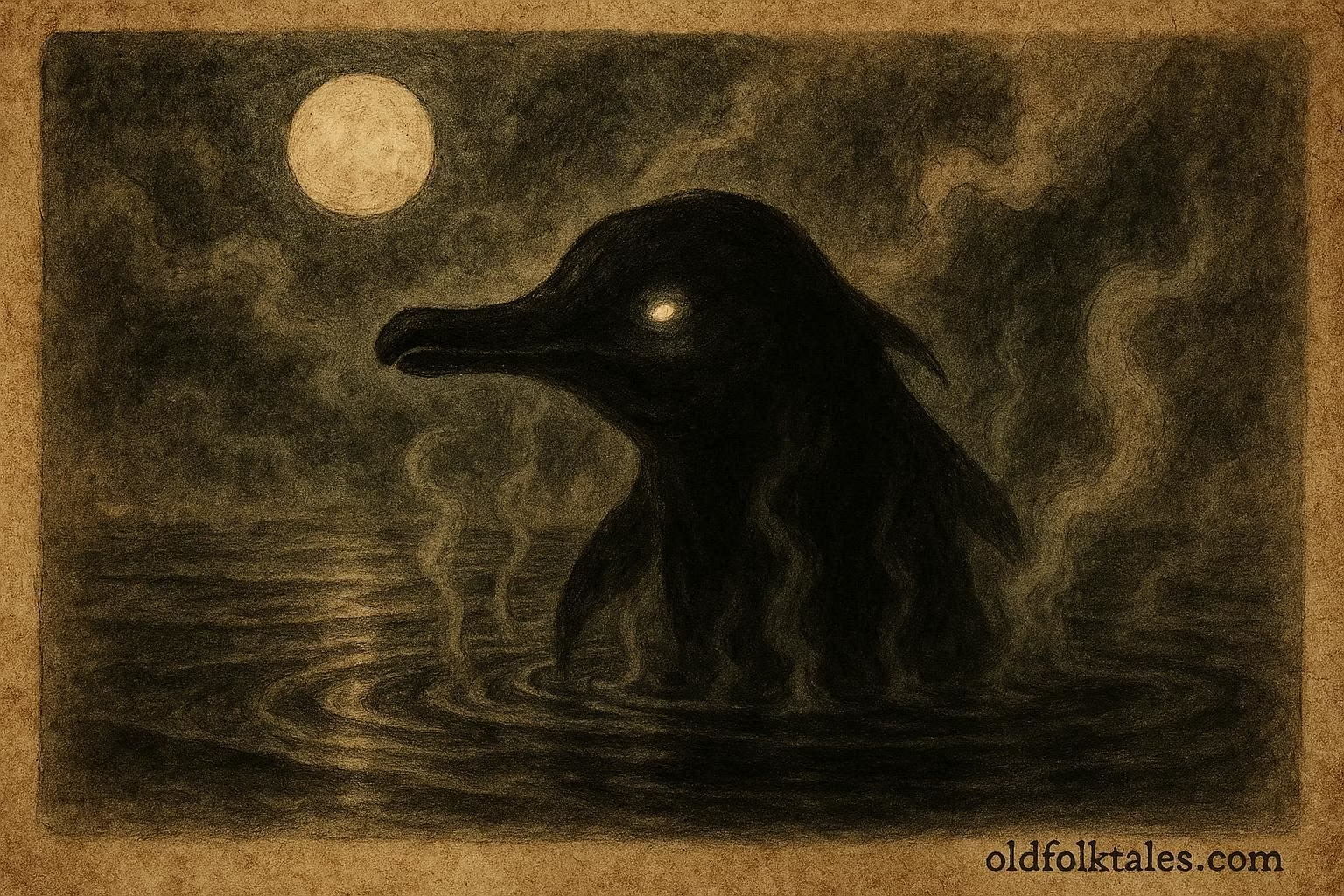
Unlike the pink river dolphins who play near the surface, the Boto Negro is rarely seen in daylight. Elders say it lives in the deepest hollows of the river where sunlight never reaches and where the stones remember the footsteps of ancient spirits. When the world sleeps and the moon climbs high, the Boto Negro rises, carrying with it the darkness of the deep. Some nights it appears as a smooth dolphin shape made of shadow. Other nights it moves like a whisper of black water, shifting faster than any creature that breathes air. And on the rarest nights it comes as a shimmering figure of dark light, its eyes reflecting a wisdom that is older than any village story.
Long ago, according to the oral traditions of the river people, the first encounter with Boto Negro happened during a season of drought. The river had grown thin and hungry, and boats scraped the muddy bottom. A young fisherman named Tariku went out each dawn searching for food, only to return with empty nets. His village grew desperate, for the river was their life and without it they had nothing.
Encounter dragons, spirits, and beasts that roamed the myths of every civilization
One evening, after hearing the elders pray for guidance, Tariku decided to go alone farther down the river than he had ever gone before. The night was quiet. No frogs sang, no insects hummed. Only the soft dip of his paddle echoed across the still water. A mist rose from the river like breath from a sleeping giant.
In the middle of that silence, Tariku heard a soft sound. A ripple. A shift. A breath. Something moved beneath his canoe, heavy and slow. Before he could react, a shape surfaced next to him. A dolphin, but not like any he had seen. Its skin was the color of midnight. Its eyes glowed faintly, not with brightness, but with depth, as though they were windows into the bottom of the world.
Tariku froze. Stories of Boto Negro filled his childhood. Warnings from elders rang in his mind. Respect the river. Honor the spirits. Keep your heart clean. The Boto Negro tests those who travel the waters. The pure of heart receive guidance. The reckless receive danger.
The spirit circled his canoe three times. Each time it moved, Tariku’s breath trembled. The river around him darkened as though the night itself had sunk into the water. He felt the presence of something vast and ancient. Not evil. Not good. Simply powerful beyond measure.
Then, in a voice softer than a drifting leaf, the Boto Negro spoke. It did not use words, but Tariku understood all the same. It warned him that the river was shifting. A whirlpool was forming upstream where the drought had exposed hidden rocks and old channels. Anyone who paddled through without caution would be dragged under.
Tariku bowed his head, whispering gratitude. The shadowy dolphin shape dipped beneath the water and vanished, leaving only a faint trail of ripples behind.
By dawn Tariku had returned home and gathered the village. He led them to the dangerous bend in the river and showed them the swirling water that waited like the mouth of a hungry spirit. They worked together to build a warning structure on the riverbank, marking the spot with woven reeds and bright feathers.
From that day on, the people honored the Boto Negro with offerings of sweetfruit and tobacco leaves. They understood the spirit was neither enemy nor friend, but a guardian who demanded respect. Those who traveled the river began to whisper quiet prayers each time they launched their boats. Some asked for guidance. Others asked only to be seen with humility rather than arrogance.
But not everyone respected the lessons of the river. One evening a group of careless young men ignored the warnings, racing their canoes across the forbidden bend to prove their bravery. As they laughed and shouted, the river began to churn beneath them. A shadow moved through the water. A sudden pull dragged one canoe sideways. The young men scrambled to escape as the current spun wildly.
Through the chaos they saw it. The Boto Negro rising slowly, its dark form cutting through the water, its eyes fixed on them with a cold stillness. It did not attack. It simply watched. And in that still gaze, the young men felt their pride drain away like spilled water.
They barely escaped the whirlpool, paddling back to shore in silence. None spoke of bravery again. Instead they brought offerings to the riverbank and bowed before the water, whispering apologies to the spirit that had spared them.
The legend of the Boto Negro endures to this day. Elders say that those who travel the river must carry not only strength, but awareness. The river teaches those who listen. It punishes those who forget. And deep beneath the surface, the Boto Negro continues its eternal watch, guiding and testing all who dare to move across its ancient waters.
Explore the shadows of world mythology, where demons test the soul and spirits watch over mankind
Author’s Note
The Boto Negro reflects the belief that nature itself holds wisdom and danger in equal measure. Through respect and humility, communities maintain balance with the living world that surrounds them.
Knowledge Check
1. What form does the Boto Negro take when it rises from the depths?
It appears as a shadowy dolphin or shifting dark water.
2. Why did Tariku venture farther down the river at night?
He sought food during a drought when the river was failing.
3. What message did the Boto Negro give to Tariku?
It warned him about a forming whirlpool that threatened travelers.
4. How did the villagers respond to the warning?
They marked the dangerous area and honored the spirit with offerings.
5. What happened when the careless young men ignored the warnings?
They were nearly pulled into the whirlpool and learned humility.
6. What does the Boto Negro symbolize for the river people?
The balance of guidance and danger within nature.