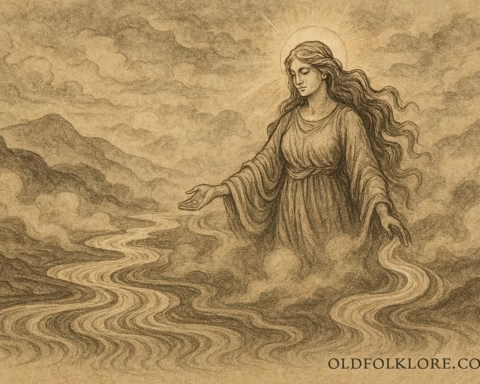
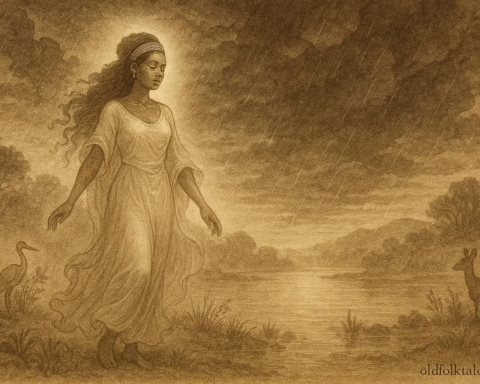
Brigid, also known as Brìghde or Bríg, is one of the most venerated deities of the pre-Christian Irish pantheon. Her name, meaning “The Exalted One,” mirrors her standing among the Tuatha Dé Danann, where she presides over healing, poetry, smithcraft, childbirth, and the sacred fire. She is often depicted as radiant, her presence marked by dawn-light or the warmth of hearth flames.
Brigid is said to be the daughter of the Dagda, chief of the Tuatha Dé Danann, and sister to the powerful gods of craft and battle. She is associated with sacred wells, poetic prophecy, and the inspiration known in Irish tradition as imbas. Smiths, bards, and midwives regarded her as patroness, and many early Irish communities maintained perpetual flames in her honor.
Her worship endured into the Christian era through syncretism: the figure of St. Brigid of Kildare preserved her symbols, fire, healing wells, pastoral blessings, ensuring that the goddess’ legacy continued through transformed devotion.
Mythic Story
Long before the monasteries of Kildare lit their eternal flame, before Ireland’s kings ruled from Tara, the island’s mists carried stories of a radiant goddess who walked between worlds. Her name was Brigid, daughter of the Dagda, born at the first blush of dawn. They say that at the moment of her birth, a pillar of fire rose from her brow, touching the heavens so brightly that watchers believed the sun itself had risen early to greet her.
Brigid grew not in courtly chambers but among artisans and poets. She traveled between clans, bringing blessings to those who forged iron, tended livestock, composed praise-songs, or delivered infants into the world. The people claimed that when Brigid entered a home, the hearth glowed brighter; when she sang, even the wind grew still to listen. She was the flame that warmed, the word that healed, the spark that shaped molten metal into useful form.
One of the most cherished tales of Brigid begins in a time of tension between the Tuatha Dé Danann and the Fomorians, their ancient rivals. Brigid’s husband, Bres, had become High King, though his rule pleased neither people nor gods. The Fomorian influence grew harsh, demanding heavy tribute. Yet Brigid remained a figure of compassion among all tribes; wherever oppression tightened its grip, she offered solace.
Among Brigid’s three divine sons was Ruadán, skilled in metals and craft, trained by both Tuatha Dé Danann smiths and Fomorian warriors. Hoping to forge unity, Brigid encouraged her son’s training, believing shared craft might soften hostility. But Ruadán’s path turned toward violence.
The tale tells that the famed smith Goibniu, master of divine weapons, forged unbreakable blades for the Tuatha Dé Danann. Fomorian leaders, seeking to undermine their enemies, persuaded Ruadán to betray the master smith. They whispered that striking down Goibniu would win him honor. Ruadán, torn between loyalties, agreed.
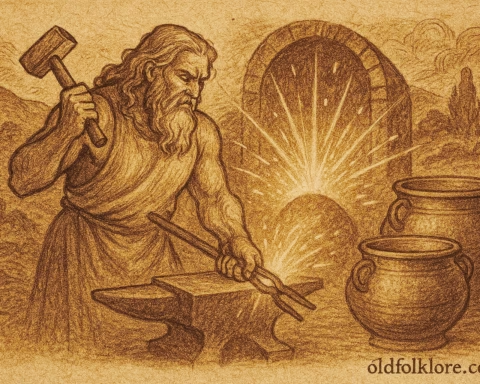
He approached the forge where Goibniu was shaping a spearhead glowing as bright as the sun’s heart. As the sparks leapt like stars, Ruadán pretended admiration, then thrust his weapon into the smith. Yet Goibniu, though wounded, seized a forge-hammer and struck Ruadán in return, dealing a mortal blow. Ruadán staggered away from the flames and collapsed.
When Brigid reached her fallen son, the earth dimmed around her. Here stands one of the earliest descriptions of keening, the traditional Irish mourning cry, for the texts say that Brigid’s lament was so piercing, so full of grief, that all Ireland heard it. Her wail became the first caoineadh, the ritual mourning-song still carried through Irish tradition.
The gods, shaken by her sorrow, paused their conflict. Even the Fomorians faltered at the sound. Brigid knelt beside Ruadán, her hands glowing with the healing fire she had bestowed upon midwives and physicians. But divine power cannot always overturn fate. Ruadán’s breath faded like embers in the wind.
In that moment Brigid’s flame changed. The fire that once symbolized inspiration became also a symbol of endurance, the warmth that persists even through loss. She vowed that no craft, no poem, no birth or healing would be touched by despair as long as her flame remained alive in the world.
Later generations claimed that Brigid’s grief softened the bitterness between Tuatha Dé Danann and Fomorian clans; the memory of her lament reminded both sides that war consumes not only armies but families. Her sacred wells became places where mothers prayed for their children’s safety, and smiths swore oaths to forge tools that served life, not destruction.
Centuries passed, yet the reverence for Brigid never dimmed. Even when Christianity spread through Ireland, the people recognized the echo of their goddess in St. Brigid, who tended the sick, blessed poets, and maintained a perpetual fire at Kildare with her nuns. Scholars understood that the saint inherited the mantle of the Exalted One, not replacing her, but ensuring her enduring presence.
Thus Brigid’s myth lives not in a single moment but in the constant renewal of fire: the hearth kindled before a poem is spoken, the candles lit at childbirth, the glowing forge that shapes iron into tools for the seasons ahead. She is dawn breaking after grief, creativity rising after hardship, and the warmth that anchors a household against the dark.
Author’s Note
Brigid’s story reveals a profound Celtic truth: creativity and compassion survive even in times of conflict. Her grief teaches that sorrow can transform rather than destroy, and that healing, craft, and inspiration are sacred acts that knit communities together. She embodies renewal, the enduring flame at the center of human resilience.
Knowledge Check
Q1: What are Brigid’s primary domains?
A: Healing, poetry, smithcraft, childbirth, and sacred fire.
Q2: Which mythic race is Brigid born into?
A: The Tuatha Dé Danann.
Q3: What event introduces the first Irish keening?
A: Brigid’s lament over her son Ruadán’s death.
Q4: How does Brigid’s worship continue into Christian Ireland?
A: Through syncretism with St. Brigid of Kildare.
Q5: What symbol marks Brigid’s birth and power?
A: A pillar of fire rising from her head.
Q6: What moral theme is central to Brigid’s myth?
A: Renewal and compassion amid grief and conflict.
Source: Early Irish Hagiographies & Celtic Mythological Tradition, Ireland.
Source Origin: Ireland (Pre-Christian Celtic Tradition)