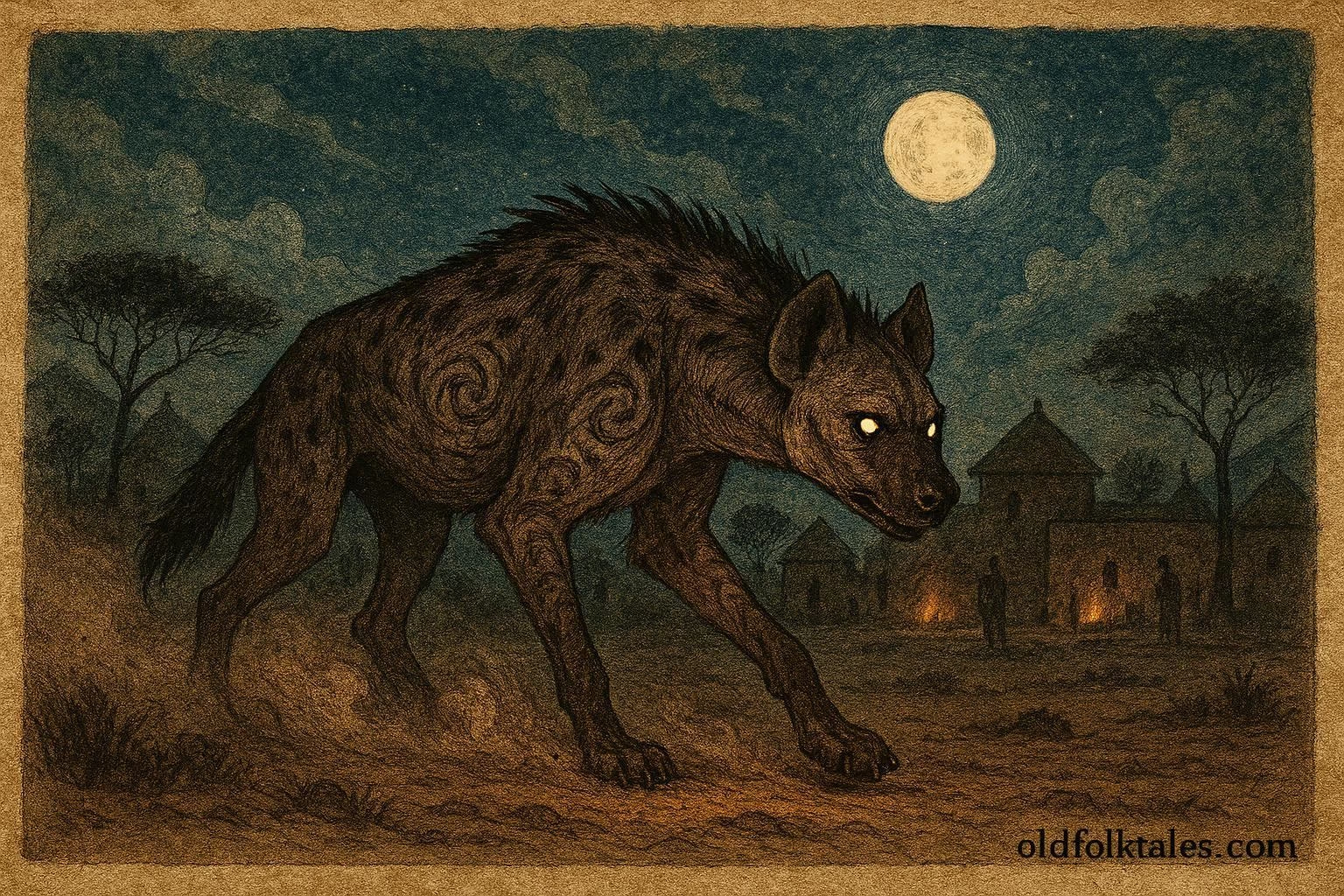
In Hausa folklore, Bultungin (sometimes spelled Bultungeen, Bultungin, or Bultungi) refers to the terrifying belief that certain humans, often witches or night-sorcerers, can transform into hyenas. Unlike European-style werewolves, the Hausa Bultungin is not viewed as a cursed victim or unwilling monster. Instead, it is typically understood as someone who intentionally practices harmful occult arts, using the power of transformation to attack livestock, unsettle communities, and feed on blood or spiritual vitality.
The Bultungin does not merely resemble a hyena; it becomes a hyena in every physical sense, though its eyes or gait may retain an uncanny human quality. Elders say that the creature moves with a strange deliberateness, too thoughtful, too calculating, and that its gaze holds a cold intelligence not found in ordinary animals.
Descriptions vary across Hausa-speaking areas:
Physical Form
-
A large spotted hyena, but leaner and more muscular than ordinary ones
-
Eyes that glint with an unsettling, human-like awareness
-
Thick fur that may appear darker in moonlight
-
Tracks that occasionally shift between hyena prints and something eerily human
-
A shadow that appears wrong, or too elongated, when seen in firelight
Transformation
Traditional accounts describe several ways the change occurs:
-
By consuming a magical ointment prepared through forbidden rituals
-
By donning a hyena skin, often buried in sacred ground and “fed” with incantations
-
By invoking ancestral spirits that have been corrupted through witchcraft
-
By entering a trance, where the soul leaves the body and inhabits a hyena wandering at night
In some tales, the Bultungin’s human body remains behind, lying motionless like a corpse, while the sorcerer’s spirit roams in hyena form. In others, the transformation is total and seamless.
Behavior
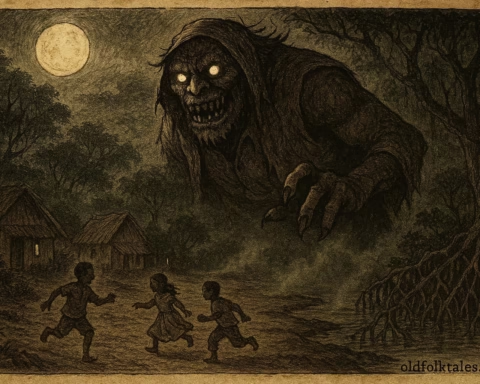
The Bultungin is feared for its predatory cunning. It stalks villages at night, particularly targeting:
-
livestock pens
-
children wandering after dusk
-
travelers on lonely roads
-
households that have violated taboos
Some villages believed that hyenas exhibiting strange behavior—lingering near compounds, laughing at unusual hours, or showing no fear of humans, were actually Bultungin in disguise.
A Bultungin may also:
-
scratch at doors to test spiritual protection
-
laugh eerily near compounds to induce fear
-
bury “spiritual poisons” near livestock pens
-
lure unwary people by mimicking human crying or speech
Hyenas are already powerful in the Hausa imagination—associated with cunning, gluttony, and the boundary between wilderness and village life. The idea of a human becoming one magnifies these fears into something supernatural and morally charged.
Cultural Role
1. A Symbol of Social Deviance and Hidden Evil: The Bultungin represents the dangers of those who reject communal harmony. In traditional Hausa society, witches were believed to undermine moral order:
-
attacking neighbors secretly
-
sabotaging livelihoods
-
sowing fear and mistrust
-
rejecting God’s rules and community norms
The Bultungin myth serves as a vivid dramatization of how ordinary people can harbor destructive intentions, disguised beneath polite appearances.
2. A Warning About Night Wanderers: Many Hausa tales stress that nothing good happens on the dark roads. Night travel was dangerous not only because of predators but also because it was the favored time for sorcery. The Bultungin embodies this fear, urging people to:
-
stay indoors after dusk
-
keep children close
-
maintain spiritual protection
3. A Cultural Explanation for Hyena Attacks: Livestock predation was once a devastating problem. The myth of Bultungin partly explains:
-
sudden cattle disappearances
-
unusual hyena behavior
-
mysterious attacks on goats or sheep
By attributing these events to witches in hyena form, communities framed natural dangers within moral and spiritual narratives.
4. The Hyena as a Moral Mirror: In Hausa metaphor:
-
the hyena symbolizes greed, deceit, and uncontrolled appetite
-
the Bultungin symbolizes a human who indulges these vices
Thus, the creature becomes a moral warning:
Those who allow greed and hatred to consume them become beasts, inside and out.
5. Protection Through Faith and Community: Traditional remedies against Bultungin include:
-
Qur’anic recitations
-
protective charms (often leather-wrapped laadai)
-
community vigilance
-
moral discipline
-
strong kinship networks
This reinforces the belief that only communal harmony and spiritual righteousness can protect people from hidden evil.
Author’s Note
The Bultungin is one of West Africa’s most psychologically rich shapeshifter traditions, not simply a monster, but a reflection of social tension, environmental realities, and moral anxieties. As with many African beliefs about witches, the emphasis is less on physical transformation and more on the power and danger of people who reject community values. In this sense, Bultungin stories help us understand how traditional societies made sense of fear, secrecy, and the threat of the unseen.
Knowledge Check
1. What creature does the Bultungin transform into?
A human transforms into a hyena, often through witchcraft.
2. What cultural fear does the Bultungin represent?
The hidden danger of people who secretly harm their community.
3. What physical trait often reveals a Bultungin?
Unusually intelligent or human-like eyes.
4. Why are livestock often central in Bultungin tales?
Hyena attacks threatened survival, and stories explained these losses spiritually.
5. What protects people from Bultungin in traditional belief?
Faith (especially Qur’anic verses), charms, and communal vigilance.
6. What moral lesson does the Bultungin symbolize?
Greed, malice, and secrecy turn humans into moral “beasts.”
Source: Hausa oral tradition; early colonial ethnographers; regional folklore accounts
Origin: Hausa-speaking regions of Nigeria and Niger