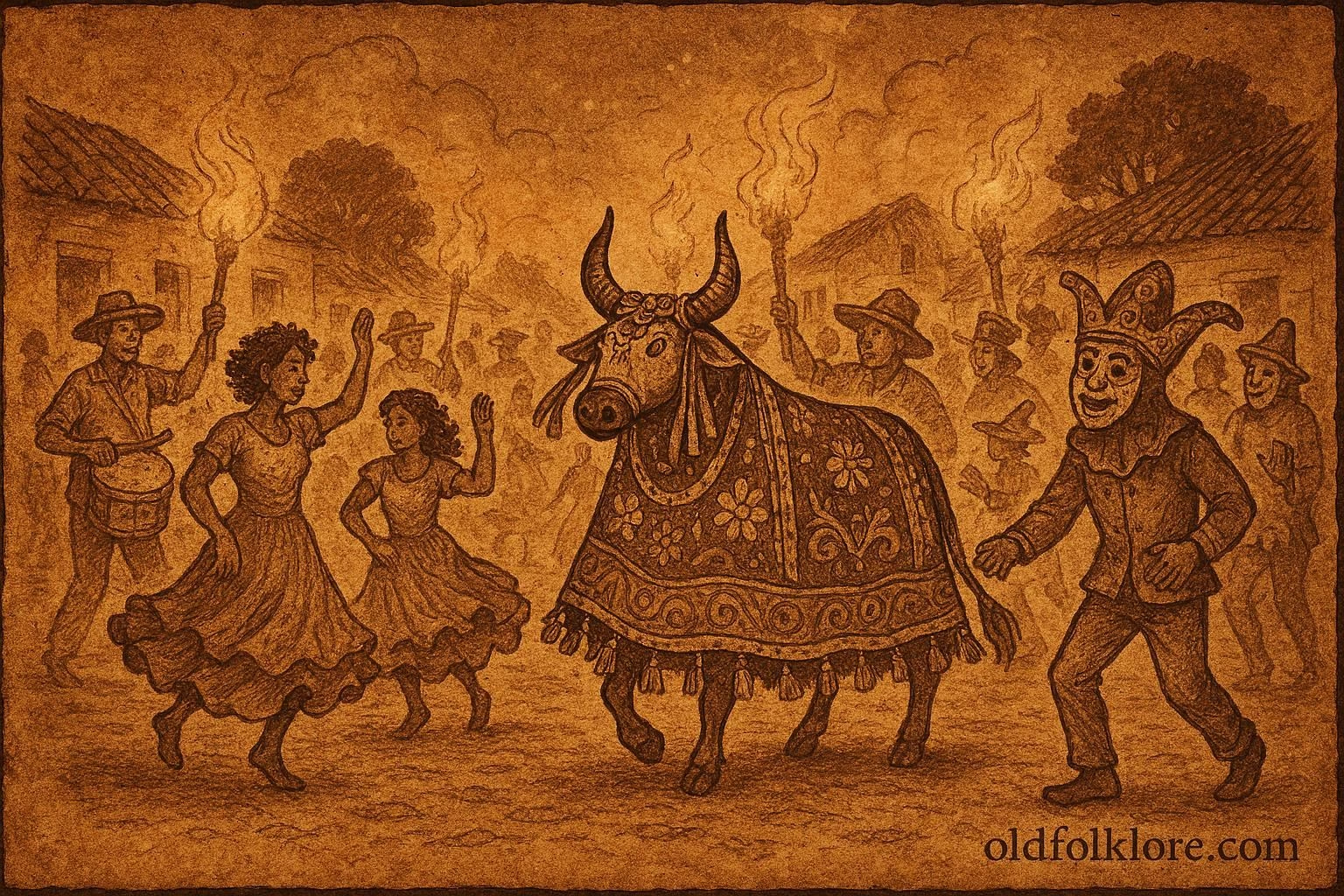
Among Brazil’s most vibrant ritual traditions, Bumba-meu-boi stands apart as a celebration where myth, music, and community devotion merge into a powerful symbolic drama. Though today it is performed with joy, laughter, and spectacle, the ritual carries profound meaning. Behind the ornate costumes and rhythmic dance lies an ancient story of death and resurrection, woven from many cultural threads that shaped northeastern Brazil during the colonial period.
At its heart, Bumba-meu-boi tells the story of an ox, beloved, strong, and central to village life. In the most common narrative, the wife of a vaqueiro (cowherd) craves the ox’s tongue during pregnancy. Driven by desire, the cowherd kills the animal to satisfy her craving. Once the ox is discovered dead, chaos spreads through the community. Musicians, healers, tricksters, priests, and magical beings all attempt to restore order. After many trials, the ox is revived through spiritual or miraculous means. Its return becomes a moment of renewed harmony, shared celebration, and the joyful restoration of cosmic balance.
Although the story is playful, its deeper symbolism resonates with universal themes. The ox represents sustenance, wealth, and the life force of the land. Its death dramatizes loss, imbalance, and human error. Its resurrection becomes a sign of hope, resilience, and divine renewal. This cycle reflects agricultural rhythms, ancestral teachings, and collective identity.
The tradition developed as African enslaved peoples, Indigenous nations, and Portuguese settlers intermingled cultures over centuries. African groups contributed drumming, call-and-response songs, and spiritual themes. Indigenous communities added ritual movement, masked characters, and cosmological views of animals as sacred beings. Portuguese elements brought Christian symbolism, humor, and theatrical structure. Through this fusion, Bumba-meu-boi became not just entertainment but a ritual of memory, resistance, and community pride.
Description
Modern Bumba-meu-boi festivals appear in many forms, yet they share the same expressive foundation. The celebration often takes place in June during the wider Festas Juninas, though the timing varies by region. Community troupes, called folguedos, prepare throughout the year. They create elaborate costumes, rehearse musical sequences, and design unique interpretations of the ox’s story.
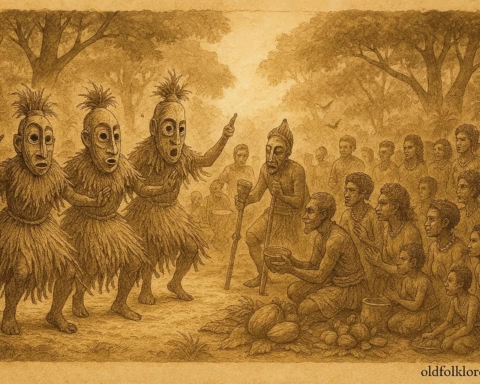
The ritual begins with a lively procession. Drums, rattles, and string instruments set the pace as mask-wearing dancers sweep through the streets. Each troupe features its own emblematic ox figure, richly decorated with sequins, beads, and embroidered cloth. The energy is festive yet ceremonial; participants move with intention, honoring the sacred narrative at the center of the performance.
Characters play crucial roles. The cowherd and his pregnant wife re-enact the moment that sets the tragedy in motion. Comic tricksters evoke laughter while subtly critiquing social norms. Healers attempt to resurrect the ox using ritual gestures, song, and symbolic medicines. Spiritual figures, sometimes represented through Indigenous or Afro-Brazilian masks, demonstrate the intervention of cosmic forces. Meanwhile, musicians guide the unfolding drama, shifting rhythm and tone with each emotional turn.
One of the most striking aspects of the festival is audience participation. Spectators are not passive observers. They sing along, dance, respond to performers, and even enter the ritual space. This communal involvement reflects the cultural understanding that life, death, and renewal belong to everyone. By joining the performance, the community symbolically shares responsibility for restoring balance.
Regional variations add further depth. In Maranhão, the style known as Boi de Matraca emphasizes percussive intensity, while Boi de Orquestra blends brass instruments with dramatic storytelling. Each region adapts the narrative and characters according to local history and spiritual worldview. These variations demonstrate the living nature of the tradition, which evolves without losing its sacred core.
UNESCO recognizes Bumba-meu-boi as an important expression of Brazilian cultural heritage, noting its ability to unite communities across generations while maintaining ancestral knowledge and ritual meaning.
Mythic Connection
The mythic symbolism of Bumba-meu-boi extends far beyond performance. The ritual reflects a worldview where the natural world, human society, and spiritual forces are interconnected. The ox, central to rural life in many parts of Brazil, becomes a sacred symbol of vitality and abundance. Its death represents a rupture in the cosmic order, one caused by human desire, imbalance, or misjudgment. The community’s efforts to restore the ox signify the collective responsibility to heal wrongdoing and re-establish harmony.
The resurrection carries strong echoes of both African and Indigenous spiritual teachings. Among many African traditions brought to Brazil, animals serve as intermediaries between worlds, and their symbolic deaths teach lessons about transformation. Indigenous Amazonian and coastal groups similarly view animals as holders of spiritual power and essential to cosmic balance. Portuguese Christian influences added themes of forgiveness, salvation, and restored life.
Through this blend of worldviews, the Bumba-meu-boi ritual expresses a sacred lesson: life is cyclical, loss is shared, and renewal is possible when community acts together. It also affirms cultural survival. During periods of colonial oppression, the ritual offered African and Indigenous communities a protected space to express identity, preserve music and language, and quietly resist cultural erasure. Today, it remains a testament to resilience and unity.
Author’s Note
This article presents the publicly known aspects of Bumba-meu-boi as a ritual theater of renewal, cultural fusion, and spiritual symbolism. It highlights community participation and the sacred cycle represented through the ox’s death and resurrection.
Knowledge Check
1. What is the core story of Bumba-meu-boi?
The death and miraculous resurrection of a beloved ox.
2. Why is the ox considered sacred?
It represents abundance, livelihood, and the life force of the community.
3. What cultures shaped the ritual?
African, Indigenous, and Portuguese traditions.
4. How do folguedos contribute to the festival?
They prepare costumes, rehearse performances, and present the ritual drama.
5. Why is audience participation important?
It symbolizes shared responsibility for renewal and balance.
6. What does the resurrection symbolize?
Hope, unity, and the restoration of cosmic harmony.