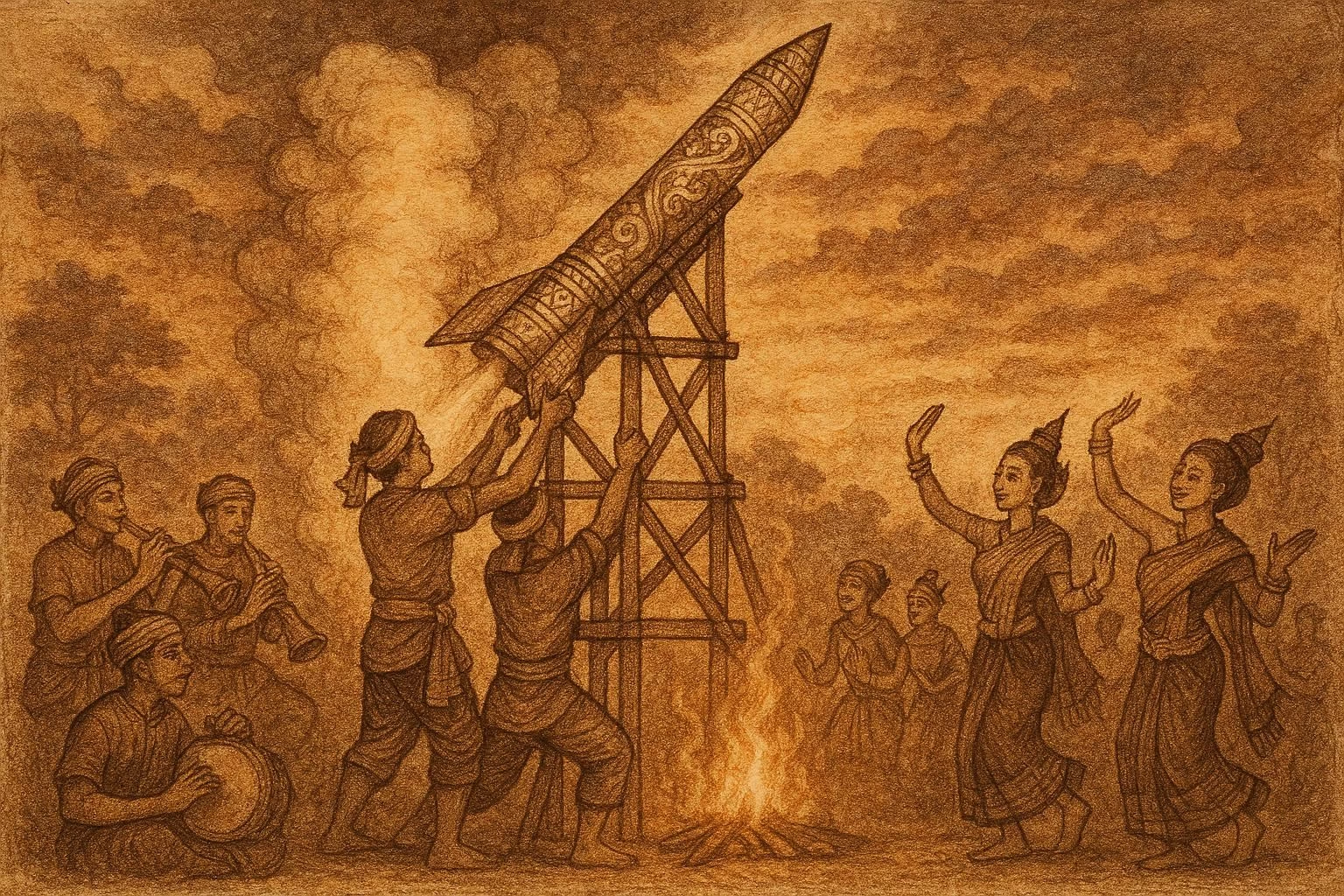
Bun Bang Fai, known widely as the Rocket Festival, is an ancient agrarian ceremony celebrated across Laos and the Isan region of northeastern Thailand. Its roots stretch far earlier than organized religion in the region, reflecting pre-Buddhist fertility rites performed to awaken the sky, stir the monsoon winds, and call down life-giving rain. The name itself, meaning “Fireball Festival,” reflects both the fiery ascent of its rockets and the explosive power of divine intervention. While Buddhism later intertwined with the celebration, its core purpose remains deeply animistic: to negotiate with sky spirits for a successful planting season.
Description
Every year, just before the arrival of the monsoon, villages begin preparations for Bun Bang Fai. Bamboo is cut, oiled, carved, and shaped into long rocket bodies. Some traditional rockets remain modest in size, crafted exactly as ancestors once did. Others, especially in competitive districts, become towering constructions with metal casings and modern propellant for spectacular flight.
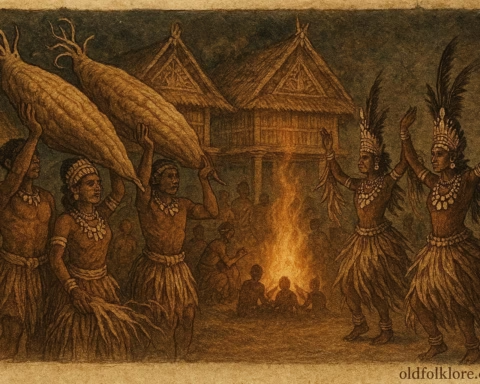
But the rockets themselves are only one part of the festival. Over several days, communities transform into vibrant spheres of motion, drumming, chanting, masked dancing, feasting, and comedic theatrical performances. Musicians lead village processions, and dancers imitate mythical beings connected to rain and earth. Villagers parade through streets with banners, offerings, and smaller symbolic rockets, asking blessings from both ancestral spirits and celestial forces.
On the main day, large communal platforms are built for launching the rockets. A rocket is raised with ceremony, its body decorated with offerings, flowers, colored cloths, and charms for luck. Crowds gather with anticipation. Priests or senior ritual specialists utter short invocations to the sky, calling on Phaya Thaen, the celestial ruler of rain, lightning, and storm. When the time arrives, the rocket is ignited with a flare and fired skyward, leaving behind a plume of smoke and cascading sparks that represent the voice of humanity reaching heaven.
If the rocket soars high, it is taken as a sign that the gods are pleased. If it misfires, tumbles, or explodes prematurely, the village customarily teases or lightly punishes the team that built it, humorous acts symbolizing the community’s shared accountability in ensuring the rains arrive. In this way, the festival blends sacred petition with collective joy.
Beyond spectacle, Bun Bang Fai serves a practical agricultural rhythm. In Laos and Isan, rice farming depends heavily on monsoon timing. The festival marks the moment of transition from dry-season scarcity to the hope of abundance. Consequently, the rockets act as both ritual tools and symbolic declarations to the environment: “We are ready. Send the rains.”
Mythic Connection
Although Bun Bang Fai is now practiced alongside Buddhist observances, its mythic heart belongs to ancient animist and folkloric traditions. The central myth speaks of Phaya Thaen, the sky deity who rules the upper realms and controls rainfall. According to traditional stories, humans must signal him at the right moment to release the monsoon. If they fail, drought and famine could follow.
In many versions, the rockets symbolize messages to Phaya Thaen. Their explosion in the sky is believed to open the path between earth and heaven. Some Lao myths speak of a time when humans and sky-beings lived in cooperation but grew distant, requiring stronger signs, thus giving rise to the rocket.
Another associated myth involves the Nagas, serpent-spirits of river and water. Some versions interpret Bun Bang Fai as a reminder to the Nagas that the agricultural season has begun. The thunder that follows the firing of rockets is poetically imagined as the Nagas responding.
Spiritually, Bun Bang Fai reflects a worldview in which humans, nature, and divine forces maintain constant dialogue. Rain does not simply fall, it must be courted, respected, and ceremonially invoked. Fire represents the assertiveness of human intention. Smoke symbolizes prayers travelling upward. And the rocket’s ascent reenacts humanity’s ancient longing to touch the heavens and secure survival.
Today, even in towns where modern agriculture has shifted, people still celebrate Bun Bang Fai as a cultural reaffirmation. It honors origins, strengthens community ties, and preserves the ancient belief that nature listens when humans speak.
Author’s Note
This article highlights Bun Bang Fai as a living Laotian and Isan tradition that blends agrarian timing, ancestral belief, and mythic dialogue with the sky. It underscores how the festival’s rockets symbolically petition Phaya Thaen for rain while expressing communal unity, pre-Buddhist cosmology, and enduring cultural continuity across generations.
Knowledge Check
1. What is the core purpose of Bun Bang Fai?
To petition sky deities for rainfall and ensure agricultural abundance before the monsoon season.
2. Who is Phaya Thaen?
He is the sky deity associated with rain, storms, and the celestial realm in Lao and Isan mythology.
3. Why are rockets used instead of traditional offerings?
The rockets serve as powerful symbolic messages to the sky, replacing earlier forms of rain-invocation with dramatic fire and sound.
4. What agricultural cycle does the festival mark?
It signals the beginning of the planting season and the community’s readiness for the rice-growing cycle.
5. How does Buddhism relate to Bun Bang Fai?
Buddhist elements coexist with the festival, but its origins and primary meaning remain animistic and pre-Buddhist.
6. What happens when a rocket fails to launch?
Villagers humorously tease the rocket builders, symbolizing communal accountability in calling for rain.