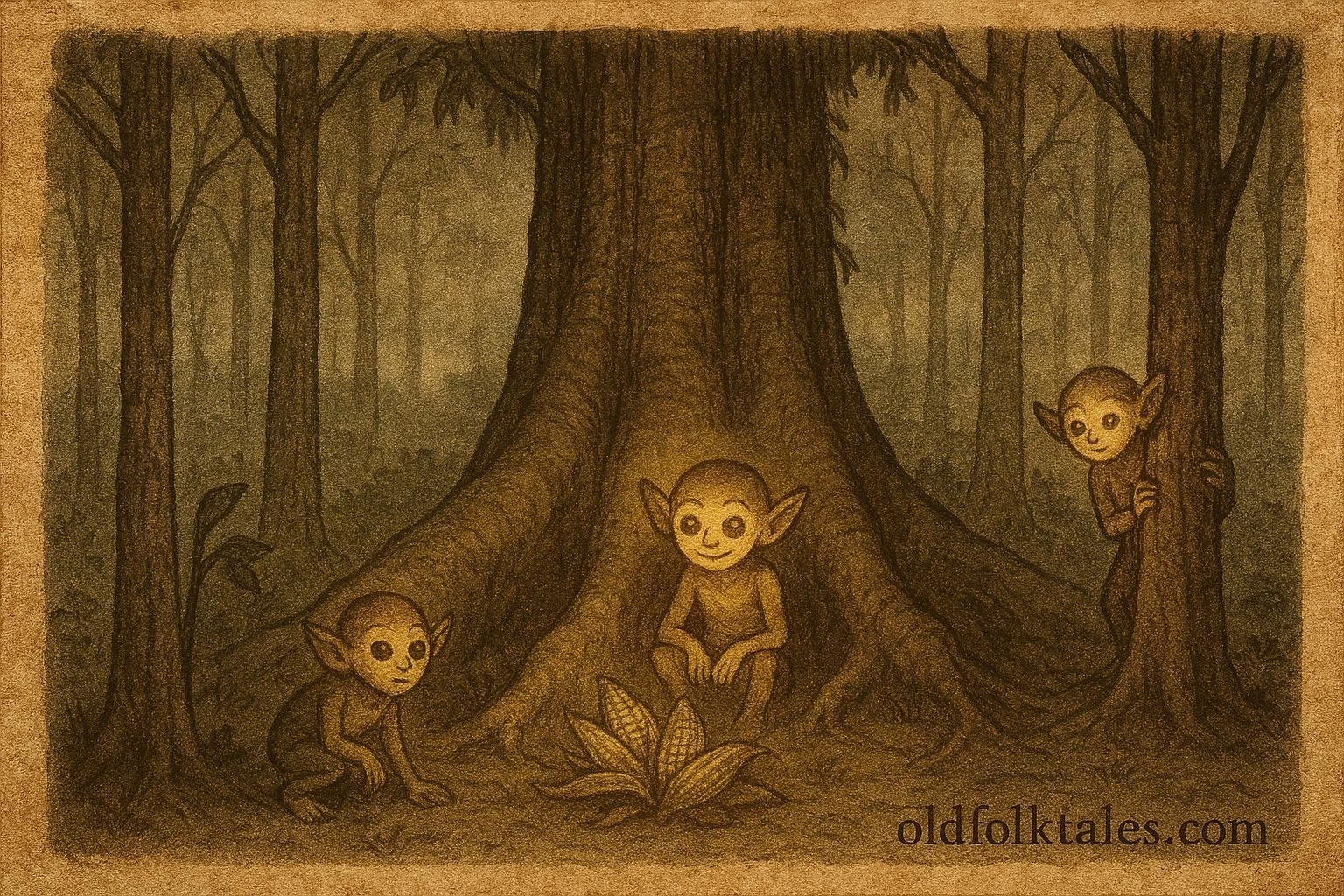
Deep in the emerald forests of Veracruz and Oaxaca, whispers tell of the Chaneques, small spirits who guard the hidden treasures of the earth. Their laughter is said to echo through the trees like the rustle of leaves, mischievous yet strangely gentle. Travelers who mock the forest or forget their manners may find themselves hopelessly lost, their belongings scattered as if the woods themselves were alive.
Long ago, in a small village near the mountains, there lived a young hunter named Tomás, proud of his skill and dismissive of the old ways. He often mocked the elders who left offerings of maize and cocoa at the base of ancient trees. “Superstitions,” he would laugh. “No spirit rules me. The forest belongs to those strong enough to take from it.”
One morning, he set out before dawn to hunt deer in the sacred grove. He ignored the warning his grandmother whispered: “Remember, the forest listens.” The air was still as he entered the thick mist beneath towering ceiba trees. Birds sang above, and dew shimmered on the ferns, but as Tomás ventured deeper, a strange unease fell over him.
Encounter dragons, spirits, and beasts that roamed the myths of every civilization
The forest seemed to change. The paths twisted upon themselves. The sun could no longer pierce the canopy. A sudden giggle echoed nearby, high and childlike. He turned, bow drawn, but saw only a flicker of movement something small darting behind a log. Then another laugh came, this time from above. He looked up and glimpsed tiny figures peeking from the branches, their eyes bright as moonlight.
Tomás shouted, “Show yourselves!”
The forest fell silent. Then, slowly, the air shimmered, and the Chaneques revealed themselves. They were no taller than a child, with skin like bark and moss for hair, wearing cloaks made of leaves. One of them stepped forward, holding his lost knife in its tiny hand. “You mock us, hunter,” it said in a voice like the rustling of leaves. “You take from our home without giving thanks. The forest does not belong to you.”
Frightened yet defiant, Tomás snatched for the knife, but the Chaneque vanished, leaving only laughter in its wake. When he turned, the forest seemed unfamiliar. Every path led back to where he began. The day faded, and strange lights danced in the shadows.
By nightfall, he stumbled into a clearing he did not know. Exhausted, he collapsed and whispered a prayer his grandmother had once taught him words of respect for the earth and its spirits. The forest grew still. The laughter softened. A gentle breeze stirred, carrying the scent of cocoa and flowers.
When Tomás awoke, he found a small pile of maize beside him and his knife resting on a stone. He walked home guided by the morning light. Upon reaching the village, he fell to his knees before the elders and confessed what he had seen. From that day, Tomás became a guardian of the forest himself, ensuring every hunt began with an offering and every tree was treated with care.
The villagers say that the Chaneques are not wicked but teachers. They remind humans of humility and the balance between giving and taking. When storms uproot trees or travelers lose their way, the people leave bowls of cocoa beneath the ceiba and whisper, “Be kind, little guardians.” Some claim to hear faint laughter carried by the wind, playful and forgiving.
To this day, parents warn their children, “If you hear laughter in the forest, speak kindly and leave a gift, for the Chaneques still watch over their home.” Those who honor them find safety and good fortune, but those who forget their respect may wander forever in circles, chasing echoes of their own arrogance.
The Chaneques remind the living that the world is full of spirits some mischievous, others wise but all deserving of reverence. The forest is not a place to conquer; it is a living being that must be understood.
Explore the shadows of world mythology, where demons test the soul and spirits watch over mankind
Author’s Note:
The story of the Chaneques reflects an enduring truth within indigenous Mesoamerican belief the idea that nature is alive with spirits who respond to human behavior. It reminds us that reverence for the natural world is not just ancient tradition but moral wisdom. Through mischief and laughter, the Chaneques teach balance, humility, and the importance of gratitude toward the unseen forces that sustain life.
Knowledge Check:
1. Who are the Chaneques in Mexican folklore?
They are small forest spirits who protect nature and play tricks on disrespectful humans.
2. Why did Tomás anger the Chaneques?
He entered the sacred forest without offering respect or gratitude, mocking their existence.
3. How did the Chaneques teach Tomás a lesson?
They led him astray and frightened him until he prayed and showed humility.
4. What symbolizes forgiveness in the story?
The pile of maize and returned knife that Tomás found upon waking.
5. What moral does the tale teach?
To respect the natural world, show humility, and live in balance with unseen forces.
6. How do villagers today honor the Chaneques?
They leave small offerings and prayers at sacred trees or forest edges.
Source:
Adapted from Mexican Folk Tales collected by J. Bierhorst (1997)
Cultural Origin:
Nahua and Totonac Peoples, Mexico