Before the age when stone first remembered the footfalls of the children of the Sun, before maize lifted its golden head toward the heavens, there dwelt in the shimmering vault of the night a being woven of radiance and rhythm. She was Chasca, daughter of Mama Killa, the Moon Mother, and a wandering star-spirit who loved music more than breath. From her mother she inherited the serene glow that soothed the mountains, and from her father she inherited swiftness, light that moved like thought, gentle yet unyielding.
When Chasca descended to the world for the first time, the Andean winds stirred with awe. Llamas lifted their heads, listening to the soft, melodic hum that trailed behind her footsteps. She walked the rugged ridgelines barefoot, leaving behind not prints, but small pools of moonlit frost that evaporated at dawn. The Quechua and Aymara peoples beheld her arrival with reverence, for they recognized in her a sign: a guardian sent to protect travelers on perilous journeys, to untangle the knots of fate in the high passes, and to soothe the spirits of the mountains.
Chasca roamed tirelessly, drifting from valley to plateau, from stone city to humble herder’s hut. Her domain was not war nor conquest, it was refuge. She guided lost wanderers, illuminated shepherds returning late, and kept watch over caravans braving the treacherous puna. When tempests gathered around the peaks, she unfurled her lunar mantle, calming the winds. When shadows thickened with malice, she sent forth silver rays that dissolved them like mist.
But as harmony grew, so too did the jealousy of the Supay of the Dark Hollows, a spirit born from caverns far beneath the Andes. He resented the moonlit stillness Chasca brought to the world, for shadows were his sustenance. Without fear, without confusion, he grew weak. So he devised a challenge that would test not Chasca’s power, but the steadiness of her spirit.
One night, during the waxing moon, Supay crept into the world through a rift in the rocks and whispered a curse across the peaks. The winds twisted violently, the rivers rose in sudden fury, and travelers who once trusted Chasca’s-soft glow found themselves caught in blinding storms. The land trembled with imbalance.
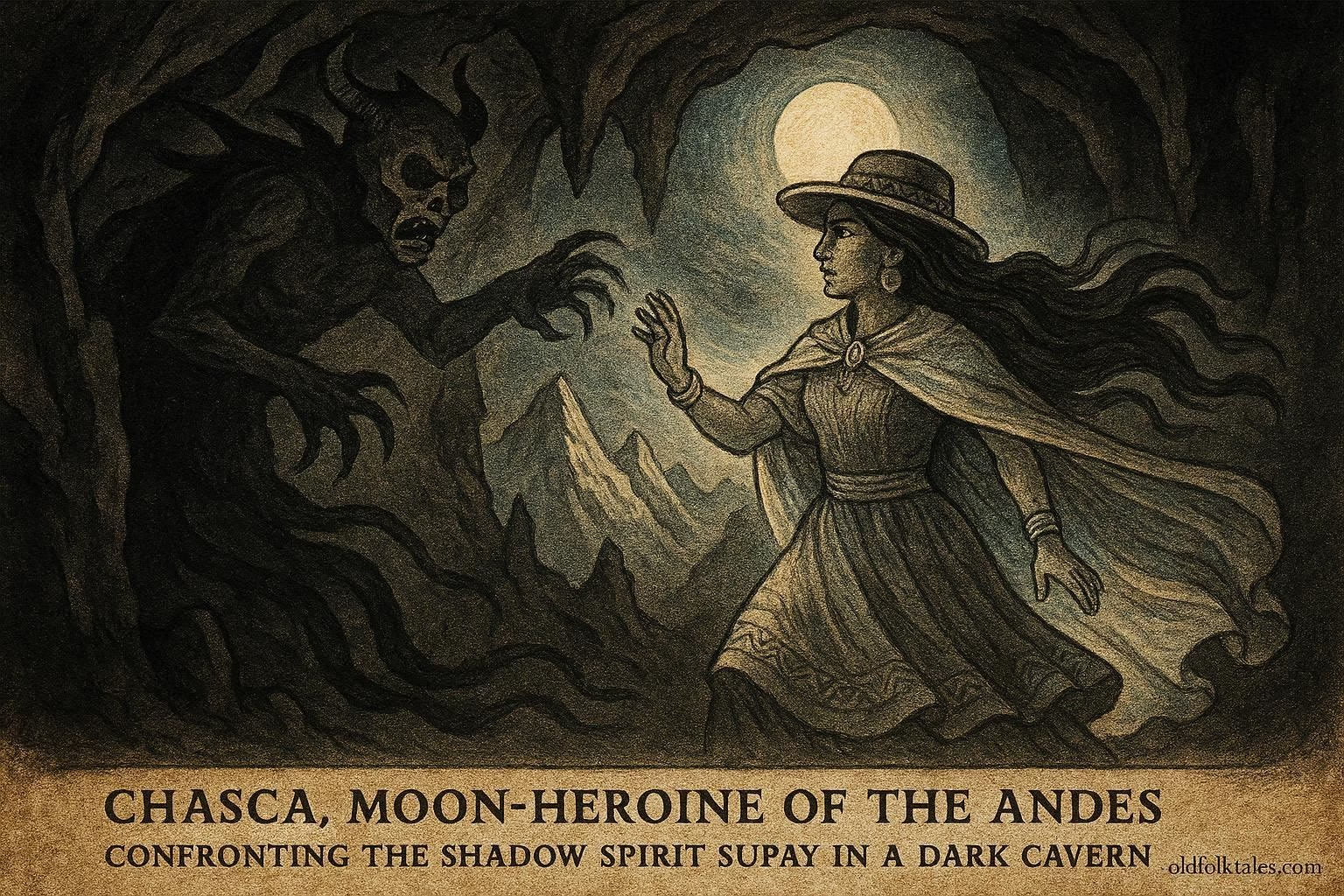
Chasca, horrified by the chaos, sought out the source. Guided by the trembling pulse of the mountains themselves, she descended into a cavern whose walls shimmered with oily darkness. Supay awaited her, draped in cold shadows, his eyes burning with the hunger of forgotten nights.
“You claim to guide,” he taunted, “yet the world flounders. You claim to protect, yet they suffer. Tell me, Moon-Daughter, will you sacrifice your own radiance to restore what you have lost?”
Chasca’s heart faltered. She saw visions of travelers shivering under collapsing skies, of mothers searching for children lost in the storm. Supay’s challenge was a cruel deception: in truth, he did not need her radiance, he wanted it extinguished. But if she refused, the suffering would continue.
This was her moral struggle, to give all that she was, or allow the world she loved to crumble.
Drawing a trembling breath, Chasca answered, “If the world has need of my light, then let it be taken.”
At once, the shadows pounced. Supay wrapped his darkness around her, draining her glow, dimming her voice, suppressing her warmth. But as her silver radiance faded, the mountains themselves cried out. The peaks shuddered, the rivers howled, and the very moon above sent down a beam of cold, pure fire. Mama Killa, feeling her daughter’s sacrifice, rose in fury.
The beam struck Chasca, igniting the last ember of her light. It flared, not outward, but inward, fueling her resolve. With her final strength, she whispered a moonborn chant that resonated through stone and sky. The cavern shattered, sending Supay tumbling back into the deep hollows from which he came.
Yet Chasca did not return to her former form. Her body dissolved into a constellation of tiny, shimmering motes that ascended into the heavens. Mama Killa wept, but her tears turned to luminous pearls that guided the fragments into place. And so Chasca became the Morning and Evening Star, appearing at dawn and dusk to watch over those who traveled between the realms of light and darkness.
From that day onward, her glow, no longer confined to a single form, spread across the Andes in silvery arcs. Her presence steadied storms, tempered avalanches, and quieted the trembling paths that wove around the mountains’ shoulders. Travelers prayed to her with coca leaves and whispered thanks when her light touched their roads.
And when the moon waxes bright and full, the people say they can still hear her soft humming drifting down the slopes, reminding them that sacrifice made willingly becomes eternal.
AUTHOR’S NOTE
Chasca’s tale endures across Andean storytelling as a symbol of gentle protection, selfless courage, and the quiet power of light. Her myth teaches that guidance is a sacred responsibility, and that even the softest glow can overcome the deepest shadows.
KNOWLEDGE CHECK
-
Who are Chasca’s divine parents?
-
What role does Chasca play among the Quechua and Aymara peoples?
-
Why does Supay resent Chasca’s presence?
-
What moral dilemma does Chasca face in the cavern?
-
How is Supay ultimately defeated?
-
What celestial form does Chasca take after her sacrifice?
CULTURAL ORIGIN: Quechua and Aymara mythic traditions of the Andean highlands, rooted in pre-Columbian cosmology and early colonial chronicles.
SOURCE: Antonio de la Calancha, Crónica Moralizada del Orden de San Agustín en el Perú (1638), with elements preserved in oral Andean storytelling traditions.