The Čort (also spelled Chort, Čyort, Čerti, depending on language) is one of the most recognizable spirit-beings in Eastern Slavic folklore. Though frequently labeled a “demon,” the Čort occupies a far more complex role than a purely evil creature. He is a mischievous, troublemaking, sometimes pitiable spirit who personifies everyday misfortune, bad harvests, lost livestock, broken tools, foolish decisions, and sudden accidents that disrupt rural life. In folktales, he frequently becomes the butt of the joke, endlessly outsmarted by clever peasants who trick him into foolish bargains.
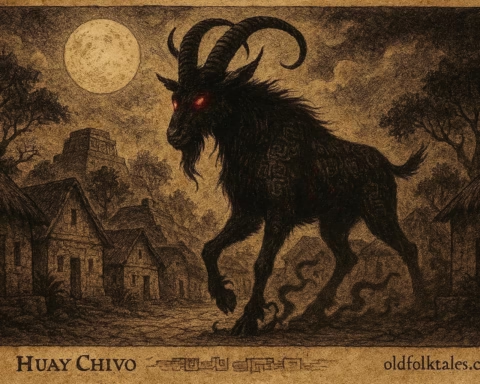
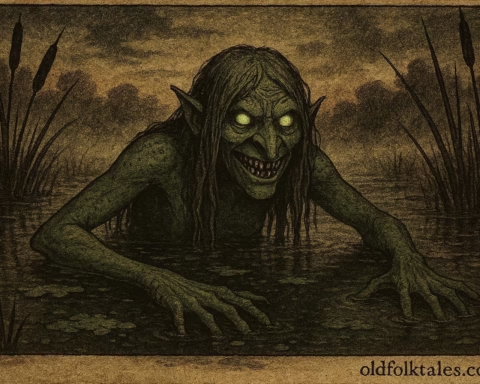
Descriptions of the Čort vary by region, but several features recur. Most commonly, he appears as a small, wiry, black-skinned or soot-covered man with goat legs, hooves, and tiny horns curling from his forehead. His eyes are often glowing red or fiery like embers, and his tail, thin, whip-like, or tufted, is a source of comedic vulnerability in many tales. In some areas, the Čort looks more human, merely distinguished by his strange gait, crooked grin, or shadowy outline. Village storytellers said he smelled faintly of sulfur, smoke, or stagnant marsh water.
Relive the heroic sagas of every age – stories of triumph, tragedy, and timeless valor
Unlike apocalyptic demons, the Čort is local. He lives near human settlements, especially:
- forest edges
- crossroads
- abandoned mills
- peat marshes
- collapsing farm outbuildings
- neglected shrines or boundary stones
He is an opportunist, slipping into daily life to cause minor chaos. A spilled bucket of milk, a sudden gust that scatters grain, a cow that refuses to walk the right direction, all were once blamed on the Čort’s meddling.
Behavior and Abilities
The Čort’s powers are modest but annoying. He can:
- appear and disappear swiftly
- mimic human voices
- tempt people with foolish offers
- create illusions (especially of treasures or shortcuts)
- cause small-scale misfortunes
- hitch rides on travelers and whisper unsettling thoughts
However, he is also famously stupid, a trait exploited repeatedly by wily peasants in Eastern Slavic humor. Characters in tales frequently trick him into signing absurd contracts, performing impossible tasks, or chasing illusions. The Čort is easily bribed with warm food, vodka, or false promises, and is regularly defeated by grandmothers, widows, clever shepherd boys, or even children.
The Bargain-Maker: One of the Čort’s favorite strategies is to offer deals: wealth, shortcuts, hidden knowledge, or magical help in exchange for the person’s soul, shadow, future happiness, or first-born child. Yet unlike Western Mephistophelean devils, the Čort rarely succeeds, Slavic stories emphasize humor over horror, focusing on human cunning rather than damnation. The moral is rarely about eternal salvation; it is about not being a fool.
Appearance in Seasonal Traditions: Čorts sometimes appear in winter rituals or carnival-like festivities where performers dress as shaggy, horned beings to chase away evil spirits. This version reflects the pre-Christian idea of local wilderness beings, later blended with Christian demonic imagery but retaining their rustic, earthy personality.
Cultural Role
Personification of Misfortune: At its core, the Čort embodies the unpredictable troubles that accompany rural life. In agrarian communities dependent on animals, weather, and tools, misfortune was expected yet needed explanation. The Čort symbolized:
- the unpredictability of nature
- the fragility of human plans
- the tendency for small mistakes to snowball
- the presence of chaos just beyond human control
A Čort in the barn might shake the rafters or tangle a horse’s mane, reminding humans that not every problem has a rational cause, some merely belong to the world’s inherent disorder.
A Moral Tool for Teaching Wit: Slavic folktales are not moralistic in the Christian sense; they often celebrate cunning over obedience. By outsmarting the Čort, heroes prove their resourcefulness, humor, humility, and sharp thinking. The tales reinforce:
- never bargain hastily
- ask questions before agreeing
- avoid shortcuts that seem too good to be true
- rely on humor and intelligence
The Čort’s foolishness allows storytellers to mock greed and gullibility while elevating cleverness as a communal virtue.
A Bridge Between Pre-Christian Spirits and Christian Demons: Scholars note that the Čort preserves traits of earlier Slavic nature spirits, creatures tied to forests, marshes, and thresholds, later reinterpreted through Christian demonology. The result is a hybrid figure: goat-legged and infernal, yet earthy, small-scale, and deeply tied to local landscapes.
Symbolism
The Čort symbolizes:
- Chaos: the unexpected obstacles in everyday life.
- Temptation: shortcuts that backfire.
- Human cleverness: triumph through wit rather than force.
- Social humor: the ability to laugh at misfortune.
He is memorable not because he is terrifying, but because he mirrors the anxieties, foolish decisions, and stubborn hopes of ordinary people.
Encounter dragons, spirits, and beasts that roamed the myths of every civilization
Author’s Note
The Čort is one of those folkloric beings who feels instantly familiar, half prankster, half demon, and wholly tied to the rhythms of rural life. His stories remind us that folklore often arises not from grand cosmic battles but from the simple desire to understand everyday frustrations. Studying the Čort reveals a culture’s resilience and humor. He teaches that misfortune can be mocked, bargains questioned, and cleverness celebrated. In every overturned bucket or unexpected mishap, the Čort allows humans to share a laugh with the universe’s small cruelties and move forward with a lighter heart.
Knowledge Check
- What does the Čort primarily personify?
Everyday misfortune and small-scale chaos. - Why is the Čort often tricked in folktales?
He is foolish and easily manipulated, emphasizing the value of human wit. - What physical features are common to the Čort?
Goat legs, horns, a tail, and a small human-like body. - What settings is he associated with?
Crossroads, forest edges, abandoned mills, barns, and marshes. - What type of bargains does the Čort propose?
Deals involving wealth or shortcuts in exchange for a soul, shadow, or promise. - How does the Čort reflect Slavic cultural values?
He teaches caution, cleverness, and humor in the face of adversity.
Source: 18th–19th-century Ukrainian and Russian oral tale collections; ethnographic dictionaries.
Origin: Rural Eastern Slavic folklore (Ukraine, Russia, Belarus)