In the golden age when immortals walked among mortals and the boundaries between earth and sky shimmered with divine presence, there lived a maiden whose beauty rivaled the flowers themselves. Her name was Persephone, beloved daughter of Demeter, the great goddess of the harvest, she who made the grain grow tall and the orchards heavy with fruit. Persephone knew only joy, spending her days wandering through meadows of eternal spring, gathering blossoms with the nymphs, her laughter ringing like silver bells across fields that never knew frost or fading.
The world then was perpetually green and abundant. Demeter’s love for her daughter ran deeper than the roots of the oldest oak, and she kept Persephone close, sheltered in a paradise of warmth and plenty. The young goddess danced barefoot through grass wet with morning dew, her arms full of narcissus and violets, her hair crowned with roses that never wilted. She knew nothing of darkness, nothing of sorrow, nothing of the cold realm that existed far beneath the soil where she played.
But in that sunless kingdom below, in the vast and lonely halls of the dead, Hades lord of the Underworld, brother to Zeus and Poseidon, ruler of shades and shadows had grown weary of his solitary throne. His palace was magnificent, carved from obsidian and precious stones that gleamed in the dim light of ghostly fires, yet it felt empty. When he glimpsed Persephone through a crack in the earth, gathering flowers in a meadow near Enna, his dark heart stirred with longing. Here was light itself, joy incarnate, everything his realm lacked.
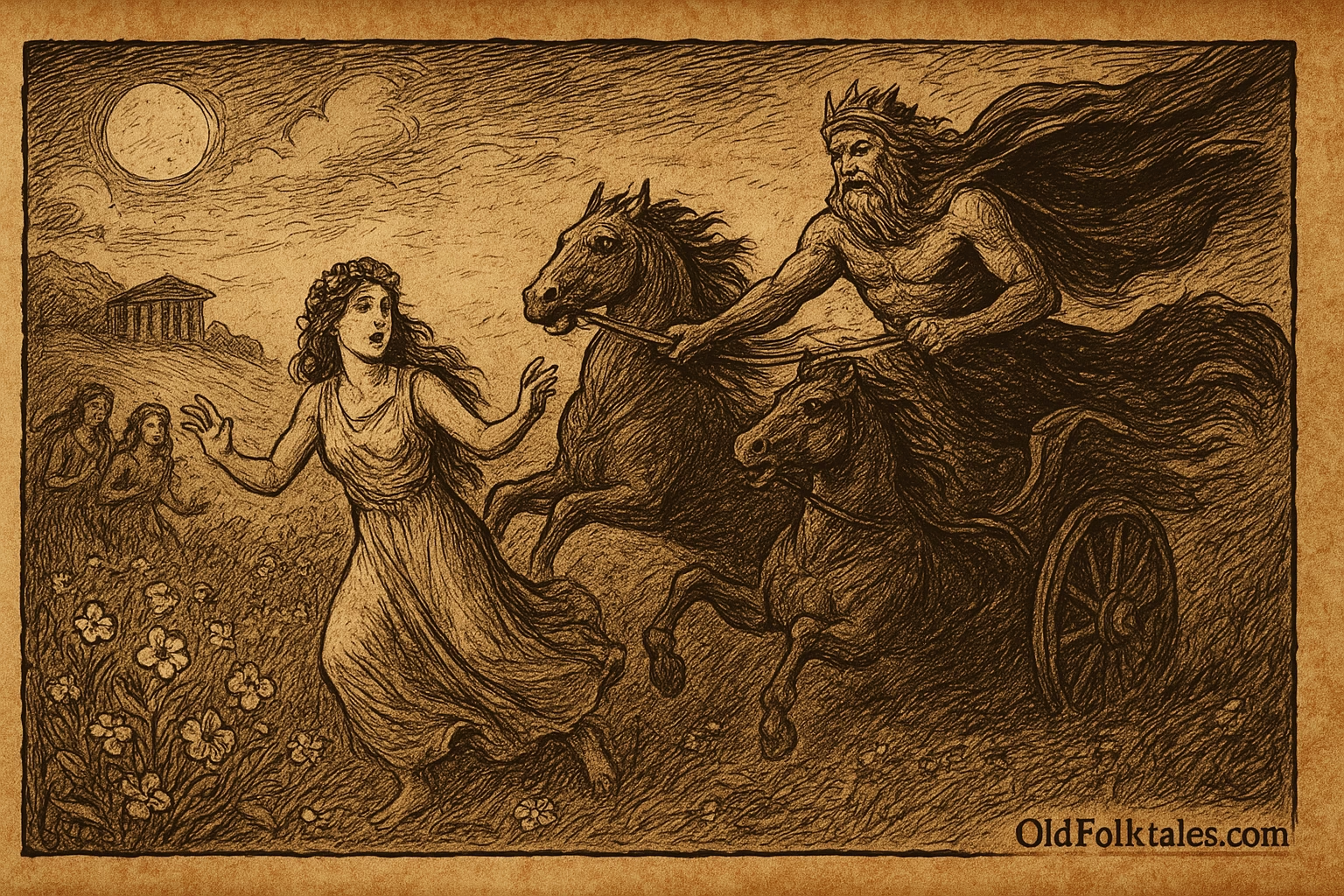
One fateful day, as Persephone reached for a particularly beautiful narcissus that seemed to glow with inner radiance, the earth suddenly trembled and split open with a terrible roar. The ground yawned wide, revealing a chasm of absolute darkness. From that abyss rose Hades in his chariot drawn by four immortal horses, black as midnight, their eyes burning like coals. Before Persephone could scream, before the nymphs could react, the god of the dead seized her, pulling her into his chariot. In an instant, the earth closed over them, swallowing all trace of the abduction as if it had never been.
The meadow fell silent. The flowers Persephone had gathered lay scattered on the ground, already beginning to wilt.
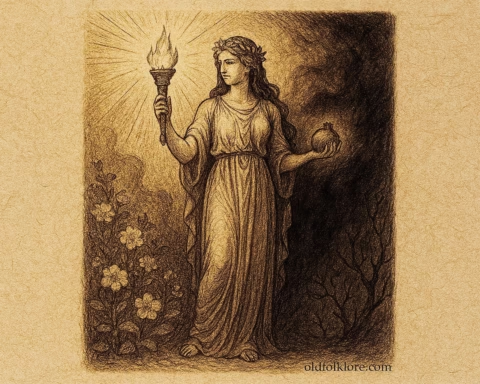
When Demeter discovered her daughter missing, her anguish shook the foundations of the world. The goddess of harvest abandoned her divine duties and wandered the earth in mourning, her hair unbound, her robes torn, calling Persephone’s name until her voice grew hoarse. She searched for nine days and nine nights without rest, carrying torches through the darkness, asking every stream, every bird, every whisper of wind if they had seen her beloved child.
As Demeter’s grief deepened, so too did the earth’s suffering. The goddess withdrew her blessing from the land. Crops withered in the fields, their stalks turning brown and brittle. Trees shed their leaves prematurely, standing like skeletal sentinels against gray skies. The soil grew hard and cold, refusing to nurture seed. Flowers died, grasses yellowed, and the world that had known only abundance began to starve. Mortals cried out to the gods for relief, their stores emptying, their children growing thin and weak.
Zeus, king of Olympus, watched from his throne with growing concern. If Demeter’s sorrow continued unchecked, all humanity would perish, and with them the sacrifices and worship the gods enjoyed. He summoned Hermes, the swift messenger god with winged sandals, and commanded him to descend into the Underworld and retrieve Persephone.
Hermes flew down through hidden passages, past the river Styx and the three-headed guardian Cerberus, into Hades’ palace of shadows. There he found Persephone seated beside Hades on a throne of dark stone, a crown of precious gems upon her head a queen, but a sorrowful one. Her eyes held a distant sadness, though she had grown accustomed to the dim light and quiet majesty of her new realm.
Hades listened to Zeus’s command with a heavy heart. He had come to love Persephone deeply, and in her presence, his kingdom felt less like a prison. But he knew he could not defy the king of gods entirely. However, there was ancient law that bound even Zeus: anyone who consumed food or drink in the realm of the dead must return there.
Before Persephone departed, Hades offered her a pomegranate, ruby-red and glistening. Whether from hunger, or affection, or some spell of forgetfulness, Persephone ate six seeds from the fruit, their juice staining her lips like blood. The moment she swallowed, her fate was sealed.
Hermes brought Persephone back to the world above, where Demeter embraced her daughter with tears of overwhelming joy. The goddess of harvest immediately restored her blessing to the earth. Flowers burst from the soil, trees unfurled new leaves, and warmth returned to the land. But the reunion’s joy was bittersweet.
Because Persephone had eaten those six pomegranate seeds, she was bound to return to the Underworld for six months of every year one month for each seed consumed. A compromise was struck Persephone would spend half the year above with her mother, and half below as Hades’ queen.
And so, the cycle was established. When Persephone rises from the Underworld each spring, the earth erupts with life flowers bloom, crops grow green, birds sing, and warmth spreads across the land. During these months, Demeter rejoices, and her happiness brings abundance to all. But when autumn comes and Persephone must descend once more to her throne beside Hades, Demeter mourns. Her sorrow drains color from the world, bringing the cold sleep of winter, when the earth rests and waits for the goddess’s return.
Thus the ancient Greeks understood the eternal rhythm of the seasons not as mere weather, but as the heartbeat of divine love and loss, the dance between light and shadow, life and death, joy and sorrow that governs all existence.
Click to read all Myths & Legends – timeless stories of creation, fate, and the divine across every culture and continent
The Moral Lesson
The myth of Persephone and Hades teaches us that life is governed by cycles of loss and return, sorrow and joy, darkness and light. Just as winter must give way to spring, difficult seasons in our lives eventually pass, bringing renewal and growth. The story also reminds us of that transformation often comes through painful experiences Persephone’s time in the Underworld changed her from an innocent maiden to a powerful queen, suggesting that our hardships can lead to wisdom and strength. Finally, it illustrates the interconnectedness of all things: one being’s joy or sorrow can affect the entire world, showing us how deeply our actions and emotions ripple through the lives of others.
Knowledge Check
Q1: Who was Persephone and why was she important in Greek mythology?
A: Persephone was the daughter of Demeter, goddess of the harvest, and became queen of the Underworld after Hades abducted her. She represents the cycle of seasons and the connection between life on earth and the realm of death, making her central to Greek understanding of agricultural cycles and natural rhythms.
Q2: How did Hades abduct Persephone and take her to the Underworld?
A: While Persephone was gathering flowers in a meadow, Hades caused the earth to split open and emerged in a chariot pulled by black horses. He seized her and carried her down into his underground kingdom before the earth closed above them, leaving no trace.
Q3: Why couldn’t Persephone return permanently to her mother Demeter?
A: Persephone ate six pomegranate seeds while in the Underworld. According to ancient law, anyone who consumed food or drink in the realm of the dead was bound to return there. Because she ate six seeds, she had to spend six months each year in the Underworld.
Q4: What symbolic meaning do the seasons have in the Persephone myth?
A: Spring and summer occur when Persephone returns to earth and Demeter rejoices, causing the world to bloom. Autumn and winter happen when Persephone descends to the Underworld and Demeter grieves, withdrawing her blessings and causing plants to die and the earth to sleep.
Q5: What was Demeter’s reaction to losing her daughter and how did it affect mortals?
A: Demeter was consumed by grief and searched endlessly for Persephone. In her sorrow, she withdrew her divine power from the earth, causing all crops to fail, trees to lose their leaves, and the land to become barren. Mortals began to starve, which finally prompted Zeus to intervene.
Q6: What does the pomegranate symbolize in Greek mythology and this story specifically?
A: The pomegranate symbolizes fertility, death, and transformation in Greek culture. In this myth, eating the pomegranate seeds represents Persephone’s permanent connection to the Underworld and her transformation from maiden to queen, binding her to both realms and creating the eternal cycle of seasons.
Source: Adapted from the Homeric Hymn to Demeter
Cultural Origin: Ancient Greece, Classical Greek Mythology