Before the dunes shifted and the Sahel winds learned the names of kings, the ancestors of the Soninke tell of a time when the world was younger and the destinies of nations still slept beneath the red earth. In that age, Dinga was born, not as a mere man, but as a child of omen, a figure who carried the whisper of spirits in his breath and the heat of kingship in his shadow. His lineage, the griots say, stretched back to heavenly waters, for his father was the Serpent-Spirit who ruled beneath the sacred lakes. From this union came Dinga, woven of both human resolve and divine memory.
As a boy, Dinga felt the pulse of unseen forces. The desert spoke to him. Birds circled him in unusual patterns. Old soothsayers bowed before him without understanding why. And when he walked, people said they heard the hum of distant drums, as though the earth itself recognized him. Yet the gifts that crowned him also set him apart. Children feared his glowing eyes during storms, and elders whispered of the prophecy surrounding him: “When the child of water touches the sun’s soil, an empire shall rise.”
But Dinga was not raised to rest on prophecy. His early years were filled with trials that honed both his spirit and his destiny. When a drought struck his homeland, killing crops and sowing despair, Dinga dreamed of a vast land far west, an expanse rich with hidden gold and guarded by ancestral spirits. The dream came with a command: travel, endure, and claim the land destined for your people. Whether the vision was a blessing or a burden, he did not yet know.
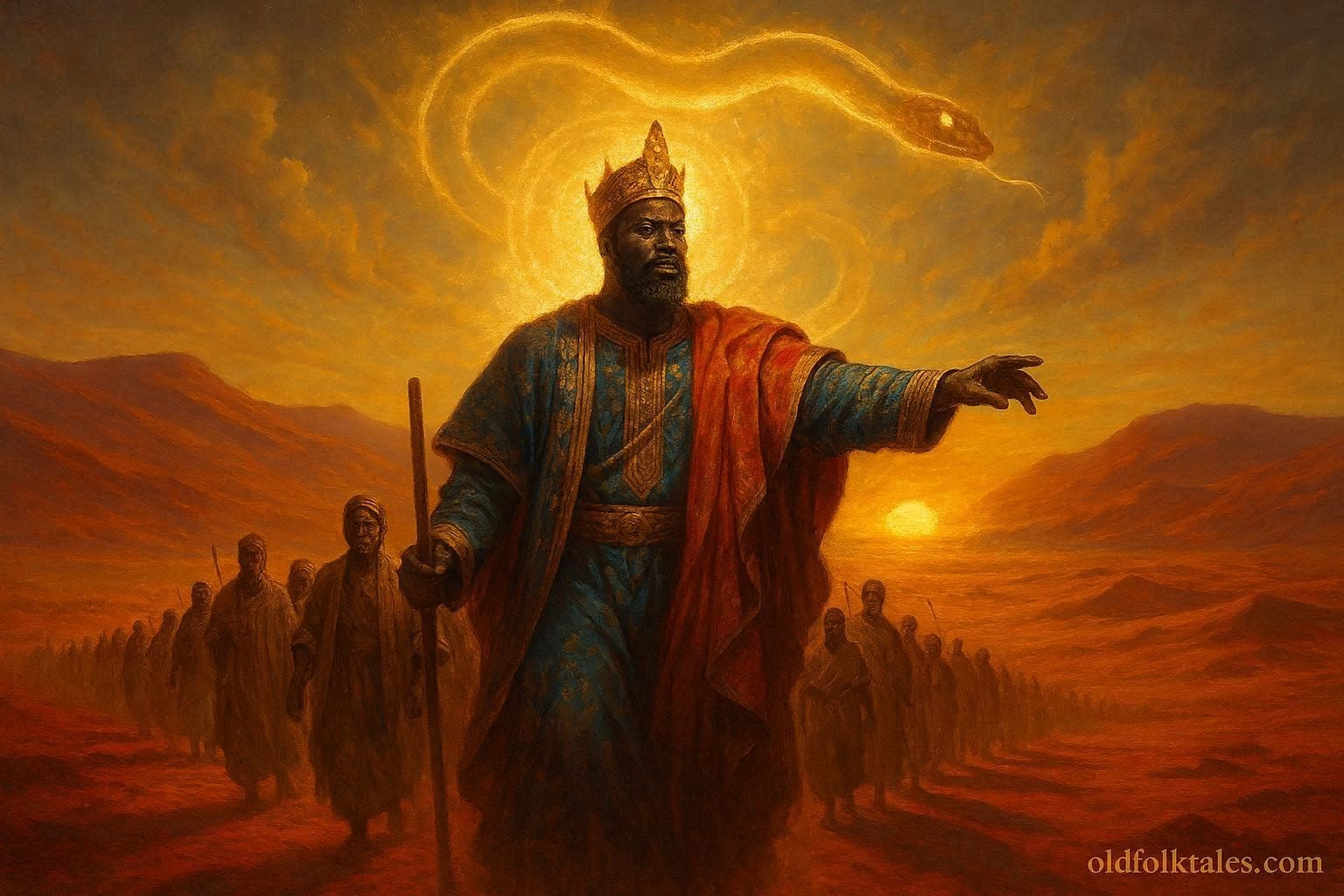
He gathered his people, the proto-Soninke clans, and declared his intent to lead them on a great migration. But this decision birthed his first moral struggle. Many did not believe in dreams. Some accused him of pride, others of madness. It is easy to follow a king, but much harder to follow a young man claiming the favor of spirits. Dinga chose not to force their loyalty. Instead, he walked into the desert alone for three days, fasting and calling on the unseen. On the morning of the fourth, a celestial serpent appeared, radiant, towering, its scales shimmering like molten copper. It circled the encampment and bowed its head to Dinga. That was all the sign his people needed.
The migration began.
Across scorching days and freezing nights, Dinga guided his people. They faced shifting dunes, raiders driven by hunger, and monstrous sandstorms that erased entire footprints in moments. Dinga’s divine nature shielded them at times; other times it was his mortal wisdom, choosing when to fight, when to hide, when to bargain. Yet the greatest challenge came not from the land, but from within.
One night, the clans argued violently over dwindling water. Brothers accused brothers. Elders feared rebellion. Dinga felt for the first time the crushing weight of leadership. Should he rule by divine authority, bending wills with the heavy hand of destiny? Or should he listen to his people, risking the slow decay of unity through compromise?
He chose a third path: sacrifice.
Entering the desert alone once again, he called upon his father’s spirit. The serpent-spirit answered, offering a hidden spring in exchange for Dinga giving up a portion of his divine essence, his protection from pain. Dinga agreed. When he returned at dawn with water flowing from a place once barren, his people saw a leader who chose to suffer for them. Their loyalty bound to him deeper than prophecy could ever ensure.
At last, after weeks worn into months, and months nearly into years, they reached a land unlike the harsh regions they had crossed. The soil glowed red. Rivers threaded through valleys. Herds grazed freely. And beneath the ground, gold shimmered like tears of the ancestors. Dinga felt the dreams of his youth settle around him like a mantle. This was Wagadu, the destined cradle of the future Ghana Empire.
But one final trial awaited.
The spirits of the land, guardians of this sacred territory, demanded a test: Only he who can balance power and humility may claim this place. Dinga entered their realm through trance, facing visions of wealth, conquest, and endless glory. They tempted him with empires owed entirely to him alone. But he resisted. He declared that his kingship would be rooted not in greed or tyranny, but in stewardship. The spirits, satisfied, withdrew their challenge.
Thus, Dinga built the first great settlement of Wagadu. He united the clans under a code of justice, established sacred rites honoring both female and male ancestors, and forged alliances with neighboring peoples. Under his guidance, trade blossomed, gold, salt, and stories traveling far beyond the horizon.
Dinga’s destiny fulfilled itself not through conquest, but through balance: divine guidance and human choice, courage and sacrifice, strength and mercy. When he finally passed into the realm of spirits, the griots say the earth swallowed his footprints so no enemy could ever claim them. Yet the echoes of his steps remained in the foundations of the empire that followed.
And thus began the rise of Ancient Ghana, Wagadu, shaped by the son of a serpent-spirit and a mortal woman, the king who carried both water and fire in his blood.
Author’s Note
Dinga stands as one of West Africa’s most significant mythic founders. His story blends spiritual ancestry, historical migration, and the cultural memory of the Soninke people. As the Ghana Empire later grew into a center of wealth and power, Dinga’s narrative remained a symbol of divine guidance combined with human responsibility, a reminder that leadership is a sacred trust shaped by sacrifice.
Knowledge Check
-
What divine lineage is Dinga said to descend from?
-
Why did Dinga lead his people on a great migration?
-
What was the moral struggle he faced during the journey?
-
How did Dinga secure water during the crisis among his people?
-
What test did the land’s spirits impose before he could claim Wagadu?
-
What symbolic outcome results from Dinga’s life and leadership?
Cultural Origin: Soninke, Ancient Ghana Empire (Wagadu), West Africa.
Source: Charles Monteil, Les Empires du Mali (1929).