In ancient times, when the Shu Kingdom stretched across the western lands that would become China, the people living along the banks of the great rivers led lives of constant hardship and uncertainty. They were fishermen, these early inhabitants, arriving with the morning wind and departing as the waves commanded. Their existence depended entirely on the mercy of water and sky forces that showed little mercy indeed.
When fierce winds whipped across the waters or torrential rains pounded down from dark clouds, the fishermen could not venture out to sea. On those days, families went hungry, children cried, and the elderly grew weak. The people endured these cycles of feast and famine year after year, their days passing in grinding difficulty, with no solution in sight and no escape from their precarious way of life.
Click to read all Myths & Legends – timeless stories of creation, fate, and the divine across every culture and continent
Then one extraordinary day, something miraculous occurred. A strange man fell from the heavens themselves, landing among the astonished people as if sent by divine decree. His name was Du Yu, and he spoke with authority and wisdom that seemed to come from beyond the mortal realm. He claimed to possess knowledge that could free the people from their dependence on the unpredictable sea.
“The solution to your suffering,” Du Yu told the gathered crowds, “lies not in the waters but in the earth beneath your feet.”
He began to teach them arts they had never imagined how to clear the wild, overgrown lands that surrounded their fishing villages; how to turn soil and prepare fields; how to plant grains that would grow tall and golden; how to cultivate vegetables that would sustain them through all seasons. Under Du Yu’s patient instruction, the people learned to work the land with their hands, to read the rhythms of planting and harvest, to coax life from the earth itself.
The transformation was remarkable. The people threw themselves into this new way of life with determination born of desperation. They worked from dawn until dusk, clearing forests, breaking ground, planting seeds, and tending crops. Slowly but surely, the desolate wilderness of the Shu lands became productive, fertile fields that stretched toward the horizon. Where once there had been only danger and hunger, now there was abundance and security.
The people’s gratitude knew no bounds. They gathered in great assemblies and unanimously declared that Du Yu should be their king. They crowned him Wang Di the Hope Emperor for he had given them hope when they had none and transformed their lives from misery to prosperity.
For a time, peace and plenty blessed the land. Wang Di ruled with wisdom and compassion, always keeping the welfare of his people foremost in his heart. But as the old saying warns, good times cannot last forever.
One year, the rains came with unusual ferocity. Day after day, water poured from the sky as if the heavens themselves had opened. The rivers swelled beyond their banks, flooding the precious farmlands that the people had worked so hard to create. The water rose higher and higher, threatening to wash away everything they had built, returning them to their former state of helplessness.
In this crisis, a man named Bieling came before Wang Di and bowed low. “Great Emperor,” he said, “I possess knowledge of how to control the waters. Give me authority, and I will save our people from this disaster.”
Wang Di, recognizing both the urgency of the situation and Bieling’s confidence, appointed him to lead the flood control efforts. Bieling proved true to his word. He organized the people, led them in epic efforts to channel and redirect the raging waters, and after several years of brave struggle, succeeded in taming the floods completely.
The people rejoiced, and Wang Di, in recognition of these tremendous achievements, made a decision that revealed the selflessness of his character. He abdicated his throne, passing the title of King to Bieling, who became known as Cong Di. The new emperor continued the good work, leading the Shu people in creating sophisticated irrigation systems and opening even more land for cultivation. Under his guidance, the kingdom prospered, and the people lived in contentment.
But power, as it often does, began to change Cong Di. As years passed and success followed success, he grew prideful and arrogant. He surrounded himself with luxury and flattery, gradually losing touch with the common people whose labor sustained the kingdom. He no longer walked among them or listened to their concerns. The suffering of the farmers and workers ceased to reach his ears within his palace walls.
When word of this transformation reached Wang Di in his retirement, his heart burned with anguish. The people he had worked so hard to save were being neglected by the very man to whom he had entrusted their care. Wang Di could not remain silent. He decided he must go to the palace and counsel Cong Di, reminding him of his duties and the principles of good rule.
As news spread that the former emperor was traveling to the capital, people poured out from their homes and fields, joining Wang Di’s procession. They hoped that together they might help Cong Di remember the compassion that should guide a ruler’s heart.
But when Cong Di learned that Wang Di was approaching with a great crowd behind him, fear seized his heart. What if the beloved former emperor wanted to reclaim the throne? What if the people preferred their old ruler to their new one? In his paranoia and insecurity, Cong Di made a fateful decision he ordered the city gates to be locked and barred.
Wang Di stood before the closed gates of the capital he had once ruled, unable to enter, unable to fulfill his mission of counsel and correction. The people waited behind him, their hopes fading as the massive wooden doors remained shut.
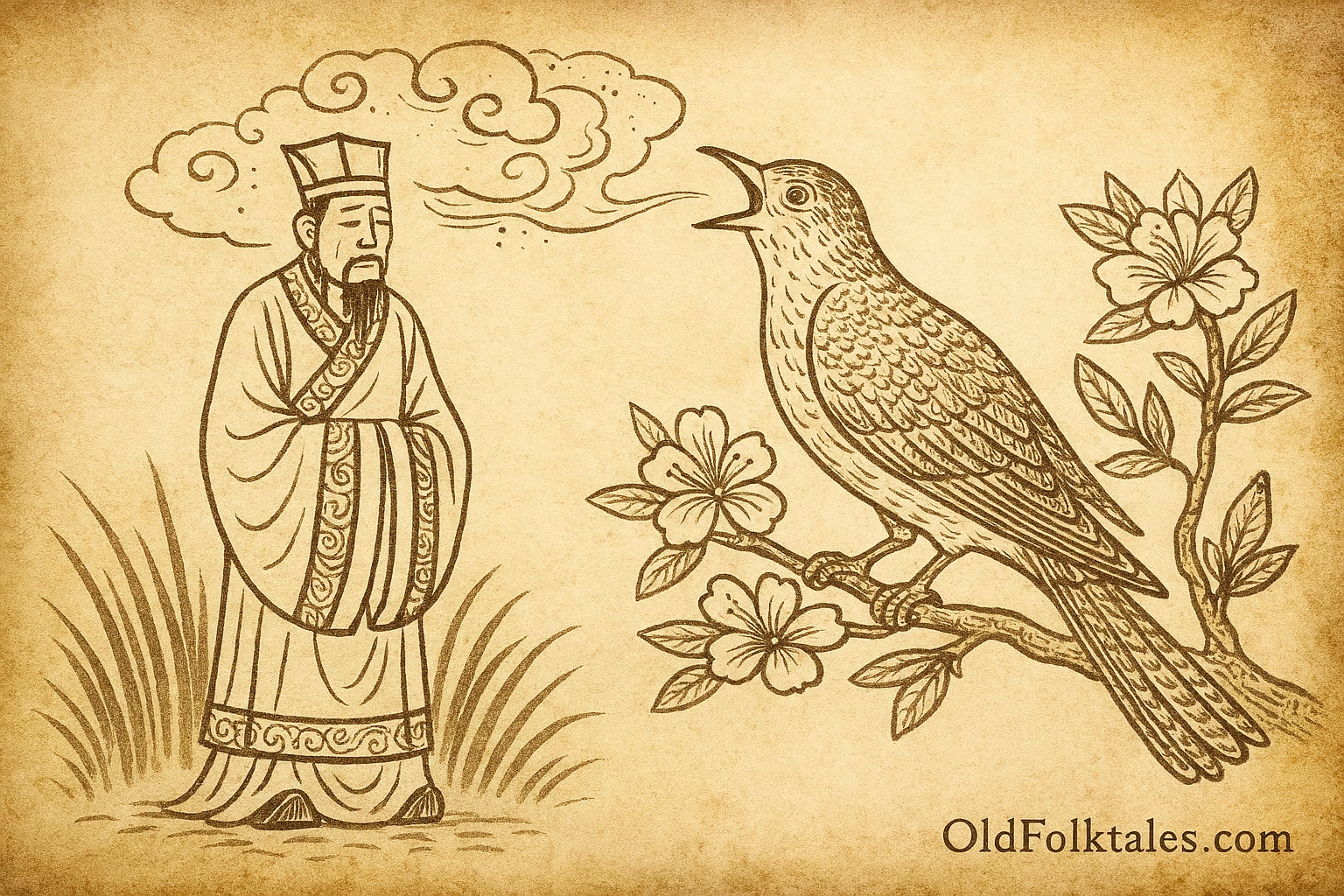
Then, in an act of supernatural transformation born of pure devotion, Wang Di changed his form. His human body dissolved and reformed, feathers sprouting where skin had been, until he became a cuckoo bird what the Chinese call a dujuan. He spread his wings and flew high above the walls that barred him, landing in a large tree within the palace gardens.
From his perch, the cuckoo that had been Wang Di cried out in a loud, plaintive voice that echoed through the courtyards: “Precious are the people! Precious are the people!”
The persistent, mournful call reached Cong Di’s ears. Day after day, the cuckoo’s cry reminded him of his responsibilities, until finally the emperor’s heart softened. Shame filled him as he recognized how far he had strayed from the path of righteous rule. He resolved to reform his ways and return to caring for his subjects.
The cuckoo, its mission at the palace complete, flew out across the farmlands of Shu. It called ceaselessly as it flew over the fields: “Cuckoo! Cuckoo!” The farmers recognized this as an urgent reminder to pay attention to the farming seasons, to work diligently at plowing and planting, to never forget that prosperity comes from careful attention to the land and its cycles.
The common people knew in their hearts that this devoted bird was none other than their beloved Wang Di, transformed by his love for them. They called it the Du Cuckoo in his honor, naming it for Du Yu himself.
The Du Cuckoo continued to cry day and night, never resting in its mission to guide and protect the people. Each cry was so intense, so full of desperate love and concern, that a drop of blood fell from its throat. Where these blood drops touched the earth, clusters of brilliant red flowers sprang up, vivid as the bird’s devotion. The people called these blossoms Du Cuckoo Flowers, known to the wider world as rhododendrons eternal reminders of an emperor who loved his people so much that he gave up his human form to serve them forever.
The Moral Lesson
The legend of Wang Di teaches that true leadership means selfless devotion to the people’s welfare, even at great personal cost. Wang Di twice sacrificed his own position first by voluntarily giving up his throne to a more capable flood controller, and then by transforming into a cuckoo bird to continue serving his people when human form could no longer reach them. The story emphasizes that leaders must remain humble, stay connected to common people’s needs, and never let pride or power corrupt their sense of duty. It celebrates perpetual service over personal glory and reminds us that genuine love for others transcends all barriers, even death itself.
Knowledge Check
Q1: Who was Wang Di and how did he become emperor of Shu? A: Wang Di (Hope Emperor) was a mysterious man named Du Yu who fell from the sky with knowledge of agriculture. He taught the fishing people of Shu Kingdom how to cultivate land and grow crops, transforming desolate wilderness into fertile farmland. Grateful for this life-changing gift, the people unanimously chose him to be their king.
Q2: Why did Wang Di give his throne to Bieling (Cong Di)? A: When severe flooding threatened the kingdom, Bieling successfully led the people in controlling the waters over several years. In recognition of these tremendous achievements and Bieling’s merit in saving the kingdom, Wang Di selflessly abdicated his throne and gave the title of king to Bieling, who became known as Cong Di.
Q3: What caused the conflict between Wang Di and Cong Di? A: Over time, Cong Di became prideful and arrogant after his success, losing concern for the common people’s suffering. When Wang Di learned of this, he tried to enter the palace to advise Cong Di. However, Cong Di feared Wang Di wanted to reclaim the throne, so he ordered the city gates shut, preventing Wang Di from entering.
Q4: How did Wang Di transform into a cuckoo bird? A: Unable to enter the locked city to counsel Cong Di, Wang Di underwent a supernatural transformation born of his devotion to the people. He changed from human form into a cuckoo bird (dujuan), allowing him to fly over the walls into the palace gardens where he could cry out his message.
Q5: What is the significance of the cuckoo’s cry in Chinese culture? A: The cuckoo cries “Cuckoo! Cuckoo!” which sounds like an urgent reminder to farmers about planting seasons. The Chinese people understood this as Wang Di (now the Du Cuckoo) continuing to serve them by urging diligent farming and attention to agricultural cycles, showing his eternal devotion to their welfare.
Q6: What do rhododendrons symbolize in the Wang Di legend? A: Rhododendrons (Du Cuckoo Flowers) represent Wang Di’s ultimate sacrifice and devotion. According to legend, the cuckoo cried so intensely that each cry shed a drop of blood, and where these blood drops fell, red rhododendron flowers bloomed eternal symbols of selfless love and service to the people.
Source: Adapted from Classical Chinese Myths by Anne Birrell (Penguin Books, 2000).
Cultural Origin: Ancient Shu Kingdom (modern-day Sichuan Province), China.