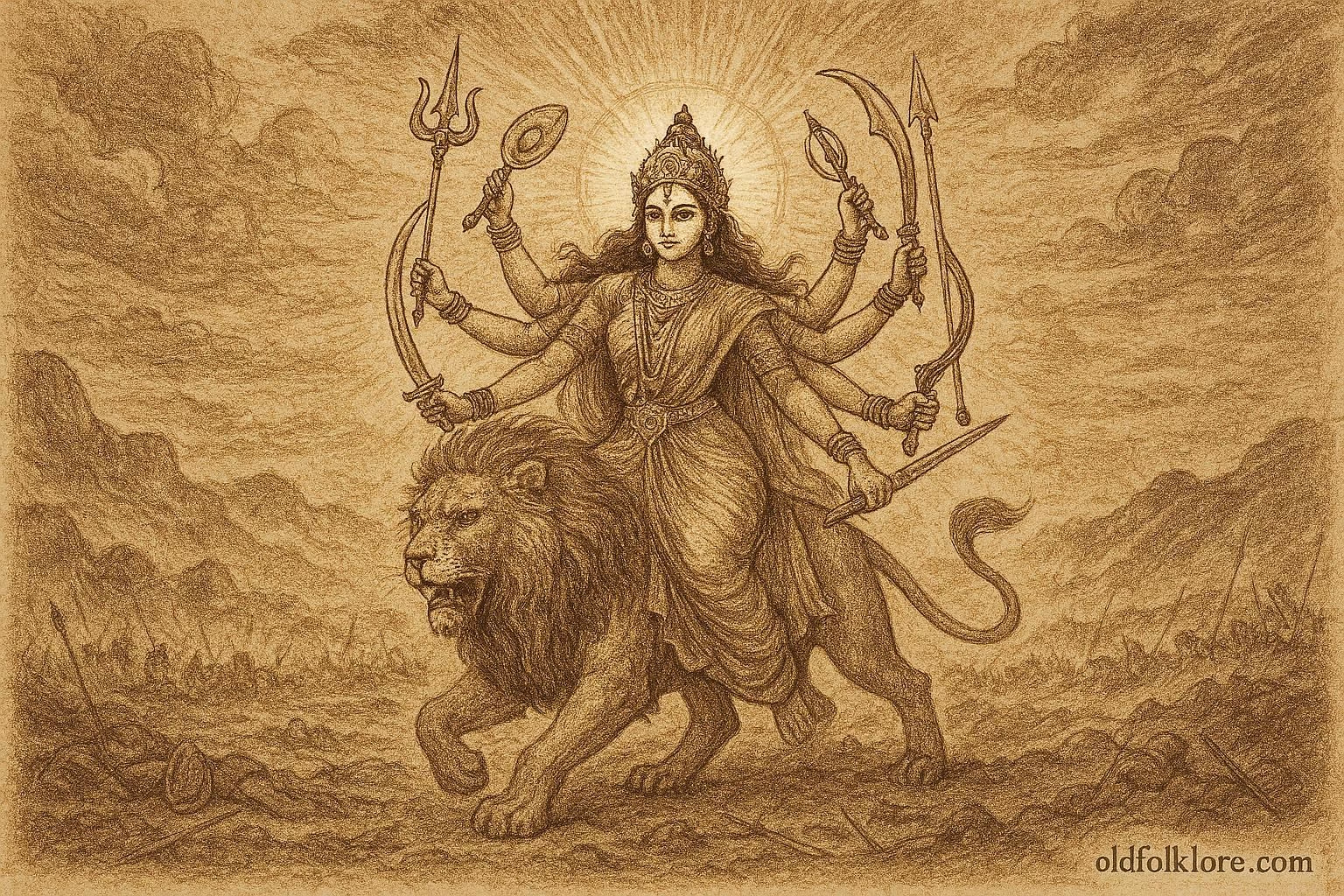
Durga, whose name signifies “The Inaccessible” or “The Impenetrable Fortress,” embodies the divine feminine in her fiercest, most protective form. She is a warrior goddess, motherly yet formidable, whose presence safeguards the cosmic order. Durga wields an array of weapons gifted by the gods, including the trident, discus, sword, and bow, each symbolizing a facet of divine power. Riding a mighty lion, she represents courage, dominance over chaos, and the unstoppable force of justice. Durga’s domain encompasses warfare, protection, motherhood, and righteous anger, merging nurturing compassion with unyielding strength. Worship traditions focus on her protection and guidance, particularly during festivals such as Navaratri and Durga Puja, where her victories over demons are celebrated with fervor and devotion. Her imagery often blends ferocity and grace: multiple arms, radiant eyes, and a commanding yet benevolent aura.
Mythic Story: Durga Slays Mahishasura
In ages past, the demon Mahishasura, born of a buffalo, grew invincible through penance and divine boons. His power eclipsed the gods themselves, and he overran the heavens, driving the celestial beings from their realms. Armed with shape-shifting powers and immense strength, Mahishasura seemed unstoppable, embodying the destructive force of unchecked ego and chaos. The gods, desperate and powerless, realized that only a new, unparalleled force could confront him.
Pooling their energies, the gods created Durga. From Vishnu, she received the discus; from Shiva, the trident; from Varuna, the conch; from Agni, the fiery sword; from Indra, the thunderbolt; and countless other divine gifts from the assembled pantheon. Each weapon, a testament to divine collaboration, was entrusted to her hands, along with the courage to wield them flawlessly. Clad in luminous armor and adorned with celestial ornaments, Durga mounted her lion, whose roar echoed across the skies, symbolizing fearless resolve and divine might.
The battle between Durga and Mahishasura lasted nine days and nights, each day a demonstration of her skill, bravery, and inexhaustible energy. Mahishasura, shifting from buffalo to lion, human, and monstrous hybrid forms, tested Durga at every turn. Yet, she remained unshaken, striking with her trident, cutting with her sword, and hurling the thunderbolt with unerring precision. The clash was not merely physical; it was a cosmic struggle of dharma (righteous order) versus adharma (chaos), of protection versus destruction.
On the tenth day, Durga confronted Mahishasura in his final form. With a decisive thrust of her trident to his heart, the demon fell, defeated and humiliated, symbolizing the triumph of divine justice over arrogance and malevolence. The gods, witnessing the restoration of their realms, showered praises and hymns, declaring Durga the ultimate protector, the preserver of order, and the embodiment of righteous fury. From this myth, the festival of Navaratri was established, celebrating her nine-day battle and ultimate victory with music, dance, prayers, and ritual offerings.
Durga’s victory is rich with symbolic resonance. Her multiple arms signify the manifold powers of the divine feminine, capable of nurturing life and vanquishing evil simultaneously. Her lion represents courage and dominance, her weapons the collective energy of the gods, and her luminous form the radiant essence of righteousness. Each element reinforces the belief that true power lies in unity, balance, and the determined application of divine will against chaos.
Learn the ancient stories behind deities of light, storm, and shadow from cultures across the world
Author’s Note
Durga’s myth illustrates the eternal balance between creation and destruction. She teaches that protection, courage, and justice are inseparable from compassion and responsibility. In human terms, Durga reminds us that challenges, adversaries, and internal struggles require both strength and wisdom to overcome. Her story encourages moral vigilance, resilience, and the understanding that righteous action, though often demanding, restores balance and harmony. The narrative of Durga inspires devotees to cultivate courage and integrity while recognizing the interconnectedness of power and compassion.
Knowledge Check
Q1: What is the primary domain of Durga?
A: Protection, warfare, motherhood, and righteous fury.
Q2: Who was the demon Durga defeated?
A: Mahishasura, the buffalo demon.
Q3: How was Durga created?
A: She was formed from the combined divine energies of all the gods.
Q4: What is the significance of her lion?
A: The lion symbolizes courage, strength, and mastery over chaos.
Q5: How long did the battle with Mahishasura last?
A: Nine days of combat, culminating on the tenth day with victory.
Q6: Which festival celebrates Durga’s victory?
A: Navaratri, observed with music, dance, and ritual worship.
Source: Devi Mahatmya, India
Source Origin: India, Hindu tradition