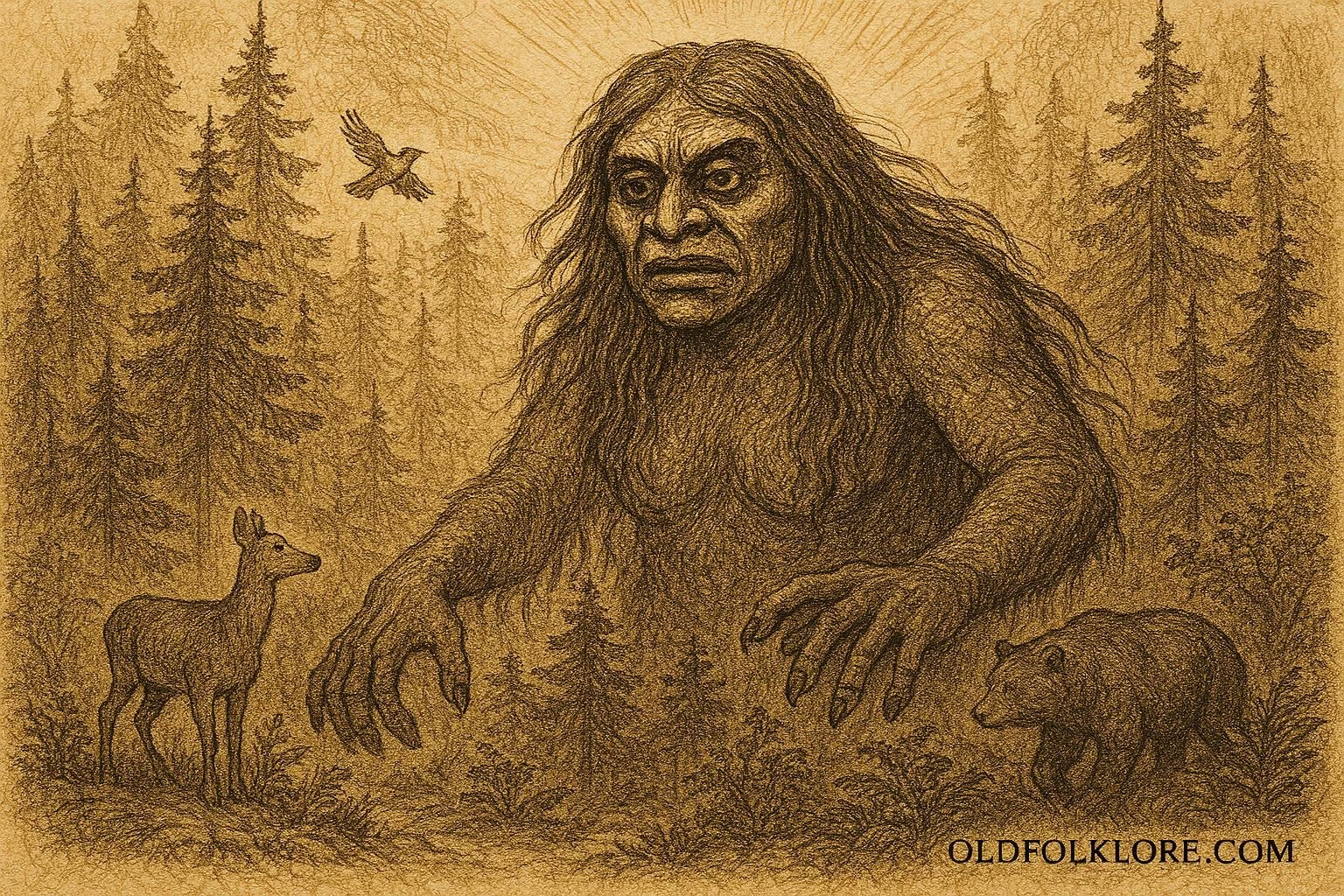
Dzunuk’wa, also called Tsonoqua, is a formidable forest giantess whose presence commands awe and respect. She embodies the dual forces of protection and punishment, ensuring that humans approach the natural world with humility. Her deep-set eyes gleam with knowledge, and her booming voice, often remembered in the chilling cry, “Hu! Hu!”, signals her movement through the dense forests of the Pacific Northwest.
As a supernatural guardian, Dzunuk’wa controls the balance of wealth and secrecy in the forest. Those who honor her through ritual, respectful harvest, or ceremonial offerings may receive prosperity, abundance, and protection. Conversely, arrogance or disrespect toward the forest invites her wrath, which manifests in vanishing treasures or misfortune.
Dzunuk’wa plays a central role in Kwakwaka’wakw ceremonial life, particularly in the Hamatsa dance, where masked dancers embody the giantess’s power. Her image, often grotesque yet awe-inspiring, teaches cultural values of humility, respect for nature, and the proper conduct of hunters and gatherers. Her duality as both fearsome punisher and benevolent provider reflects the interconnectedness of survival, morality, and spiritual observance.
Mythic Story
Long ago, when the forests of the Pacific Northwest were dense and untamed, humans moved cautiously among towering cedars, moss-draped firs, and shadowed streams. It was said that Dzunuk’wa roamed these forests, unseen yet omnipresent, her gaze tracking those who ventured too boldly or without respect. Her cry, “Hu! Hu!”, echoed through valleys, alerting all that she was near.
One season, a young hunter named Tamakwas sought fortune and food for his village. Ambitious and proud, he disregarded the teachings of his elders and ventured deep into the forest without offerings, confident that skill alone would suffice. As he collected berries and prepared to trap game, the chilling voice of Dzunuk’wa resounded, shaking the trees and startling the birds into flight.
Suddenly, a massive figure emerged from the shadows: the giantess Dzunuk’wa, her eyes glimmering with wisdom and warning. Her hair, long and matted, brushed the mossy ground, and her teeth gleamed as she observed the young hunter. She had heard the disrespect in his thoughts, in the way he imagined taking the forest’s bounty as his own without gratitude.
“You tread carelessly,” she bellowed. “You seek wealth but honor nothing. Who will guide you when the forest turns against you?”
Terrified yet awed, Tamakwas bowed and begged for mercy. Dzunuk’wa studied him, weighing fear against sincerity. She decided to test his character: she hid his prey, scattered the berries, and created illusions of looming shadows, forcing him to confront his hubris. Alone in the forest’s silence, Tamakwas realized the error of his arrogance. He remembered the teachings of his ancestors: humility, ritual respect, and reverence for the living world.
After days of wandering, weakened but wiser, Tamakwas returned to the path where Dzunuk’wa awaited. “You have learned patience and respect,” she intoned. “You understand that wealth is not merely taken but received through care and reverence.”
With a wave of her enormous hand, she revealed hidden caches of salmon, berries, and roots. Streams gleamed with fish, and the forest seemed to breathe anew. The giantess’s mercy transformed Tamakwas’s understanding: prosperity required both courage and humility, and the forest’s gifts were sacred, not to be seized thoughtlessly.
From that day, Tamakwas became a devoted follower of Dzunuk’wa’s teachings. He shared her lessons with the village, instructing the young and old alike in the ceremonies and observances that honored the forest and its guardian. The cry of Dzunuk’wa, once terrifying, became a reminder of moral vigilance and communal responsibility.
Over generations, her presence continued to guide hunters, gatherers, and dancers. In the Hamatsa dance, performers don grotesque masks of Dzunuk’wa, recreating her fearsome appearance and the moral lessons she embodies. Children learn to respect the forest; adults remember the balance between ambition and reverence. Her myth preserves the Kwakwaka’wakw understanding that wealth and prosperity are inseparable from ethical conduct and spiritual harmony.
Though some narratives depict Dzunuk’wa as malevolent, others highlight her protective and generative powers. Her duality mirrors the natural world: abundant yet perilous, nurturing yet demanding respect. To ignore her is to risk misfortune; to honor her is to receive guidance, prosperity, and insight into the sacred rhythms of life.
Author’s Note
Dzunuk’wa’s myth teaches that human ambition must be tempered by respect for nature and ethical behavior. She embodies the intertwined forces of fear and blessing, illustrating that prosperity arises from reverence, humility, and moral awareness. Her story reinforces communal responsibility, the sanctity of the natural world, and the enduring wisdom embedded in oral traditions.
Knowledge Check
Q1: Who is Dzunuk’wa and what does she govern?
A: Dzunuk’wa is a forest giantess who governs wealth, prosperity, and supernatural guardianship of the forest.
Q2: What warning cry is associated with her presence?
A: “Hu! Hu!”, signaling both her approach and the need for respect.
Q3: How does she test humans in the myth?
A: By challenging their humility and reverence, often creating obstacles or illusions to gauge sincerity.
Q4: What is the Hamatsa dance?
A: A ceremonial dance where performers wear Dzunuk’wa masks, embodying her power and moral lessons.
Q5: What lesson did the hunter Tamakwas learn?
A: That wealth and prosperity require respect, humility, and ethical conduct toward nature.
Q6: How is Dzunuk’wa’s duality represented?
A: She is both a fearsome punisher and a benevolent provider, reflecting the forest’s abundance and danger.
Source: Kwakwaka’wakw oral histories and ethnographies, Pacific Northwest Coast.
Source Origin: Kwakwaka’wakw peoples, Pacific Northwest Coast, pre-Colonial to present