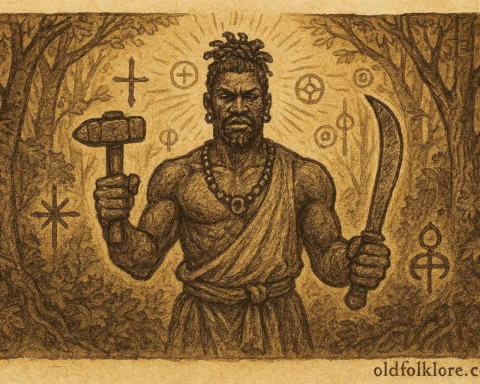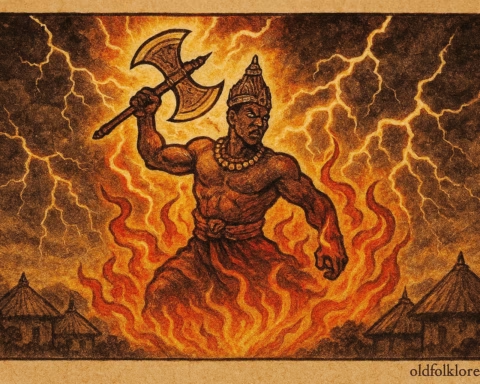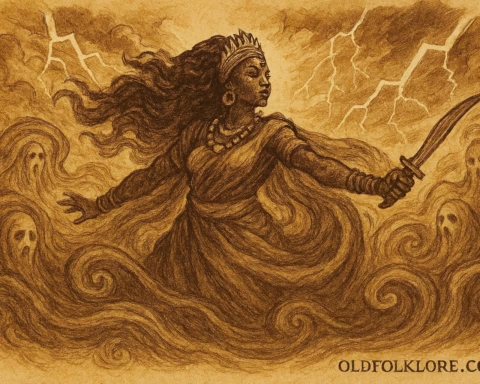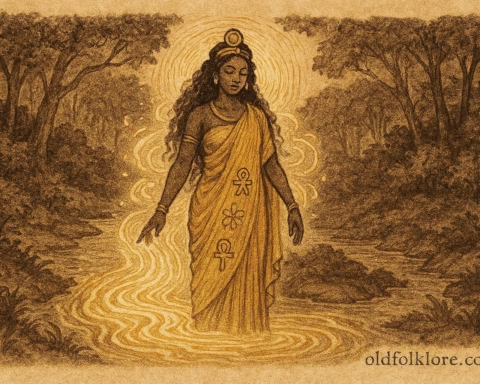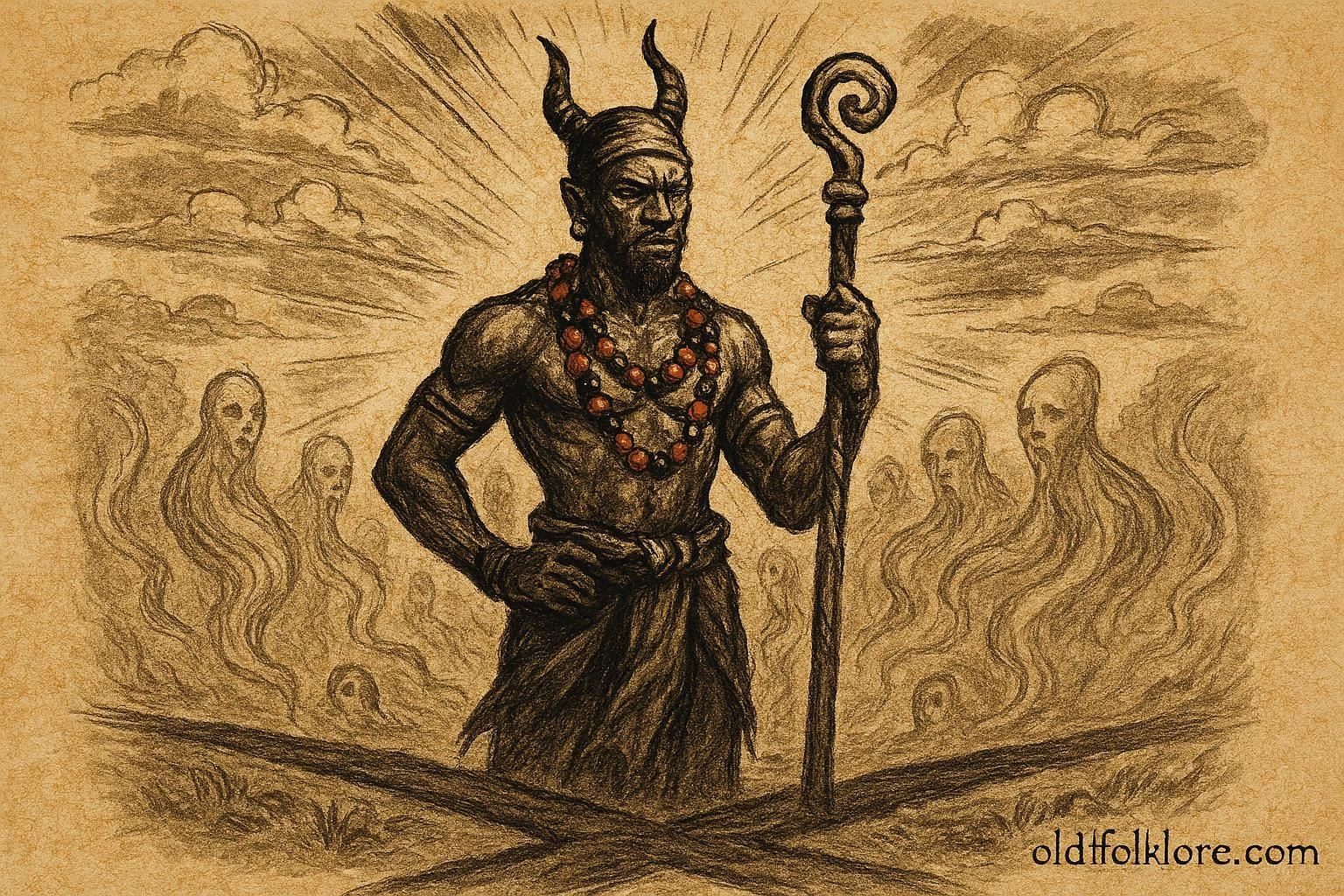
Èṣù is one of the most enigmatic and essential Orishas in Yoruba cosmology. He is the divine messenger between humans, the Orishas, and Olódùmarè, conveying offerings and prayers, testing moral integrity, and ensuring that cosmic law is observed. Known as a trickster, mediator, and guardian of the crossroads, Èṣù embodies duality: he is neither wholly good nor wholly evil, but a force of balance, unpredictability, and justice.
His sacred symbols include the red-and-black beads, a small staff or flute, cowrie shells, and the crossroad itself, representing choice and destiny. Offerings of palm oil, kola nuts, and peppers honor him, while ritual dances and songs recount his clever exploits and lessons. In the diaspora, he is known as Elegua in Santería, Exu in Candomblé, and maintains his core traits: guardian of pathways, enforcer of divine law, and playful trickster.
Mythic Story
Among the Yoruba, Èṣù’s tales are countless, each illustrating his role as mediator, enforcer, and teacher. One such story begins with the Orishas convening to decide the distribution of power among humans. Olódùmarè entrusted Èṣù with carrying messages and ensuring that all instructions were faithfully received. Yet, Èṣù’s cunning nature meant he did not always act predictably, for his aim was to test wisdom and morality.
In one legend, a mortal sought guidance from Ifá, the divination deity, but stubbornly refused to perform the proper rituals. Èṣù appeared at a crossroads, shifting his path and challenging the man with choices that seemed arbitrary, even perilous. With each decision, the mortal’s intentions were revealed: selfishness, fear, and pride came to light. Only by respecting Èṣù’s cunning and honoring the Orishas’ commands could he reach wisdom. The story teaches that the path of righteousness is rarely straight and that fate is intertwined with choice.
Another tale speaks of Èṣù rescuing Ifá from imprisonment within a palm tree. The divination deity had been trapped by a rival, threatening the flow of cosmic knowledge to humanity. Èṣù appeared as a mischievous wind, slipping past guards, bending rules, and outwitting those who sought to control divine law. He freed Ifá, restored balance, and ensured that humans could continue to consult the wisdom of the Orishas.
These myths illustrate that Èṣù’s mischief is purposeful. When he creates obstacles, he tests courage, humility, and discernment. When he delivers gifts or guidance, he ensures justice and fairness. His presence at marketplaces, crossroads, and ceremonies underscores his vigilance: no transaction, no pact, no journey is beyond his observation. It is said that ignoring Èṣù can bring misfortune, while honoring him brings clarity, protection, and guidance.
In the diaspora, his stories adapted to new contexts while maintaining essential elements. Elegua’s cleverness, unpredictability, and role as messenger remain central, though he may also appear as a harbinger of sudden opportunity or warning of moral missteps. He teaches that chaos is not mere randomness; it is a divine test and a balance to order. His duality, playful yet solemn, benevolent yet testing, reminds devotees that morality, choice, and fate are intertwined in life’s unpredictable rhythms.
Through centuries of oral tradition, songs, dances, and offerings, Èṣù’s myths continue to resonate. He is honored during festivals, divination ceremonies, and rites of passage, ensuring the harmony of cosmic order while challenging humans to grow in discernment and integrity. His laughter and cunning, though sometimes confounding, are never meaningless; they are the instruments through which balance and justice flow across the worlds.
Author’s Note
Èṣù embodies the tension between order and chaos, law and improvisation, morality and free will. His myths remind us that life’s crossroads are sacred, that choices have consequences, and that even mischief can serve divine purposes. By navigating Èṣù’s challenges with respect and awareness, humans learn discernment, humility, and the importance of honoring both cosmic and moral laws.
Knowledge Check
Q1: What domains does Èṣù govern?
A: Crossroads, communication between humans and Orishas, fate, and moral balance.
Q2: What symbols are associated with Èṣù?
A: Red-and-black beads, staff or flute, cowrie shells, and crossroads.
Q3: How does Èṣù test humans in myths?
A: By creating choices, obstacles, or challenges that reveal intentions and morality.
Q4: What role does Èṣù play in divination?
A: He conveys messages between humans and Ifá, ensuring the correct flow of guidance and knowledge.
Q5: How is Èṣù represented in diaspora traditions?
A: As Elegua or Exu, maintaining his trickster, messenger, and guardian traits.
Q6: Why is Èṣù considered morally complex?
A: Because he is neither wholly good nor wholly evil, embodying balance, duality, and the unpredictability of fate.
Source: Yoruba Mythology, Nigeria
Source Origin: Yorùbá lands (present-day southwestern Nigeria and Benin)