Among the Maasai of East Africa, life is marked by sacred rites that define social, spiritual, and communal identity. Central among these are Enkipaata, Eunoto, and Olng’esherr, linked male initiation ceremonies that guide a young boy from childhood through the warrior stage and into adulthood. These rites of passage are more than symbolic; they structure Maasai society, align personal milestones with communal responsibilities, and maintain the continuity of lineage and cultural values.
Enkipaata is the initial initiation into manhood. Usually performed for pre-adolescent boys, it signifies their entry into the age-set system. Boys are formally recognized by elders, receive instruction in Maasai customs, oral history, and moral conduct, and are introduced to the responsibilities they will assume as warriors and adults. This ceremony often involves communal feasting, blessings, and ritualized performance that prepare the boys spiritually and socially for their future roles.
The most widely documented rite is Eunoto, a multi-day ceremony that marks the transition from moran (warrior) to senior warrior status. Morans, who have spent years in disciplined training and communal life as warriors, undergo a public shaving ritual conducted by elders. This act is profoundly symbolic: the removal of their hair represents shedding youthful dependence and stepping into the responsibilities of adult leadership, marriage eligibility, and social accountability. During Eunoto, morans are presented to the wider community, praised for their valor, and officially integrated into the ranks of senior warriors who guide younger initiates.
The linked ceremony, Olng’esherr, sometimes referred to as the meat-eating ritual, reinforces the integration of new warriors into adult society. Consuming meat, a traditional symbol of status and strength, marks the assumption of rights and responsibilities previously reserved for mature members. Through these ceremonies, the Maasai ensure that each male moves along a clearly defined path of social progression, maintaining the cohesion and stability of age-sets that structure governance, marriage, and communal duties.
Mythic Connection
These rites of passage are deeply entwined with Maasai cosmology and the sacred order of life. Maasai mythology emphasizes the connection between humans, livestock, and the divine. Life stages are seen as transitions not only in social responsibility but in spiritual alignment with Enkai, the supreme deity, and ancestral guidance. The rituals recognize that youth, warriorhood, and elderhood correspond to cosmic order, each stage maintaining harmony between humans, nature, and the divine.
Shaving, beadwork, ceremonial dances, and public proclamation all act as sacred enactments of these mythic truths. The morans’ transformation echoes creation myths in which humans are given gifts, responsibilities, and moral codes by divine forces. By performing these ceremonies, the Maasai reaffirm that personal growth is inseparable from communal welfare and spiritual duty. The collective recognition by elders and peers signifies that an individual’s spiritual maturity is inseparable from social integration.
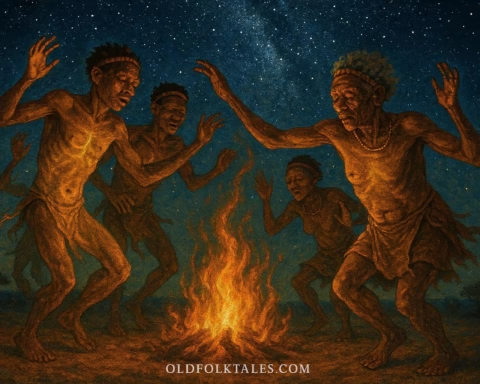
Songs, drumming, and ritualized speeches during the ceremonies invoke blessings for protection, courage, and fertility. The ceremonies also pay homage to ancestors, ensuring continuity of guidance and cosmic favor. In essence, these rites are not merely social markers but performative acts that maintain the sacred balance in the Maasai worldview.
Cultural and Social Significance
The Maasai view the age-set system as vital to social structure. These ceremonies codify progression through well-defined stages, ensuring that each male member of the community is trained, morally guided, and socially recognized. Enkipaata, Eunoto, and Olng’esherr are thus both formative and integrative, they teach ethics, courage, communal loyalty, and respect for elders while publicly demonstrating adherence to tradition.
These rituals also reinforce intergenerational bonds. Elders pass on knowledge, values, and spiritual guidance to younger men. Warriors, in turn, model discipline and responsibility. In modern contexts, while pressures of health regulations, tourism, and legal frameworks have modified some practices, the ceremonies retain their essence. Some communities allow controlled observation for visitors or educational purposes, but core rites, particularly the shaving and meat-eating rituals, remain sacred and restricted to initiates and their families.
Author’s Note
The Maasai initiation rites exemplify how cultural, spiritual, and social dimensions intertwine in ceremonial life. Enkipaata, Eunoto, and Olng’esherr demonstrate that transitions from childhood to adulthood are communal as much as individual. Through these sacred practices, the Maasai maintain social cohesion, honor ancestors, and align personal growth with divine order. They remind us that rites of passage are a universal human endeavor, linking the past, present, and future through ritual, story, and moral guidance.
Knowledge Check
1. What is the purpose of Enkipaata?
It introduces boys to manhood and the age-set system, teaching morals, customs, and social responsibilities.
2. How does Eunoto signify transition to senior warrior status?
Through ceremonial shaving, public recognition, and ritual affirmation of adult duties and marriage eligibility.
3. What role does Olng’esherr play in Maasai initiation?
It symbolizes social and spiritual integration of warriors through a meat-eating ritual, marking full adult status.
4. How do these rites connect to Maasai cosmology?
They align life stages with divine order, ancestral guidance, and the balance between humans, nature, and Enkai.
5. Why are elders important in these ceremonies?
Elders transmit knowledge, supervise ritual correctness, and formally sanction each initiate’s social and spiritual progression.
6. How have modern influences affected these rites?
While some practices are adapted for tourism or health regulations, sacred rituals remain restricted, preserving their spiritual and social significance.