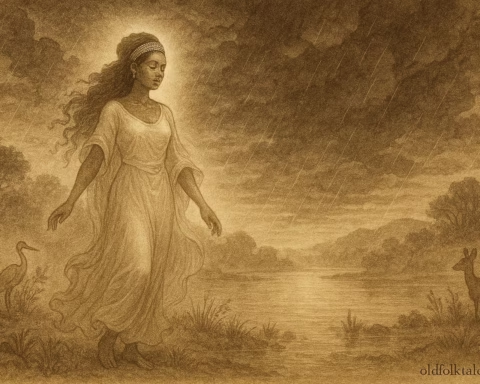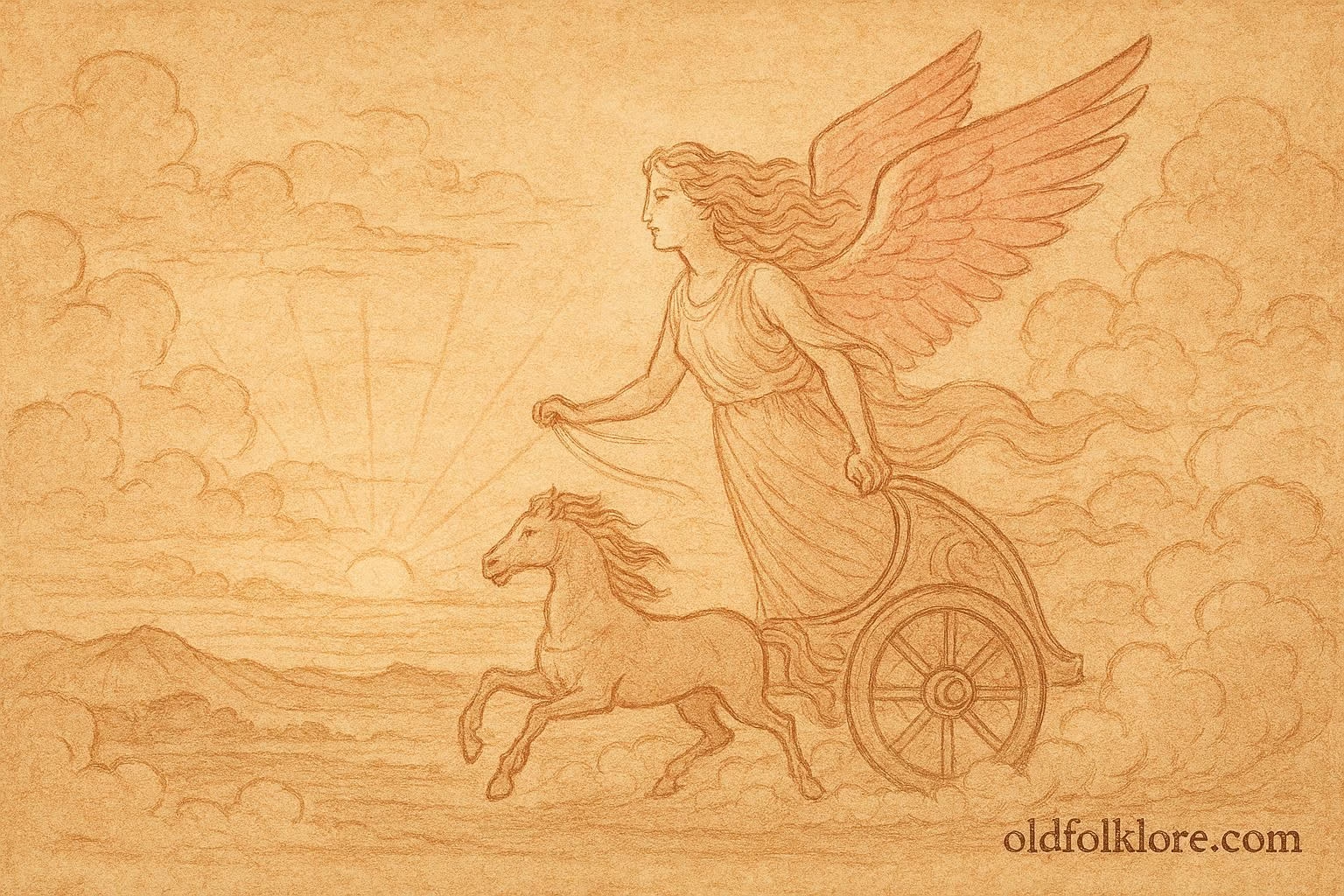
Eos, known to the Romans as Aurora, is the luminous Greek goddess of the dawn, the bringer of first light, the opener of the gates of heaven, and the herald of a new day. Daughter of the Titans Hyperion and Theia, she stands in the divine triad of celestial siblings: Helios, the sun; Selene, the moon; and Eos, the rosy-fingered dawn whose gentle radiance precedes all.
Greek poets describe her as eternally youthful, her saffron robes glowing as she rises from the horizon each morning. She drives a golden chariot drawn by swift-winged horses, scattering dew across the earth and ushering in the renewal of life. Her symbols include the morning star, the chariot of light, and the rosy wings that mark her as the first breath of day.
Eos is also remembered for her romantic entanglements, especially with mortal men. Her most famous companion is Tithonus, a prince of Troy whose destiny became one of the most poignant lessons in Greek mythology. Through Eos, the Greeks reflected on longing, renewal, and the bittersweet boundaries between mortal and divine life.
Though her worship was not centered on grand temples, she appears throughout the literary and artistic tradition of the ancient world, painted on vases, invoked by poets, and honored in hymns celebrating the sacred cycle of daybreak.
Mythic Story: Eos and the Fate of Tithonus
Long ago, when the world was young and the Titans still whispered in the winds, the goddess Eos rose each dawn from the eastern edge of the earth. Her rosy fingers brushed aside the last shadows of night, and her chariot pulled a soft golden glow over land and sea. With each daybreak, she carried renewal to gods and mortals alike.
Yet even gods who usher in the new day can know longing.
Among the many cities she passed, there was one whose towers gleamed with early sunlight: the proud city of Troy. There lived Tithonus, a prince of noble bearing, whose voice was said to be as clear as a lyre string touched by Apollo himself. Eos saw him one morning as he practiced archery by the palace walls, the dawn light shining on his hair. Something stirred in her, a warmth as soft and insistent as the coming day.
She returned again the next morning… and the next. Day after day, she watched him greet the rising sun. Eventually she stepped down from her chariot, her sandals touching the earth like the settling of dew.
Tithonus, astonished by her radiance, bowed low. But Eos lifted his chin gently. “Do not fear,” she said. “For the dawn shines on all, and today it shines for you.”
They became inseparable. Eos carried him across the sky, and he marveled at the world from heights only gods could know. She spoke to him of the light that shapes all life, of how each dawn renews the world even as it reminds us of what fades.
But even divine love must face divine laws.
Eos dreaded the day she would lose Tithonus to old age, for he was mortal. Determined to bind their love beyond the reach of time, she flew to Olympus and stood before Zeus, king of gods. Her saffron robes glowed in the palace halls.
“Grant my beloved immortality,” she pleaded. “Let him never leave my side.”
The request touched Zeus, who had known the ache of desire and the sharpness of loss. With a nod, he granted her wish.
Eos returned to Tithonus with joy, believing she had saved their bond forever. For a time, the two were blissfully united. They roamed lands kissed by morning light and soared over seas that shimmered with the first rays of day.
But in her haste, Eos had forgotten to ask for something crucial: eternal youth.
Immortality came upon Tithonus, but age did not loosen its grip. Slowly, almost imperceptibly, his frame began to stoop. His hair lost its sheen. His voice, once as clear as dawn, grew thin. Eos watched helplessly as the mortal she loved withered yet refused to die.
She tried everything. She brought him into her radiant palace at the edge of the world, hoping her light might restore him. She laid him upon robes woven with dawn-fibers, called upon the healing winds, and sought remedies from gods and spirits alike. But no divine craft could reverse what had been sealed by Zeus’s decree.
The once-vigorous prince became frail, yet still he lived on, endlessly, painfully. His mind drifted between memory and weariness. Eos’s grief deepened with each sunrise she brought to the world, for dawn is renewal, yet she could not renew the one she cherished.
As centuries passed, Tithonus grew so diminished that his body no longer resembled its former human shape. His voice shrank into a thin, tremulous sound, a whisper like wind in dry grass.
The poets say that in her sorrow and mercy, Eos transformed him into a cicada, a tiny creature whose endless, trembling song fills summer mornings. In this form, Tithonus still greeted his beloved at dawn, though he no longer suffered the weight of age.
And so, when the first light of day rises and the cicadas sing, the Greeks remembered the bittersweet story of Eos and Tithonus, a tale that warns of unchecked desire, the limits of divine gifts, and the eternal beauty and fragility of dawn.
Author’s Note
The myth of Eos and Tithonus reminds us that longing, even divine longing, can lead to unforeseen consequences. Eos represents renewal and awakening, yet her story with Tithonus shows that not all forms of immortality are blessings. It is a meditation on desire, time, and the delicate balance between human life and divine power.
Knowledge Check
Q1: What is Eos the goddess of?
A: Dawn and first light.
Q2: Who are Eos’s celestial siblings?
A: Helios (sun) and Selene (moon).
Q3: Who was Eos’s mortal beloved in her most famous myth?
A: Tithonus of Troy.
Q4: What mistake did Eos make when asking Zeus for immortality?
A: She forgot to request eternal youth for Tithonus.
Q5: What symbol is associated with Eos’s daily journey?
A: Her golden chariot of dawn.
Q6: What creature is Tithonus said to become?
A: A cicada.
Source: Greek Mythology, Greece.
Source Origin: Greece