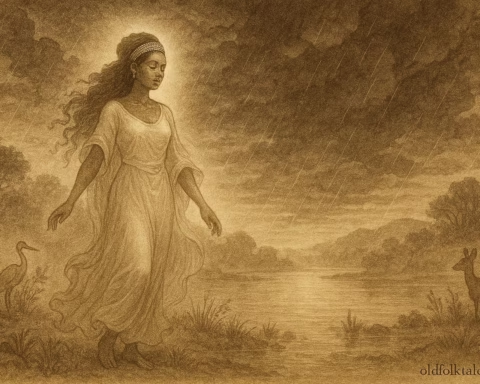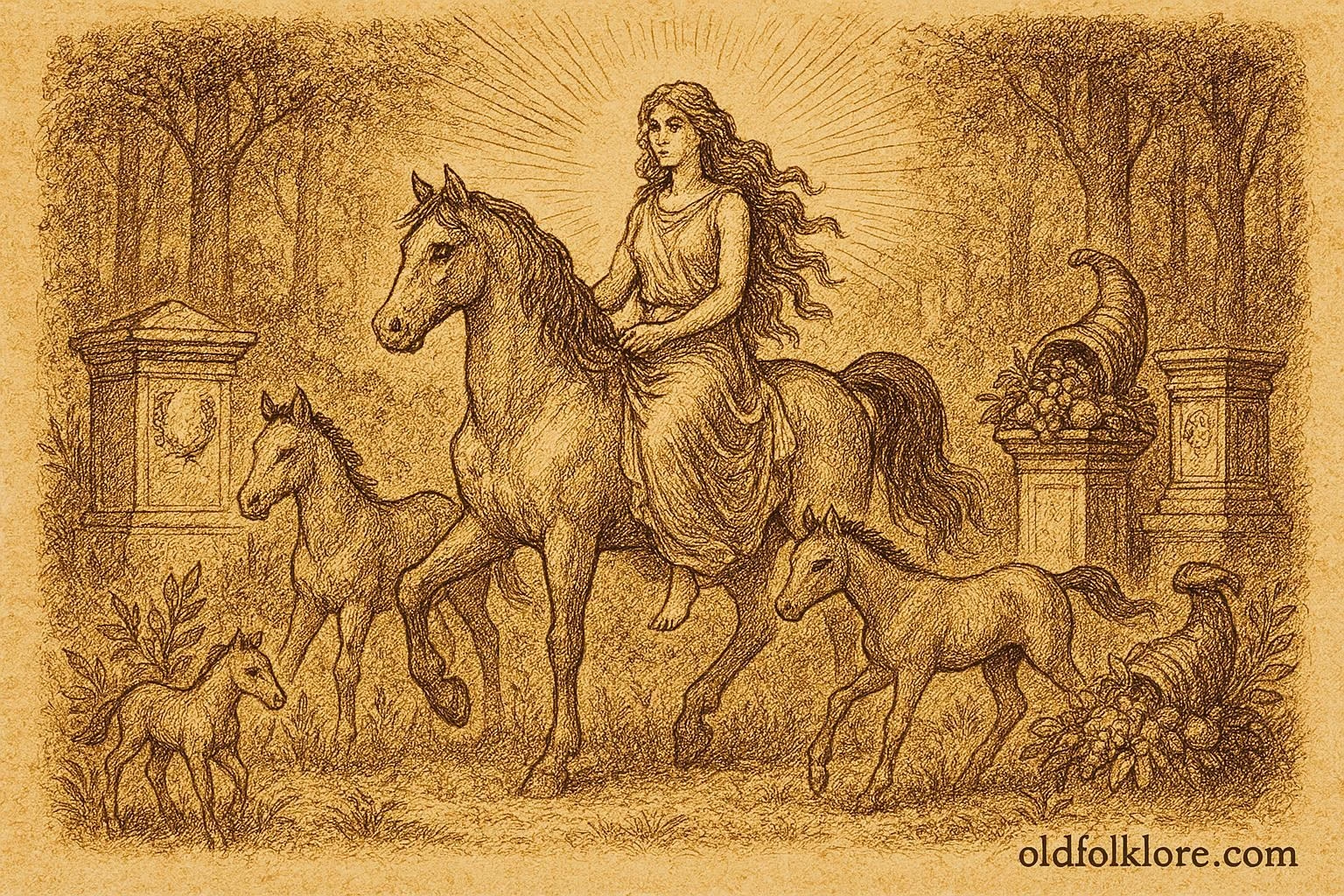
Epona is the Gaulish horse-goddess whose domain spans horses, cavalry, travel, fertility, and sovereign protection. Celebrated for her intimate bond with equines, she is often depicted riding a mare or seated among powerful horses, embodying vitality, guidance, and nobility. In Roman military contexts, Epona became the guardian of cavalry units, stables, and travel routes, blending Celtic reverence with Roman institutional worship. Symbols associated with her include the horse, foals, cornucopia, and sometimes a seated posture that conveys nurturing authority. Temples, altars, and inscriptions across Gaul, Britain, and the Danube regions attest to her widespread veneration and enduring influence.
Mythic Story
Long before Rome had absorbed the provinces of Gaul, Epona’s influence moved across verdant plains, deep forests, and river valleys, revered by Celtic tribes as the sovereign protector of horses and those who rode them. The horse, central to Celtic life as a companion in war, trade, and ceremony, became the earthly manifestation of her spirit. Every hoofbeat echoed with her divine presence, for she alone had the power to safeguard riders, ensure fertility of stock, and bless journeys with fortune.
Legends tell of warriors preparing for battle in the misty morning, their steeds pawing the earth nervously. It was Epona who passed among them unseen, ensuring that each horse and rider moved with strength, speed, and endurance. Her blessing was not merely martial but also spiritual: she bridged the mundane and the sacred, making travel and warfare acts of cosmic significance. Soldiers invoked her name before campaigns, leaving offerings of grain, carved images, or dedicated stables to secure her favor. It was said that horses under her protection never faltered, and travelers guided by her spirit found safe passage across perilous lands.
Epona’s magic extended to fertility, both of horses and humans. She was credited with ensuring healthy foals, guiding the growth of herds, and even bestowing prosperity upon communities that honored her. Stories recount entire villages thriving under her care, with horses strong and abundant, crops protected, and commerce flowing safely along roads watched by her unseen eyes. She was mother, guardian, and sovereign all in one, a goddess whose reach extended across the natural and spiritual worlds.
As Roman influence spread, Epona’s cult was uniquely adopted into official state religion—a testament to her unmatched significance. Roman cavalry units stationed along the Rhine and Danube built altars in her honor, merging Gaulish ritual with Roman ceremonial structure. In these shrines, her iconography adapted slightly: sometimes she bore a cornucopia, linking her equine dominion to prosperity and abundance, while her seated posture evoked maternal authority. Yet her essence remained unaltered: she was the protector of horses, the patron of travelers, and a symbol of noble sovereignty.
Pilgrimages and offerings continued in both Gaul and Britain. Riders placed carved figures of Epona in stables, whispering prayers for strength, speed, and endurance. Mothers seeking the health of their children or the fertility of livestock invoked her name alongside local spirits. In battle, cavalrymen swore oaths beneath her images, believing her presence ensured victory and survival. Through these acts, Epona became a living thread connecting daily life, military endeavor, and divine guardianship, her presence silently ensuring the rhythm of life in her domain.
The enduring power of Epona’s myth lies not in grand cataclysms or heroic duels but in the subtle, constant care she provides. She reminds humanity of the bond between rider and horse, human and animal, mortal and divine. Her protection is both immediate and far-reaching: safeguarding bodies, ensuring livelihood, and bridging the tangible world with the sacred. Through her, the Celts and Romans alike recognized that divine guardianship often manifests in the rhythms of everyday life, in journeys begun, fields tended, and hooves pounding the earth beneath the open sky.
Author’s Note
Epona embodies the sacred bond between humans and horses, the natural world, and the responsibilities of protection and guardianship. Her story teaches that divine care is often subtle but pervasive, guiding travelers, warriors, and communities. Through her, ancient peoples recognized that prosperity, fertility, and safe passage are gifts maintained through reverence, ritual, and ethical respect for the living world.
Knowledge Check
Q1: What domains does Epona preside over?
A: Horses, cavalry, travel, fertility, and sovereignty.
Q2: How is Epona typically depicted in mythology?
A: Riding a mare or seated among horses, sometimes with a cornucopia.
Q3: How did Roman cavalry honor Epona?
A: By building altars, dedicating stables, and invoking her protection before campaigns.
Q4: What is the significance of Epona’s cornucopia in Roman depictions?
A: It links her protection of horses to prosperity and abundance.
Q5: Which regions outside Gaul venerated Epona?
A: Britain, the Rhine, and Danube regions of the Roman Empire.
Q6: What moral or symbolic lesson does Epona’s myth convey?
A: Divine guardianship manifests in everyday life, sustaining prosperity, safety, and natural harmony.
Source: Celtic and Roman Religious Texts, Gaul / Roman Empire
Source Origin: Gaul / Roman Empire