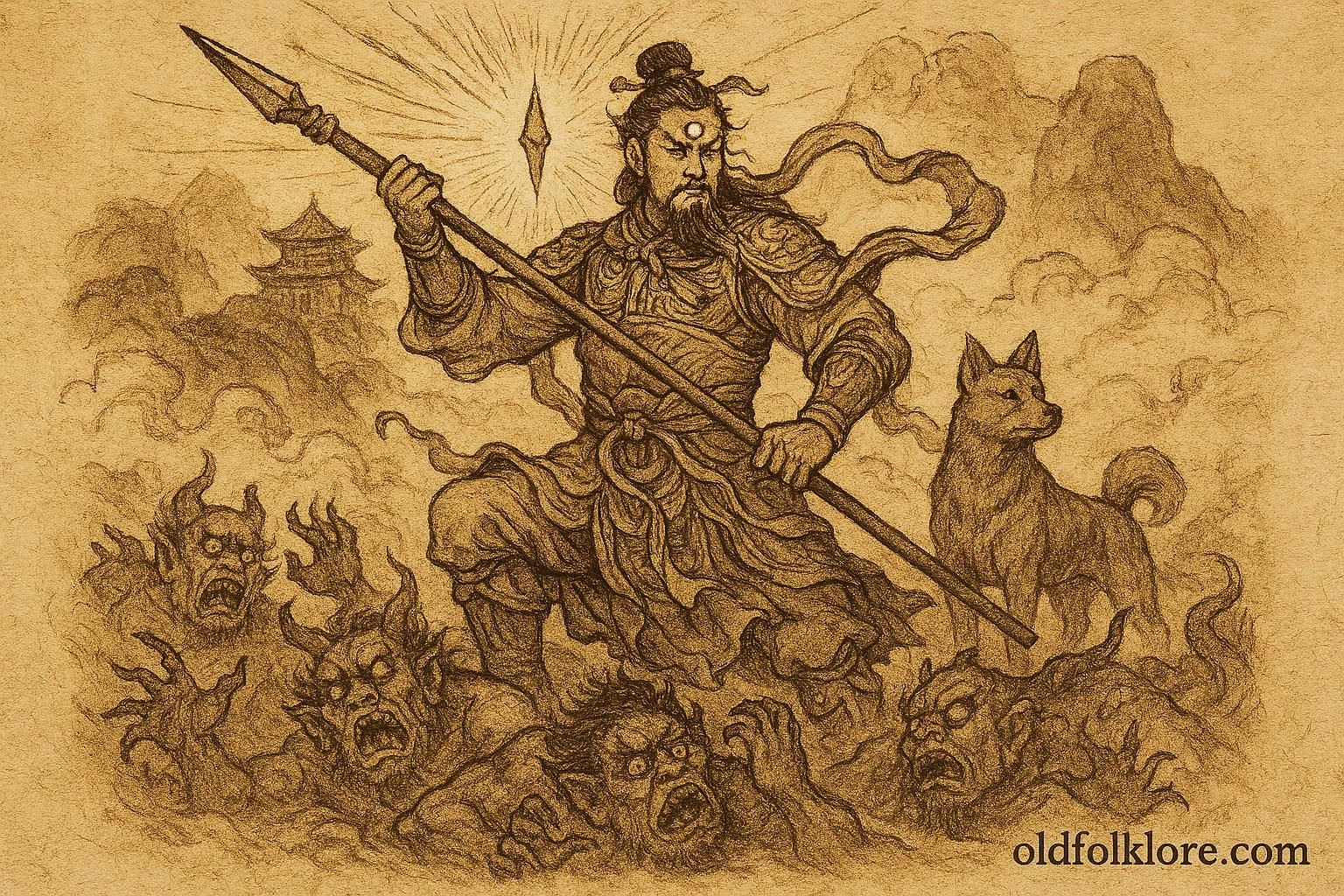
Erlang Shen is a formidable deity of justice, heroism, and moral order in Chinese mythology. Celebrated for his third eye, which pierces illusions and detects hidden truths, he enforces cosmic balance by confronting demons, unrighteous spirits, and corrupt mortals. Often portrayed as a handsome warrior in flowing robes of armor, Erlang Shen carries a spear or staff, and is frequently accompanied by a loyal dog, a faithful companion aiding him in battle and pursuit of justice.
His role in Chinese myth blends divine authority with heroic action. Legends present him as both the nephew of the Jade Emperor and, in other traditions, a mortal-turned-deity whose extraordinary virtue earned him immortal status. He appears prominently in Fengshen Yanyi (The Investiture of the Gods) and other classical literature, demonstrating his relentless dedication to upholding morality and punishing wrongdoing. Temples dedicated to Erlang Shen exist across China, where worshipers invoke him for protection against injustice, malevolent forces, and spiritual deception.
Erlang Shen embodies the principles of righteousness and vigilance. His third eye is not merely a symbol of vision but a spiritual instrument, representing insight, discernment, and the unwavering pursuit of truth. As such, he bridges the human and divine realms, offering protection, guidance, and the courage to confront evil.
Mythic Story
In the days of yore, when demons roamed the lands of mortal China, spreading chaos and terror, there arose a warrior unlike any other. Erlang Shen, radiant with divine authority, walked the earth with purpose. His third eye, centered upon his brow, gleamed with an unearthly light, revealing the hidden motives of beings both mortal and infernal. Wherever deceit and malice thrived, he appeared, spear in hand, ready to restore balance.
One of the most renowned tales recounts Erlang Shen’s battle with the Nine-Headed Phoenix Demon, a creature whose many forms sowed fear across the countryside. This demon could shapeshift into villagers, animals, or natural phenomena, confusing mortals and defying ordinary heroes. Entire villages fell into despair, unable to distinguish friend from foe.
Hearing of the havoc, Erlang Shen approached the afflicted valley, accompanied by his faithful dog, whose senses complemented the divine sight of his master. The demon first attempted to deceive him, appearing as a radiant maiden, then as a mighty tiger. Yet Erlang Shen’s third eye pierced each illusion, revealing the demon’s true, grotesque form. The villagers watched in awe as his gaze shattered the enchantments, exposing the creature’s multiple heads, writhing like black serpents against the sky.
With measured precision, Erlang Shen raised his spear, and a battle ensued across the rolling hills and riverside forests. The demon lashed out, spreading darkness and fire, but the warrior remained steadfast. The dog, leaping with uncanny agility, aided in subduing the demon’s shifting forms. Erlang Shen’s movements were not only martial but ritualistic, each strike and parry a manifestation of moral order, an enactment of justice that transcended the physical fight.
Finally, the demon, exhausted and trapped under the combined vigilance of Erlang Shen and his companion, attempted one last deception: it conjured illusions of loved ones pleading for mercy. But the third eye saw beyond trickery, perceiving not sorrow but malicious intent. Erlang Shen struck decisively, sending the creature into the netherworld, ensuring that it could harm no mortal again.
Stories tell that after such victories, Erlang Shen would restore the ravaged lands, calming storms, repairing shattered dwellings, and instructing humans on vigilance and virtue. His presence offered not only protection but moral guidance, encouraging people to act righteously and respect cosmic balance. In many versions, mortals who honored him through offerings, festivals, or temple rituals were blessed with clarity of judgment, protection from deception, and courage to confront their own moral failings.
Erlang Shen’s mythology also emphasizes the interplay between human and divine duty. While he wields supernatural power, his effectiveness depends upon the alignment of human action with justice. His third eye, while a gift of the gods, mirrors the human need for insight and discernment. As both guardian and teacher, he reminds mortals that vigilance and integrity are essential to preserve harmony, both in society and in the natural order.
Thus, across centuries, Erlang Shen has been venerated not merely as a warrior or enforcer, but as a symbol of ethical clarity. His legends inspire courage, honesty, and moral courage, demonstrating that the divine gaze is unyielding but also instructive, guiding humanity toward righteousness, vigilance, and respect for cosmic law.
Discover the gods, goddesses, and divine spirits who ruled the heavens and shaped human fate
Author’s Note
Erlang Shen’s myth highlights the intertwining of divine authority with moral responsibility. The third eye symbolizes insight, discernment, and ethical awareness, showing that justice requires perception, courage, and integrity. Beyond thrilling battles, his tales teach that righteousness is both a divine blessing and a human obligation, essential to maintain balance in the world.
Knowledge Check
Q1: What is Erlang Shen’s signature power?
A: His third eye, which sees truth and exposes evil.
Q2: Which creature did Erlang Shen famously battle?
A: The Nine-Headed Phoenix Demon.
Q3: Who often accompanies Erlang Shen in myths?
A: His loyal dog, assisting in battle and pursuit.
Q4: In which classical Chinese text does Erlang Shen appear prominently?
A: Fengshen Yanyi (The Investiture of the Gods).
Q5: What moral lesson does Erlang Shen’s mythology convey?
A: Vigilance, integrity, and the pursuit of justice are essential to maintain cosmic and societal order.
Q6: How does Erlang Shen’s third eye function symbolically?
A: It represents insight, discernment, and the ability to perceive truth beyond illusions.
Source: Fengshen Yanyi and Chinese folk opera, China.
Source Origin: China, Song–Ming dynasties (10th–16th century CE)