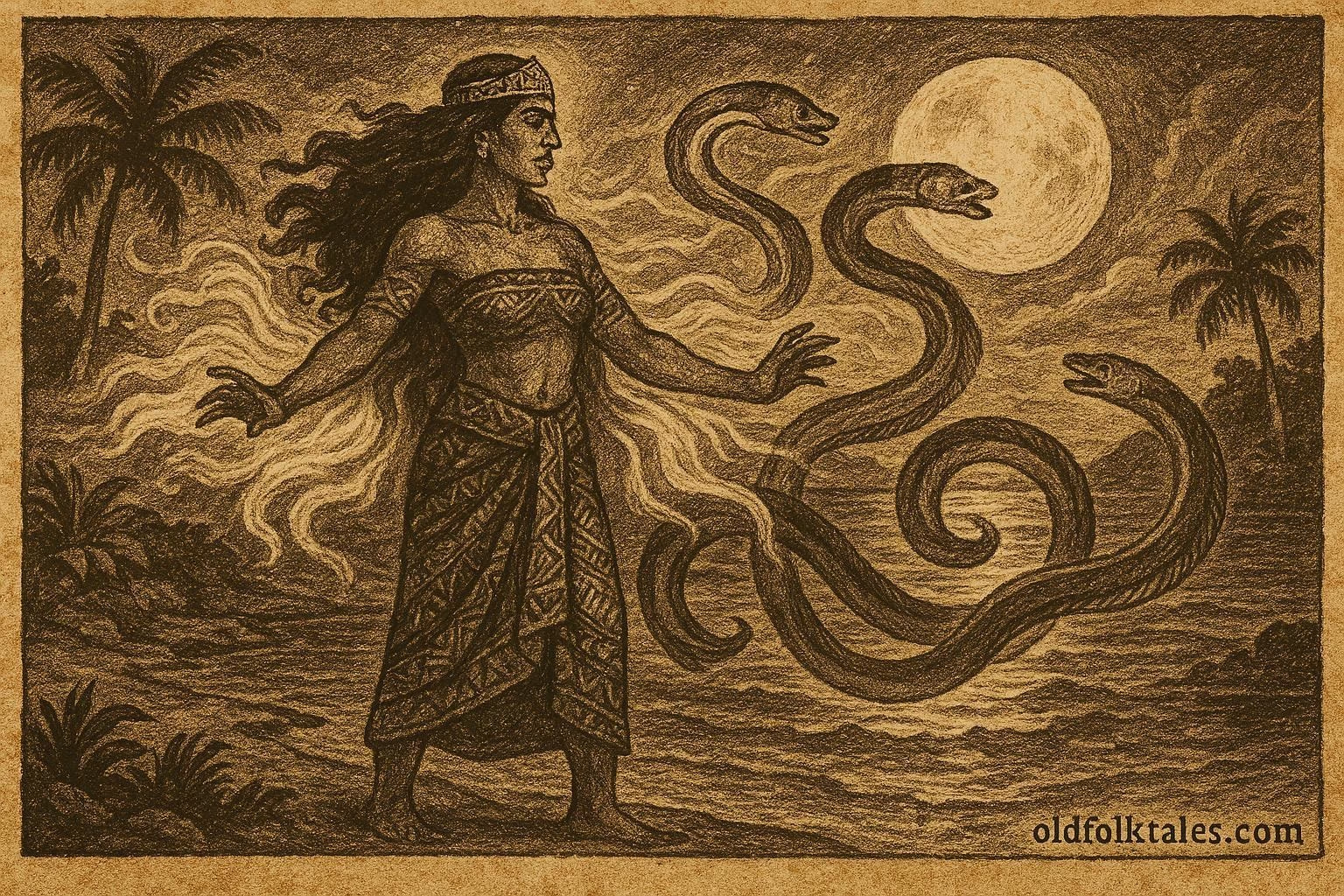
Faumea is one of the most compelling and complex female figures in Polynesian myth, an embodiment of beauty, danger, sexuality, and cosmic potency. Known widely as the eel-woman, she is described as a supernatural being whose body houses living eels. These eels reside in her vagina and act as lethal guardians, attacking or devouring men who approach her unwisely. This imagery is not meant as simple grotesque symbolism; rather, it signals the immense spiritual and bodily power of women in Polynesian cosmology, where reproductive spaces are both sacred and guarded.
When the god Tangaroa, one of the central creators and cultural ancestors of Polynesia, encounters Faumea in the Vahitahi version of the story, he recognizes her as both dangerous and desirable. Their courtship is a drama of knowledge, courage, and consent. Faumea teaches Tangaroa how to coax the eels out, a symbolic act of unlocking hidden power through understanding rather than force. After he follows her instructions, the two sleep together, initiating a union that generates important descendants: Tu-Nui-Ka-Rere (“Great-Flying Tu”) and Turi-a-Faumea (“Turi son of Faumea”). These children become significant figures in later Polynesian adventures and genealogies.
Faumea’s power is not limited to her eel guardians. In mythic episodes preserved in Beckwith’s summaries, she later aids in rescuing Hina, who has been captured by a monstrous octopus demon. Faumea releases storm winds from beneath her arms, sending a destructive blast that weakens the octopus and helps Tangaroa and the rescuers liberate Hina. This extraordinary detail, wind emerging from under her arms, encodes her role as a controller of storms, a mistress of destructive and cleansing forces, and a woman who can unleash nature itself.
Her depiction oscillates between deity, monster, guardian, and ancestral mother, depending on the island tradition. In some genealogical lines, she is merged with Haumea, the Hawaiian earth and fertility goddess. This linkage reinforces her maternal and generative aspects and shows how the broader Polynesian world often shares and transforms divine identities across islands.
Faumea’s personality, as reflected through the narratives, is neither fully benevolent nor malevolent. Instead, she is a figure of raw mana, spiritual power, which must be approached with knowledge, respect, and ritual propriety. She tests Tangaroa but also guides him. She warns of danger but also embodies it. She protects, destroys, births, and rescues.
Polynesian myths often feature powerful women whose bodies are gateways to life and death, and Faumea is an exemplary figure in that tradition.
Powers and Abilities
- Eel-Guarded Body: The eels inside her act as living weapons that kill intruders.
- Knowledge Bearer: She teaches Tangaroa how to safely neutralize the eels, a powerful transmission of sacred knowledge.
- Wind Manipulation: She can unleash violent winds from under her arms, creating storms or aiding in battle.
- Maternal Divinity: She gives birth to demigods who participate in wider Polynesian myth cycles.
- Shapeshifting Resonance: While not explicitly a shapeshifter, her bodily powers link her to transformative motifs across Polynesia.
- Mythic Intercessor: She intervenes in conflicts, including the rescue of Hina from an octopus demon.
Behavior and Associated Myths
The Courtship with Tangaroa: The foundational story of Faumea begins with Tangaroa’s arrival on the island where she dwells. Knowing that her body houses carnivorous eels, he consults her directly. Faumea instructs him to lure the eels out with specific motions or rituals (the exact details vary by source). She does not deceive him; her guidance indicates that mutual understanding is required before union. Their intimacy produces powerful offspring, reinforcing the significance of their union to Polynesian genealogy.
Birth of Heroic Children: Faumea’s children with Tangaroa, including Tu-Nui-Ka-Rere and Turi-a-Faumea, appear in different episodes across Polynesian oral tradition. Their names often imply movement, bravery, or flight, traits inherited from both their divine parents.
Rescue of Hina: In one of the most dramatic episodes recorded by Beckwith, Faumea aids Tangaroa in saving Hina, a major Polynesian heroine, from an octopus demon. Faumea lifts her arms, releasing cyclonic winds that batter the sea creature. This act portrays her as a storm-bringer whose stored natural forces can be deployed to shift the balance in mythic battles.
Cross-Island Variants: In Tuamotu traditions, Faumea stands as a unique supernatural woman. In Hawaiian genealogies, however, she is sometimes merged with or interpreted as a manifestation of Haumea, the earth mother who births demi-gods from different body parts. This suggests a pan-Polynesian pattern of deities that evolve across space and oral transmission.
Cultural Role and Symbolism
- Embodiment of Female Sacred Power: Faumea symbolizes the danger and sanctity of female generative power. The eels represent both protection and the boundary between life-giving and life-ending potential.
- Guardian of Knowledge: Her willingness to teach Tangaroa how to control the eels converts a deadly risk into a transformative relationship. Knowledge is the key to survival and union.
- Mastery Over Natural Forces: Her wind powers represent the unpredictable strength of storms across the Pacific,destructive yet also cleansing and protective.
- Ancestress of Heroes: Faumea’s children link major mythic cycles together, showing that dangerous goddesses can be crucial maternal figures.
- Liminal Figure: She exists on boundaries: sea and land, danger and intimacy, death and life, chaos and order.
- Representation of Female Agency: Faumea is not passive; she negotiates, instructs, acts, and intervenes. Her agency shapes the outcomes of myths.
Encounter dragons, spirits, and beasts that roamed the myths of every civilization
Author’s Note
Faumea is one of the most striking figures in Polynesian mythology because she resists simple categorization. She embodies danger without malice, knowledge without gentleness, and power without tyranny. Her eel guardians reflect long-standing Polynesian associations between the body, taboo, and sacred energy. When analyzing Faumea, it is important to rely on older ethnographic material (Beckwith and genealogical chants) rather than modern summaries, which often simplify her into a “monster.” She is far more than that: a mother of heroes and a holder of cosmic winds.
Knowledge Check
- Q: Why is Faumea called the “eel-woman”?
A: Because she has supernatural eels inside her vagina that kill men who approach unwisely. - Q: Which major Polynesian god becomes her partner?
A: Tangaroa, the great sea and creator god. - Q: What does Faumea teach Tangaroa to do?
A: How to lure out and neutralize the eels so they can safely be together. - Q: What powerful gift does Faumea possess under her arms?
A: Winds strong enough to create storms or defeat monsters. - Q: Who does Faumea help rescue from an octopus demon?
A: Hina, a major heroine of Polynesian mythology. - Q: What cultural idea does Faumea symbolize?
A: The sacred, dangerous, and generative power of women in Polynesian cosmology.
Source: Hawaiian Mythology (Beckwith, public domain); Dictionary of Polynesian Mythology (Craig); Internet Sacred Text Archive; cross-island genealogical lore
Origin: Tuamotu Archipelago (French Polynesia); classical Polynesian myth cycles (19th–20th century transcription of older chant traditions)