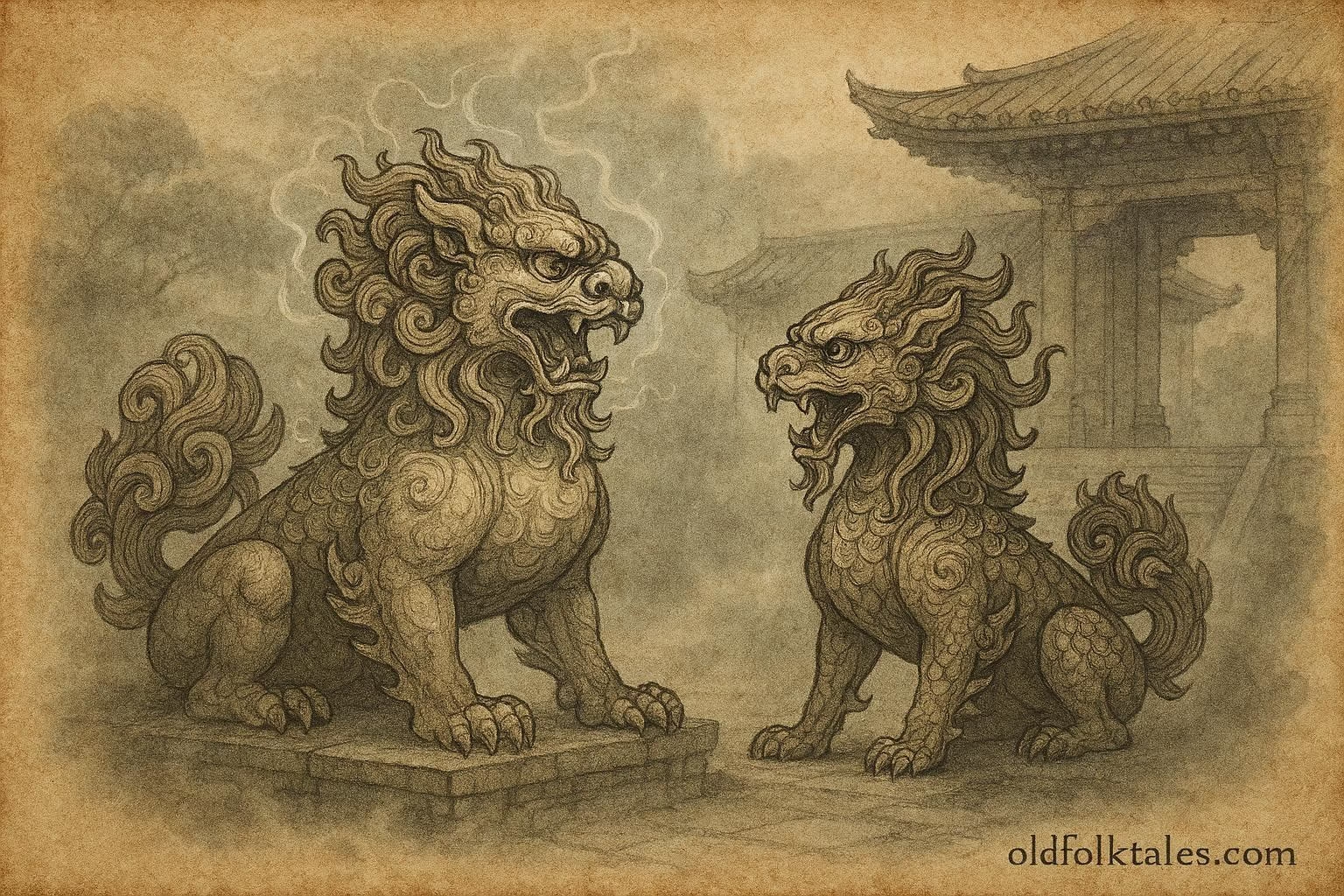
The Foo Dog, also called Shíshì (獅子, “lion”) or Shi-Shi, is a mythological guardian beast widely used as a temple, palace, or tomb sentinel in China and other East Asian cultures. Although “dog” is a Western misnomer, the creature is primarily lion-like in appearance with artistic embellishments that highlight supernatural qualities.
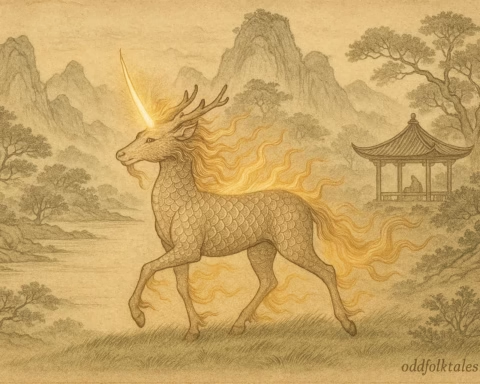
- Physical traits: Foo Dogs are lion-dragon hybrids, often depicted with muscular, leonine bodies, exaggerated manes, curling fur, and expressive faces. In some artistic renditions, they possess dragon-like features: scaled skin, flowing whiskers, flaming tails, or horn-like protrusions. Their mouths are frequently open in a roaring gesture, symbolizing protection and power.
- Gender pairing: Foo Dogs are typically displayed in male-female pairs. The male often has a paw on a ball, symbolizing power or world domination; the female may have a cub beneath her paw, representing nurturing or protection of lineage.
- Size and material: They range from small statues in household shrines to monumental carved stone lions flanking palaces, gates, or temples. Materials include stone, bronze, ceramics, or wood, each imbuing slightly different symbolic weight.
- Behavior (mythic/power): Though stationary in real-world practice, Foo Dogs are believed to possess spiritual agency:
- Warding off evil spirits, demons, or malevolent forces
- Guarding sacred or important spaces
- Maintaining the threshold between human and spirit worlds
- Judging moral purity at the entrance to temples or tombs
- Powers: While not a narrative “monster” attacking physically, their mythic power is protective, spiritual, and symbolic, acting as sentinels against supernatural threats. They are also associated with prosperity, luck, and stability, particularly in households or business establishments.
Cultural Role
Foo Dogs embody several overlapping cultural, moral, and spiritual functions:
- Guardian of Sacred and Social Space: In temples, palaces, tombs, or civic buildings, Foo Dogs serve as a physical and symbolic boundary, separating human activity from spiritual or sacred realms. Their placement is ritualized, often facing outward toward entrances to repel negative energy (feng shui principle of chi control).
- Moral Symbolism: The open-mouthed male lion represents assertive protection and active vigilance, while the closed-mouth female symbolizes quiet nurturing and internal guardianship. Collectively, they enforce societal and cosmic order, reflecting Confucian and Buddhist principles of harmony and balance.
- Cosmological Significance: The lion, an imported symbol via Buddhist traditions (originally from India), was naturalized into Chinese mythic systems, merging with local dragon imagery to create a hybrid guardian. This hybridization reflects the integration of foreign spiritual motifs into indigenous cosmology.
- Artistic and Cultural Expression: The Foo Dog also functions as an artistic conduit for myth-making, blending stylization and symbolic exaggeration to convey supernatural potency. Artisans employed curling manes, exaggerated claws, flaming tails, and facial expressions to manifest spiritual force visually.
- Regional Variations:
- China: Stone lions flanking temple gates, elaborate carvings with symbolic paws and facial expressions.
- Japan: Known as Komainu, lion-dogs guarding Shinto shrines.
- Vietnam: Called Ngựa Sư tử or similar hybrid guardian statues in Buddhist temples.
- Korea: Known as Haetae or lion-like creatures guarding palace entrances. Each variant adapts the lion motif to local cosmology and artistic style.
- Socio-Cultural Integration: Beyond temples, smaller Foo Dog statues are used in homes or businesses, linking domestic protection, social order, and fortune. They are particularly prominent during festivals or rituals, sometimes decorated with red ribbons or symbolic offerings to amplify their protective powers.
Historical Context
- Tang dynasty (7th–10th century): First stone Foo Dog statues recorded at imperial temples, reflecting imported Buddhist iconography combined with local dragon-lion hybridization.
- Song to Ming dynasties: Flourishing of guardian lion iconography in architectural and sculptural traditions; became standardized in male-female pairing and symbolic motifs.
- Spread across East Asia: Through Buddhist and Confucian influence, Foo Dogs appear in Japan, Korea, and Vietnam, integrating local artistic and spiritual interpretations while maintaining core protective functions.
- Modern significance: Today, Foo Dogs remain prevalent in architecture, decorative arts, and cultural heritage sites, bridging myth, art, and spiritual symbolism.
Variant Note
- Form: Stylized lion, sometimes with dragon features, fiery mane, or exaggerated facial expression.
- Disposition: Protective, spiritual, threshold-guardian; not aggressive or narrative-driven.
- Gendered Pairing: Male (ball), Female (cub), symbolic rather than literal.
- Regional adaptation: China (Shíshì), Japan (Komainu), Korea (Haetae), Vietnam (lion-dragons).
Authenticity Assessment
- Primary evidence: Classical Chinese temples, tombs, and inscriptions; Tang dynasty stone carvings; Buddhist texts describing lion sentinels.
- Continuity: Practiced across centuries in architecture, art, and domestic ritual, not a modern invention.
- Symbolic depth: Integrates imported (Indian) and indigenous (dragon, cosmology) motifs, creating a mythic hybrid fully embedded in cultural practice.
- Not pop-culture: Foo Dogs predate Western media interpretations; their mythic significance is tied to ritual, social order, and cosmological symbolism.
Encounter dragons, spirits, and beasts that roamed the myths of every civilization
Author’s Note
Foo Dogs illustrate how symbolic creatures function as mythic protectors without needing narrative stories. They fuse lion, dragon, and spiritual imagination into a tangible guardian form, mediating human interaction with sacred space. In studying Foo Dogs, one sees the blending of imported Buddhist symbolism with local cosmology, producing a hybrid mythic figure deeply embedded in ritual, art, and urban-scape spirituality. While not a monster in the narrative sense, Foo Dogs qualify as mythic beings through their symbolic, ritual, and protective agency.
Knowledge Check
- Q: What is the original Chinese name for the Foo Dog?
A: Shíshì (獅子). - Q: Why are Foo Dogs typically displayed in pairs?
A: Male and female symbolize active protection and nurturing, often with a ball or cub. - Q: What primary function do Foo Dogs serve?
A: Guarding sacred or important spaces, repelling evil spirits. - Q: Which cultures outside China adopted Foo Dogs?
A: Japan (Komainu), Korea (Haetae), Vietnam (lion-dragons). - Q: What symbolic hybrid features can Foo Dogs have?
A: Lion body with dragon features: scales, flaming tails, horn-like protrusions. - Q: How do Foo Dogs connect to cosmology?
A: They mediate human and spiritual realms, embodying order, protection, and moral vigilance.
Source:
Primary: Classical Chinese architectural iconography and temple inscriptions.
Secondary: The Scribbling Geek, The Symbolism of Foo Dogs in Chinese Culture (online essay).
Origin: China, first documented in Tang dynasty (7th–10th century), later spread throughout East and Southeast Asia (Japan, Korea, Vietnam) via Buddhist and Confucian temple traditions. Guardian lions are symbolic mythic creatures, blending naturalistic and supernatural qualities, rather than originating from a narrative folktale.