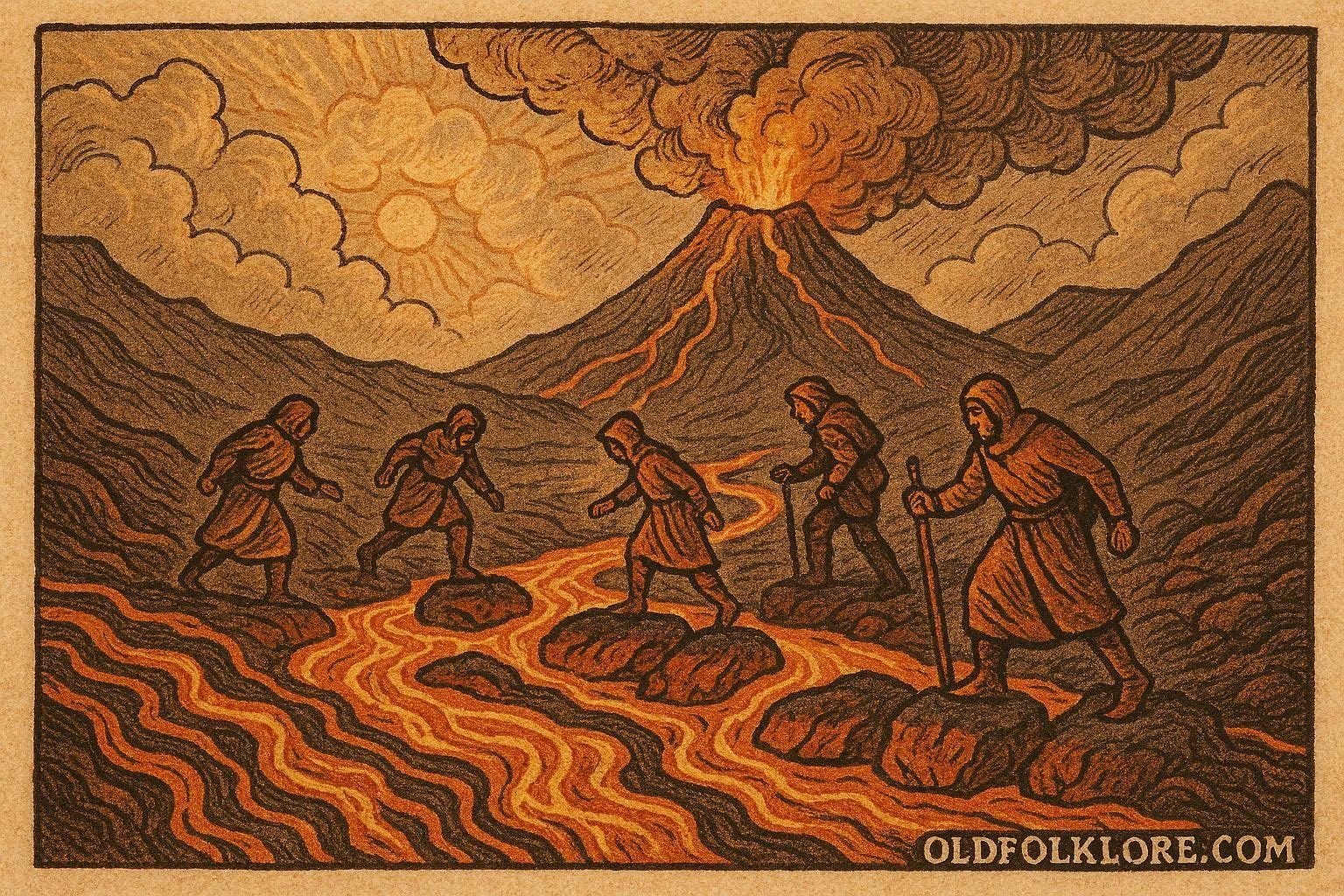
In the shadow of towering volcanoes like Pacaya and Fuego, life has always demanded courage. Communities in Guatemala have lived alongside these powerful mountains for centuries, witnessing their eruptions, tremors, and unpredictable moods. For people in these regions, survival required not only practical skill but a deep understanding of resilience, risk, and courage. From this lived experience emerged a rich oral tradition filled with proverbs reflecting the delicate balance between fear and bravery, caution and action
The volcanic landscape served as both teacher and warning. Lava flows and ash clouds became metaphors for life’s challenges, teaching that danger is ever-present but not insurmountable. These sayings celebrate the human spirit: the willingness to confront adversity, the perseverance to endure setbacks, and the courage to move forward despite uncertainty. Elders used these proverbs to instill bravery in children, guiding them to respect the natural forces around them while developing inner strength.
In these proverbs, risk is neither glorified nor avoided; it is approached with wisdom and foresight. Life is like stepping across smoldering rocks, each decision matters, and resilience determines survival. These sayings remain relevant for modern readers, reminding us that courage is cultivated in the heart, and resilience is the steady flame that withstands life’s eruptions.
50 Proverbs on Courage, Risk, and Resilience
1. “The footprints that linger on lava are remembered by the wind.”
Bravery leaves a lasting impression.
2. “The mountain will burn, but the soul can endure.”
Inner strength outlasts external danger.
3. “A cautious step avoids the cracks, but courage crosses the flow.”
Wisdom balances fear and bravery.
4. “Those who flee before the smoke never see the summit.”
Opportunity requires facing risk.
5. “Ash may fall, but hope rises like new shoots.”
Resilience turns setbacks into growth.
6. “Even the strongest rock yields to persistent hands.”
Endurance and effort overcome obstacles.
7. “The brave do not wait for the volcano to sleep.”
Courage acts even when danger is present.
8. “A frightened heart makes the smallest fire roar.”
Fear amplifies challenges.
9. “The wind carries the footprints of those who dare.”
Courage leaves evidence and inspires others.
10. “A river of lava teaches respect for life’s flow.”
Danger is a teacher, not just a threat.
11. “The hand that trembles cannot hold the rope.”
Confidence is essential in risky situations.
12. “Ashes may cover the path, but determination clears it.”
Persistence overcomes obstacles.
13. “Courage is a candle in the volcanic night.”
Bravery guides through uncertainty.
14. “Even in fire, the ant continues its work.”
Resilience shows in small, persistent efforts.
15. “The summit is reached by those who endure the heat.”
Success requires patience through trials.
16. “A heart that respects the mountain avoids regret.”
Awareness and preparation reduce unnecessary risk.
17. “The smoke teaches the wise where to walk.”
Observation and prudence are critical in danger.
18. “Footprints on hot rock are forged by steady steps.”
Courage requires careful, deliberate action.
19. “Even the volcano sleeps in cycles; know its rhythm.”
Understanding danger helps mitigate risk.
20. “The one who climbs without fear sees the horizon.”
Bravery opens new perspectives.
21. “Lava flows cannot erase the lessons of the past.”
Experience endures beyond immediate crises.
22. “A calm mind carries you across trembling ground.”
Composure ensures safer navigation through danger.
23. “The eagle flies above ash, not beneath it.”
Perspective and preparation reduce peril.
24. “Courage without care is a footstep into fire.”
Bravery must be tempered by wisdom.
25. “The smoke does not stop the determined.”
Persistence overcomes temporary obstacles.
26. “Even footprints in lava begin as careful steps.”
Every courageous act starts with preparation.
27. “The lava remembers those who ignore its warning.”
Nature punishes recklessness.
28. “A volcano tests the heart more than the legs.”
Resilience is mental as well as physical.
29. “Ash may blind, but courage sees the way.”
Determination allows progress despite hardship.
30. “The brave do not need the path to be smooth.”
Courage persists even without guarantees.
31. “Fire teaches patience more than stones teach weight.”
Trials cultivate endurance.
32. “A fearless child crosses the river of stones first.”
Youthful boldness can lead innovation.
33. “The smoke hides danger but reveals the strong.”
Challenges expose true character.
34. “Even in eruption, the mountain gives lessons.”
Difficult circumstances teach wisdom.
35. “The river of fire cools in time; do not rush.”
Patience is vital in crisis.
36. “Those who watch the wind do not fall.”
Awareness prevents unnecessary risk.
37. “A trembling hand loses its hold on opportunity.”
Fear can prevent success.
38. “The lava path is walked by many, remembered by few.”
Courage is notable, even if rare.
39. “Every scar on the rock tells a story of endurance.”
Experiences shape strength and wisdom.
40. “Even the strongest storm cannot wash away persistence.”
Steadfastness survives adversity.
41. “The one who respects fire uses it to forge life.”
Wisdom turns challenges into advantage.
42. “Fear is heavier than ash.”
Psychological obstacles can outweigh physical ones.
43. “Those who climb with care reach the summit unburned.”
Measured bravery ensures survival.
44. “Volcanoes teach the patient more than the reckless.”
Reflection and prudence bring lasting lessons.
45. “The river of lava can carve a path for those who watch.”
Observation turns danger into opportunity.
46. “Even the smallest footstep counts in ash.”
Every effort matters in challenging situations.
47. “Courage is learned, not inherited.”
Bravery develops through experience.
48. “A wise traveler counts steps before fire reaches them.”
Planning mitigates risk.
49. “The ground may shake, but the heart steadies.”
Inner resilience allows endurance.
50. “Ash falls on all, but those who act rise above.”
Action and perseverance transcend adversity.
Author’s Note
The proverbs of Footprints in the Volcano remind us that courage is not the absence of fear, but the ability to act wisely despite it. Life’s challenges, like volcanic eruptions, are unpredictable and sometimes overwhelming. Yet through careful observation, measured risk, and resilience, humans can navigate danger and even flourish. These sayings honor both the natural world and the human spirit, celebrating bravery, preparation, and the enduring capacity to rise above adversity.
Knowledge Check
- Q: Why are volcanoes central symbols in these proverbs?
A: They represent danger, unpredictability, and life’s challenges. - Q: What does “Even footprints in lava begin as careful steps” teach?
A: Courage and risk-taking require preparation and prudence. - Q: How does fear affect action according to these sayings?
A: Fear can prevent progress or magnify perceived danger. - Q: Why is observation emphasized in volcanic proverbs?
A: Awareness allows people to navigate risks safely and make informed decisions. - Q: How do these proverbs link courage and resilience?
A: Bravery is necessary to face danger, while resilience ensures endurance through challenges. - Q: What lesson do these proverbs teach about patience in crisis?
A: Patience allows one to act wisely rather than recklessly, increasing chances of survival and success.